
Approving a wig sample is an important milestone, but it is not the
final quality-control step. Before shipment, wholesale buyers need
evidence that bulk production follows the approved specification across
the order—not only in one selected unit.
A practical pre-shipment inspection checks quantity, workmanship,
measurements, hair appearance, lace, cap construction, color, packaging
and order records. It also defines how nonconforming units will be
separated and corrected before release.
This guide focuses on bulk-order inspection. It is different from
sample approval: the sample defines the target, while pre-shipment
inspection evaluates whether production has reproduced that target
consistently.
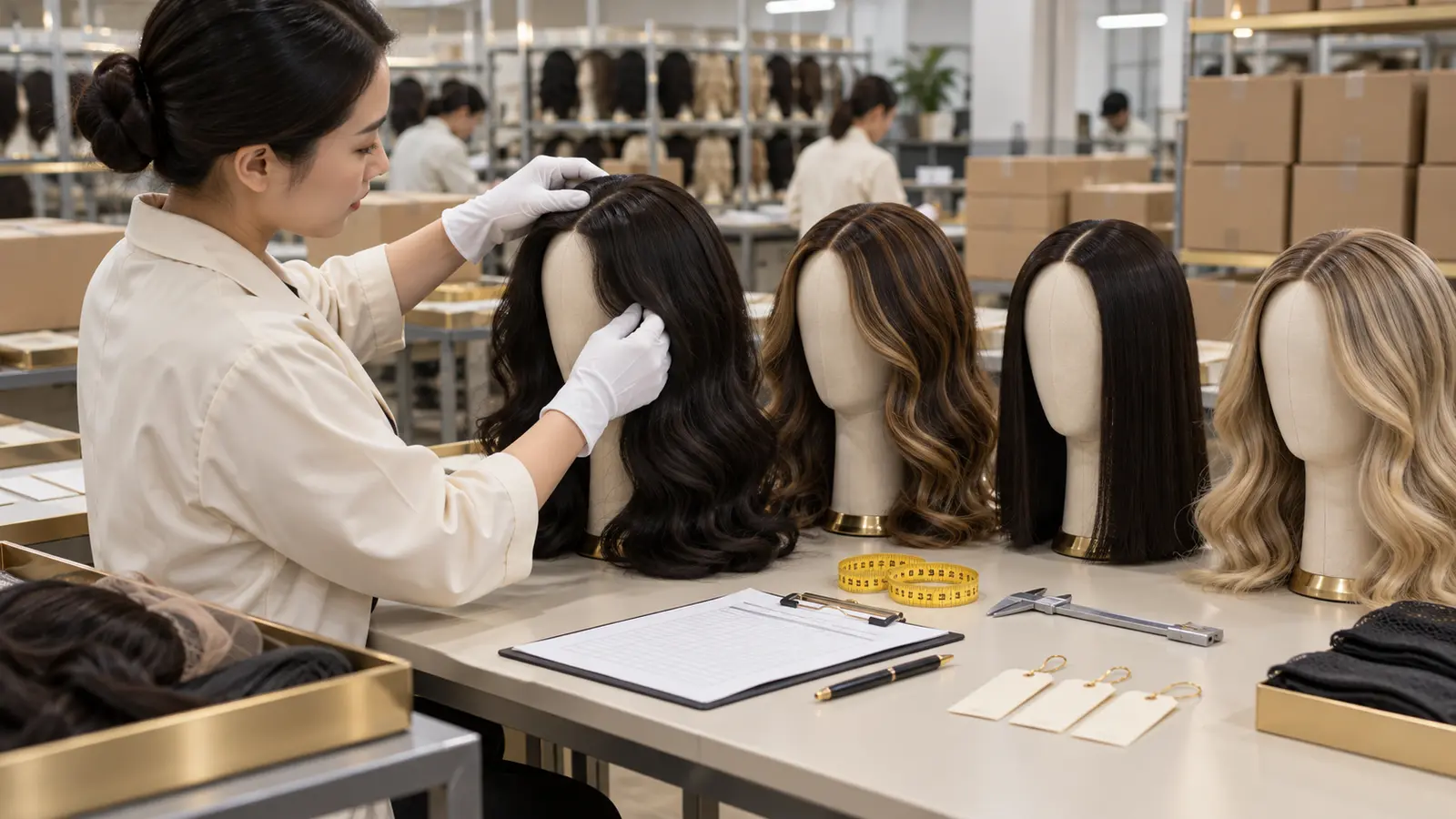
Sample Approval vs
Pre-Shipment Inspection
| Stage | Main question | Typical focus |
|---|---|---|
| Sample approval | Is this specification suitable for production? | Product design, materials, measurements, construction, color and packaging direction |
| In-process control | Is production following the approved method? | Materials, workmanship, measurements and process consistency |
| Pre-shipment inspection | Does the completed bulk order conform closely enough to release? |
Quantity, sampled units, defects, packaging, labels and shipment readiness |
Buyers who still need to establish the product standard should begin
with Wig
Sample Orders: What Buyers Should Test Before Bulk Production.
Buyer Tip: A pre-shipment inspection is most
effective when the approved sample, purchase order and specification
sheet all describe the same requirements.
Prepare the
Inspection Standard Before Production
Do not wait until the order is complete to decide what “acceptable”
means. Before production, the buyer and manufacturer should align
on:
- Product name and SKU codes
- Quantity by style, length, color and construction
- Hair material and processing description
- Finished length, weight and density requirements
- Lace size, material and color
- Cap dimensions and components
- Texture, color and styling reference
- Label and packaging placement
- Barcode or carton-mark requirements
- Allowed tolerances and defect handling
- Approved reference sample or images
The specification should identify which characteristics are critical
and which allow controlled production variation.
Step 1: Verify
Order Quantity and SKU Breakdown
Start by reconciling completed quantities with the purchase
order.
Check:
- Total units completed
- Quantity by SKU
- Length and color breakdown
- Lace or cap construction breakdown
- Replacement or spare units, if agreed
- Packaging components available for each unit
A correct total quantity can still hide an incorrect SKU allocation.
For example, an order may contain the right number of wigs but too few
units in a core length or color.
Step 2: Select
Units Across the Production Batch
Inspection units should represent the order rather than come only
from one carton or the top of a stack. The sampling plan can
consider:
- Total order size
- Number of SKUs
- Complexity of colors and constructions
- Previous production performance
- Buyer’s risk tolerance
- Whether third-party inspection is required
Select across different cartons, production groups and variations
where possible. Custom colors, long lengths, high densities and
technically complex lace constructions may justify additional
attention.
The exact sample size and acceptance rule should be agreed before
inspection. Buyers using a formal AQL system should state the inspection
level and defect limits in the purchase requirements rather than
applying them after production.
Step 3:
Confirm Product Identity and Specifications
Each inspected unit should match its label, SKU and
specification.
Confirm:
- Style and construction
- Stated length
- Density or finished weight standard
- Texture and curl pattern
- Color or color placement
- Lace type and dimensions
- Cap size and adjustable components
- Parting or hairline specification
Use consistent tools and methods. If length is measured differently
between sample approval and bulk inspection, the results will not be
directly comparable.
Step 4: Inspect
Hair Appearance and Handling
This is a B2B quality check, not a consumer-care test. The purpose is
to identify production or material inconsistency.
Look for:
- Uneven or unexpected color variation
- Texture inconsistency between units
- Excessively dry, coated or oily appearance
- Unusual odor
- Visible tangling or matting
- Excessive loose hair during controlled combing
- Thin ends or fullness inconsistent with the approved sample
- Short-hair distribution outside the agreed standard
Some loose strands can occur during handling and finishing. The
inspection should focus on repeatable, excessive or concentrated
shedding that may indicate a construction or processing problem. See Why
Human Hair Wigs Shed for the distinction between loose hair and a
systemic issue.
Step 5: Inspect
Lace and Hairline Workmanship
For closure and frontal wigs, examine:
- Correct lace dimensions
- Lace color and material
- Holes, tears, runs or contamination
- Knot security and general knot consistency
- Ventilation distribution
- Hairline shape and density transition
- Parting space
- Attachment between lace and cap
The expected result should reflect the approved product position. A
delicate HD lace product and a durability-focused transparent lace
product may require different handling and acceptance considerations.
Buyers can compare the material choices in HD
Lace vs Transparent Lace.
Step 6: Check Cap
Construction
Turn selected wigs inside out and inspect the complete cap.
Check:
- Cap circumference and key measurements
- Seam condition and stitching security
- Weft attachment and spacing
- Elastic band position and tension
- Combs, clips and adjusters
- Nape and ear-tab construction
- Lace-to-cap connection
- Cleanliness and loose thread removal
Construction defects may not be visible when the wig is displayed on
a stand. Interior inspection is essential for identifying weak
attachment points and inconsistent assembly.
Step 7:
Compare Color, Texture and Styling Across Units
Place comparable SKUs together under neutral lighting. Review the
group, not only one unit.
For natural-color products, check whether variation stays within the
agreed range. For highlighted, ombré or blonde products, inspect
placement, tone, transition and unwanted staining. For curls and waves,
compare pattern definition and overall silhouette.
If a style has been set or finished for presentation, the buyer
should know which appearance will remain after normal transport and
which requires restyling. Packaging should protect the agreed
presentation without creating avoidable deformation.
Step 8:
Verify Private-Label Details and Packaging
Product quality and presentation quality should be inspected
together.
Verify:
- Brand label text and placement
- Hangtags, stickers and inserts
- Barcode and SKU accuracy
- Packaging size and material
- Product-to-box match
- Spelling and print quality
- Required accessories
- Inner protection and carton organization
- Shipping marks and carton counts
Use approved artwork and a packaging sample as references. Never rely
on memory for logo position, color or printed text. VAYORA’s custom wig
packaging page explains the elements buyers should prepare.
Step 9:
Classify Findings and Confirm Corrective Action
Inspection findings should be recorded consistently. A useful report
separates:
- Critical issues that prevent shipment
- Major issues that affect function, specification or commercial
acceptance - Minor issues that affect appearance but may be repairable
- Observations that should be monitored in future production
For each issue, record the SKU, quantity affected, photo evidence and
proposed action. Corrective action may include rework, replacement,
re-inspection, quantity adjustment or buyer review, depending on the
agreed terms.
Do not release the shipment only because the inspection has finished.
Release it when the findings have been reviewed and the required actions
are closed or formally accepted.
Step 10: Review Shipment
Documents
Before final release, compare product and carton information with the
commercial documents.
Review:
- Final packing list
- Commercial invoice details
- Carton quantity and markings
- Gross and net weight where applicable
- Delivery details
- Required product or material documents
- Inspection report and corrective-action record
Document accuracy helps prevent delays and makes receiving inspection
easier for the buyer.
Bulk Wig Inspection
Checklist
| Inspection area | Key checks |
|---|---|
| Quantity | Total units and SKU allocation match the order |
| Product specification | Style, length, density/weight, texture, color and construction |
| Hair | Appearance, combing behavior, shedding, tangling, odor and consistency |
| Lace | Size, color, material, knots, tears, hairline and attachment |
| Cap | Measurements, seams, wefts, bands, combs, adjusters and cleanliness |
| Private label | Labels, tags, inserts, barcode and artwork accuracy |
| Packaging | Correct product, protection, box condition and accessories |
| Cartons | Counts, assortment, marks and organization |
| Records | Photos, findings, corrective actions and release decision |
How a
Manufacturer Supports Pre-Shipment Quality Control
A manufacturer-led workflow should connect material inspection,
in-process checks and final inspection rather than treating quality
control as one last-minute activity.
For OEM/ODM and private-label projects, this may include:
- Confirming a production specification after sample approval
- Checking materials and components before assembly
- Monitoring construction during production
- Separating and reworking nonconforming units
- Performing final SKU and packaging checks
- Providing inspection records or photos according to the project
agreement
Review VAYORA’s wig
manufacturing process and quality control
approach for the workflow surrounding bulk production.
Final Sourcing Takeaway
Sample approval defines what the buyer wants. Pre-shipment inspection
verifies how consistently the completed order follows that approved
standard.
The strongest inspection process begins before production, uses
representative units, records findings by SKU and connects every issue
with a clear corrective action. This gives both buyer and manufacturer a
more objective basis for deciding whether the order is ready to
ship.
Review Your Bulk Order Inspection Plan
Preparing a bulk wig order or private-label production brief? Send VAYORA your approved specifications, SKU quantities, packaging requirements and inspection priorities. Our team can review the production and pre-shipment quality-control workflow.
Frequently Asked Questions
Is
sample approval enough before shipping a bulk wig order?
No. The sample establishes the target specification. Pre-shipment
inspection checks whether the completed production order follows that
target across representative units and SKUs.
Should every wig
in a bulk order be inspected?
The appropriate inspection approach depends on order size, SKU
complexity, project risk and the agreed quality plan. Some checks may
cover every unit, while detailed checks may use a defined sample across
the batch.
What should
buyers check in a lace wig inspection?
Check lace size, material, color, tears, knots, ventilation,
hairline, parting space and the attachment between the lace and cap.
How should inspection
defects be recorded?
Record the SKU, issue type, quantity affected, photos and required
corrective action. Findings should be classified consistently so the
shipment-release decision is clear.
When should
private-label packaging be inspected?
Packaging artwork and structure should be approved before bulk
production, then checked again with finished units before shipment for
labels, barcodes, inserts, product match and carton organization.