
LACE & CAP
Construction Foundation
Select the lace area, cap structure, size direction, parting, straps, combs or other agreed features. The base determines how later density and hairline work should be reviewed.
Follow the buyer-to-production workflow from written specifications and sample review through material preparation, cap and lace construction, density and color control, final inspection, private label packaging and shipment planning.
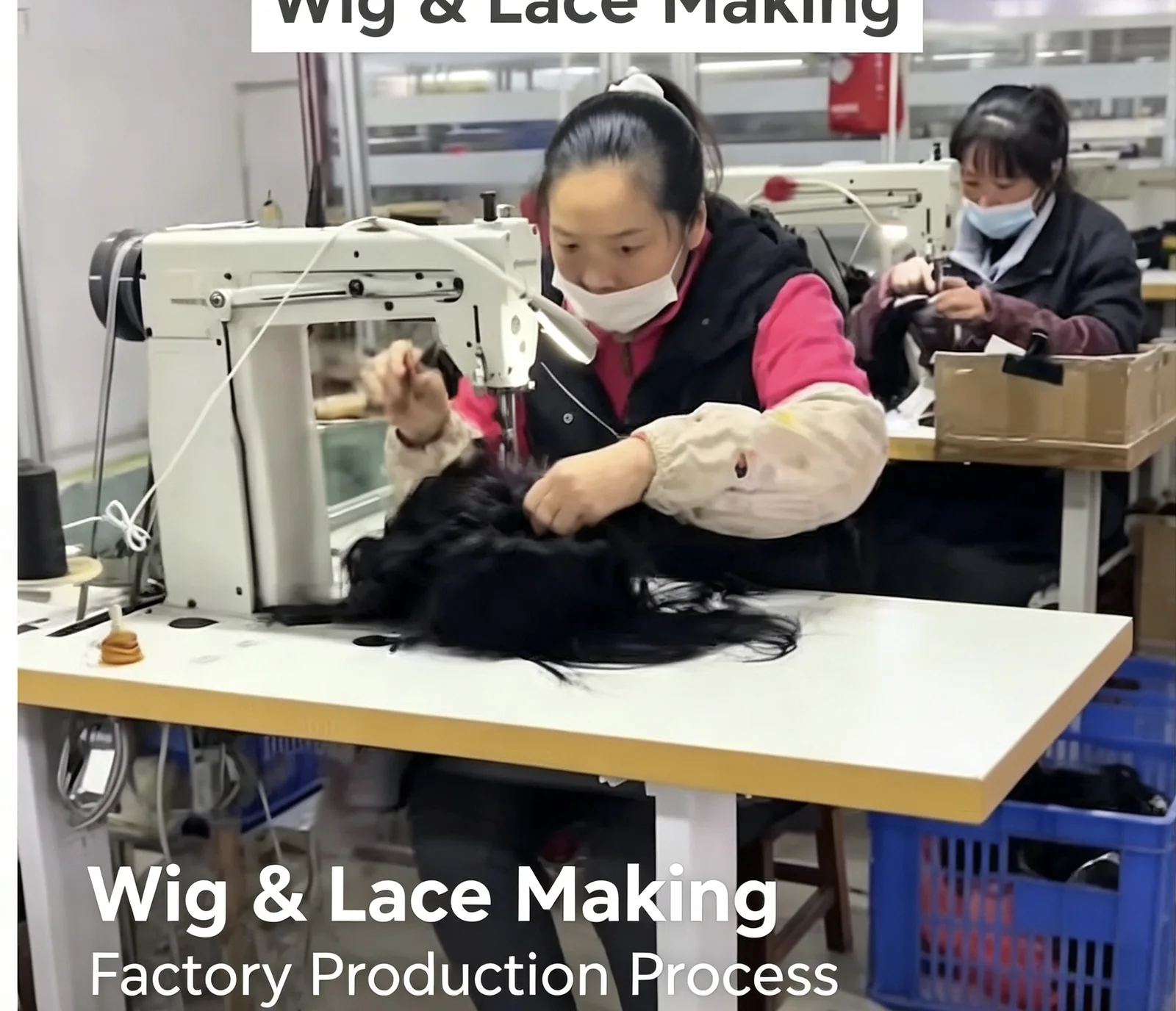
The product brief should connect style, construction, cap and lace direction, length, density, texture, color, hairline, labeling and packaging. Final feasibility and production details are confirmed against the selected product and sample route.
Market, product direction, references and expected quantities.
Lace area, cap design, size, parting and adjustable features.
Length, density direction, texture, color and finish.
Physical review, adjustments and written approval record.
Production reference, QC, packaging and shipment details.
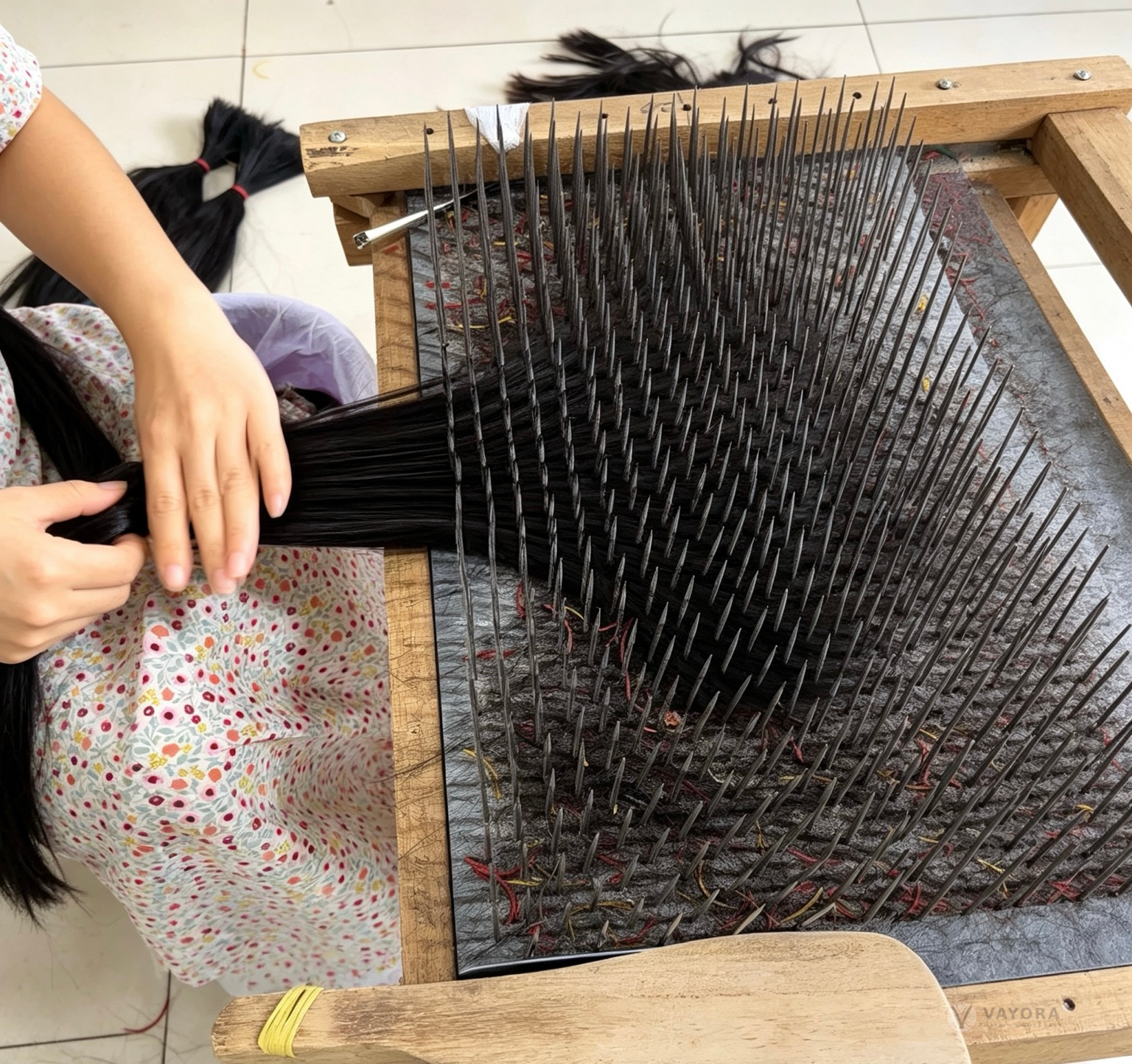
Hair is prepared for the approved length, texture and color direction before it becomes part of the final construction. Visual references should be reviewed in the context of the selected wig, because density, styling and lighting affect the finished appearance.
Where a precise shade or effect matters, the approval method should be agreed before bulk confirmation.
Select the lace area, cap structure, size direction, parting, straps, combs or other agreed features. The base determines how later density and hairline work should be reviewed.
Build the chosen wig construction with attention to hair distribution, parting area, hairline direction and attachment security.
Review density together with length, texture, cap area and finished silhouette. Confirm the intended distribution using the approved sample and written brief.
Compare the processed product with the agreed color and texture reference, including roots, highlights or transitions where specified.
Review hairline, parting, cut, layers, curls or bob shape according to the actual SKU—not a generic style description.
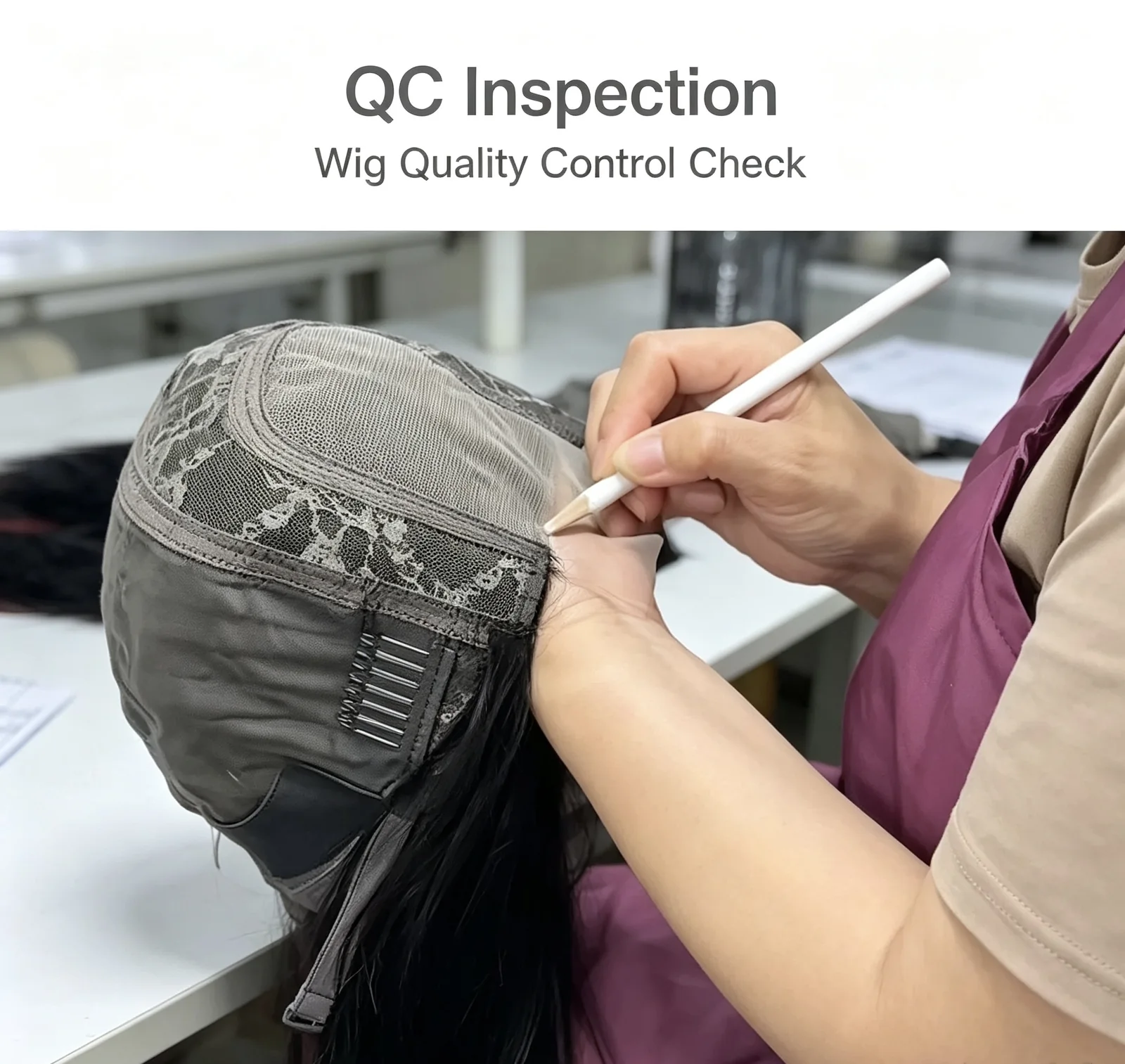
Inspect cap and lace condition, attachment, symmetry, measurements and the agreed functional features before final styling and packing.
Final inspection connects the physical product with the current specification: construction, measurements, appearance, density direction, color and texture, labels, SKU identity and pack configuration.
Any approved sample adjustment should be recorded before the bulk order is released. A written trail helps prevent an outdated sample or artwork version from becoming the production reference.
Use the closest category page to define the product, then return to the process and QC pages to plan approval and bulk control.
Plan fit, cap structure, adjustable features, hairline and wear-and-go styling.
Explore glueless wigs →Define lace area, lace direction, parting, hairline and cap requirements.
Lace front wigs → · HD lace wigs →Confirm shape, length and finish for bobs; approve tone and color route for blonde collections.
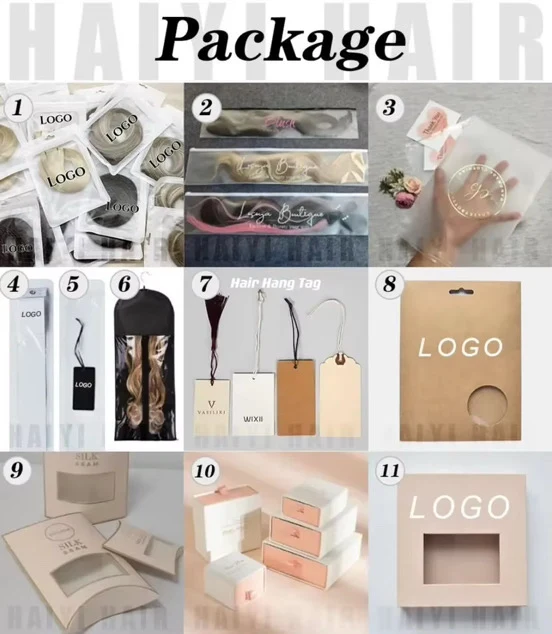
Bob wigs → · 613 blonde wigs →Private label artwork, SKU identification, bags, boxes and inserts should follow the approved wig construction and assortment. Confirm the correct artwork version and placement before packing.
Send the target construction, lace and cap direction, length, texture, density, color references, quantities, packaging needs and delivery country.