
Quick answer: Measure the intended wearer’s head, then compare those measurements with the actual finished-cap dimensions and adjustment range of the specific wig. A label such as “small,” “medium,” or “21 inches” is not a universal international size standard. A glueless wig also depends on the cap’s grip, elastic, lace position and fit across the front and nape. Do not approve the purchase using circumference alone.
For salons and private-label wig brands, size mismatch can create customer dissatisfaction even when the hair and lace are excellent. A cap that feels loose may shift at the front; a cap that is too tight can create unpleasant pressure. This guide explains the fit information a professional buyer should collect before sampling and before promising a comfortable ready-to-wear product.
Which Measurements Matter?
| Measurement | How it is taken | What to record |
|---|---|---|
| Head circumference | Around the head along the intended wig band placement, above ears and around the nape | Measured value, unit and any hair-under-cap considerations |
| Front to nape | From front hairline position over the crown to the desired nape edge | Starting/ending points used |
| Ear to ear over top | Across the crown from one side to the other | Symmetry and coverage needs |
| Temple to temple / front width | Across the front hairline or the specific points required by the cap design | Intended lace/front placement |
| Nape width and position | Across the lower back area of the cap | Band/strap interaction and comfort |
Use a soft flexible tape and avoid pulling so tightly that the measurement is distorted. Repeat the measurement under consistent conditions and record whether the wearer’s natural hair is flattened or secured as it will be when the wig is worn. If a wig is designed for a very different hair volume or under-cap arrangement, the same person may experience a different fit.
Why Head Circumference Is Not Enough
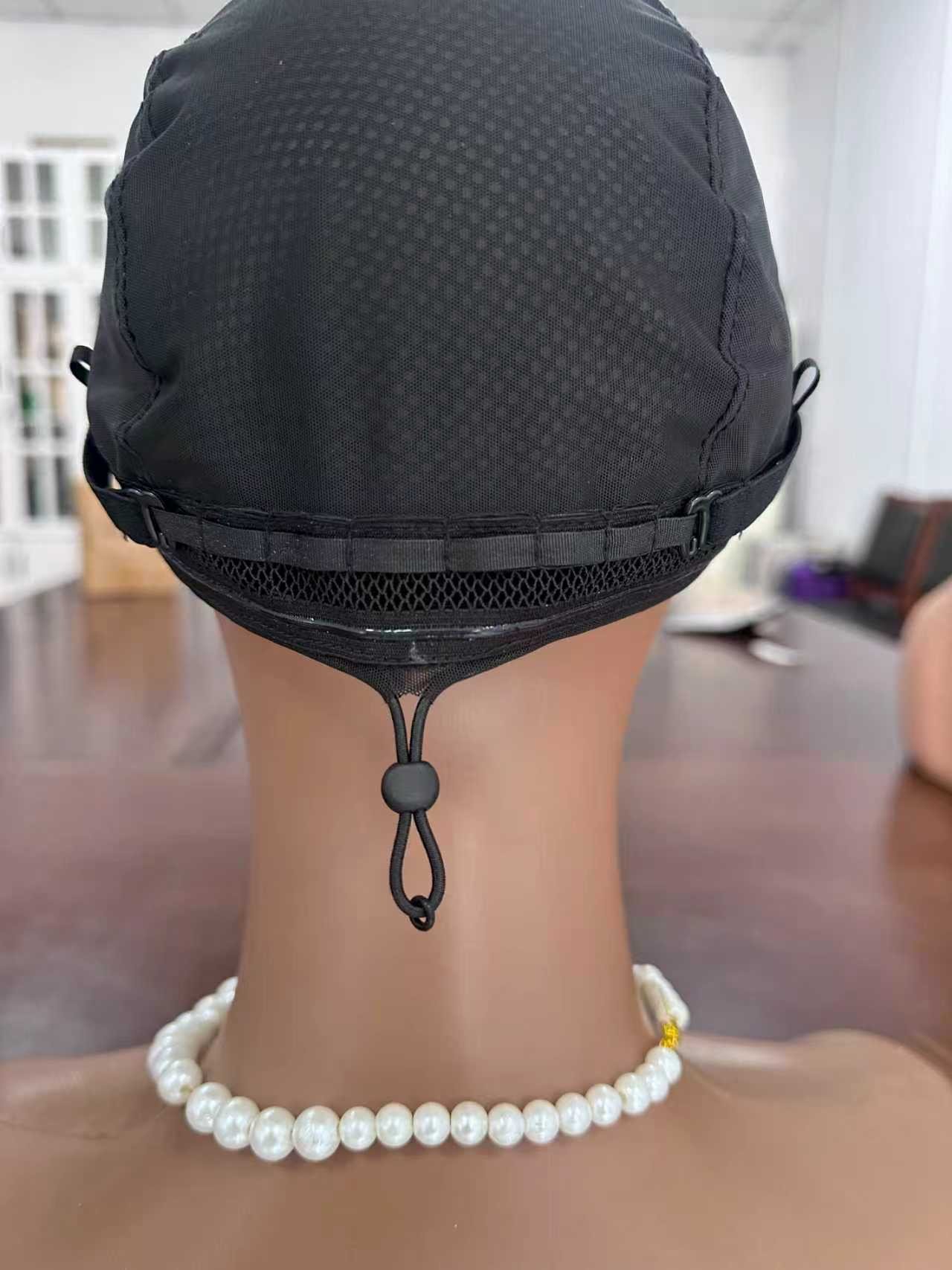
Two caps with identical stated circumferences can fit differently because the panels, stretch material, crown depth, elastic position, ear tabs, nape and lace shape differ. One may offer firmer resistance at the front while another concentrates tension near the band. A low-profile pixie cap may not behave like a large-volume curly wig cap. The finished weight and center of mass can also affect how stable the unit feels when worn.
Ask the manufacturer for an inside-out cap photograph and a finished-garment measurement chart. Specify how the cap is measured at rest and, where applicable, how the elastic/adjustment system changes its fit. Do not turn a stretch measurement into a guaranteed fit range for every wearer without validation.
Glueless Does Not Mean One Standard Cap
The term “glueless” describes an intended wearing experience, not a fixed lace size or one universal assembly. A glueless cap may use an elastic band, adjustable straps, grip or other features. Some designs include combs or clips; those may not suit every wearer. Separate the lace area—such as 5×5 closure or a lace frontal—from cap measurements and attachment preferences.
For a wearer with a sensitive scalp or a need to avoid certain attachment points, collect those constraints without assuming that a particular material is medically suitable. Review the physical cap and seek appropriate professional advice where irritation or a medical condition is involved.
A Four-Step Salon Fitting Check
1. Measure and document. Record the head measurements and intended hair arrangement. Use the same tape locations for repeat visits.
2. Examine the cap. Note actual circumference, front-to-nape depth, lace dimensions, band placement, stretch panel and seam positions. Compare them with the recorded wearer profile.
3. Test the sample gently. Assess whether the front sits in the intended position, temples lie flat, nape feels secure, and pressure is distributed comfortably. The wearer should not have to compensate with excessive tension.
4. Record the result. Keep sample ID, cap version, wearer measurements (with appropriate consent and privacy protection), adjustments used and any changes requested. Do not use a mannequin fit as the only evidence for a real customer.
What a Private Label Buyer Should Request
When developing several cap sizes, request a chart that defines each intended size using actual dimensions, not just S/M/L labels. Define any allowable manufacturing variation with the supplier before bulk approval. If a small stock reference happens to be available, do not assume the same material, shade and cap construction are available in medium or large without confirmation.
Cap Fit Brief Template
- Target market and intended wearer group:
- Wig type, lace coverage and parting:
- Circumference / front-to-nape / ear-to-ear / front width:
- Under-cap hair arrangement:
- Cap material and desired stretch behavior:
- Elastic, adjustable straps, comb or clip preferences:
- Sensitive contact areas or attachment exclusions, if relevant:
- Test sample / fit review / accepted tolerance:
- Proposed quantity by size, length, color and texture:
Wig Cap Size FAQ
Is a 21-inch wig cap always a small size?
Not necessarily. Ask what “21 inches” measures, whether it is the intended head circumference or finished cap circumference, and which construction and stretch system it describes. Compare with the actual size chart.
Can an adjustable band fix a cap that is too large?
Sometimes adjustment improves the fit, but it cannot correct every mismatch in crown depth, front width or shape. Physical fitting is the better basis for approval.
Are all glueless wigs the same size?
No. Cap measurements, materials, bands and design details differ by construction and supplier.
Should salons measure clients before ordering?
Yes, where fitting is part of the service. Use consistent measurement locations and document the requested cap and sample reference before promising fit.
Can VAYORA review custom cap dimensions?
Send the measurement brief and product specification. Feasibility, sample options, minimum quantities and timing are confirmed for the selected construction; custom sizing is not automatically available on every SKU.
Build a Fit-Ready Wholesale Wig Range
A reliable salon wig program connects the desired appearance with measured fit and an approved physical cap. Send VAYORA your construction, lace, head/cap measurements, sizes, desired adjustment features, sample reference and estimated SKU quantities for review.
Related: Wig cap construction guide · Glueless wigs · Samples & MOQ · Request a quote.