
Quick answer: A wig for a person experiencing medically related hair loss should be selected for individual fit, softness at skin-contact areas, fastening preferences, ventilation, weight and ease of handling. There is no single “medical wig cap” material that is comfortable or appropriate for everyone. A product’s appearance or the inclusion of PU, silicone or a hand-tied base is not evidence of a medical certification, treatment benefit or universal suitability.
This guide is written for nonprofits, salons, wig-fitting specialists and organizations purchasing hair replacement products for people with different comfort needs. It focuses on procurement and product evaluation, not medical advice. Clients with scalp wounds, significant irritation or treatment-related concerns should consult their healthcare team about suitable head coverings and skin care.
Start With the Wearer’s Actual Needs
Before selecting a construction, ask what the person will be comfortable sharing about the intended wearing routine—not why they have hair loss unless it is relevant and voluntarily provided. Useful practical details include: head measurements, approximate daily wearing duration, sensitivity to seams or combs, preferred level of coverage, climate, desired hairstyle, personal attachment preferences, and whether their head size or natural-hair volume is changing.
Ask whether the wig will be worn for a brief fitting, occasional social use or longer daily periods. No choice should be assumed on the basis of a person’s medical diagnosis alone. If possible, offer a fitting sample and the option to try a soft liner separately.
Compare Common Wig Cap Construction Options
| Component or construction | Potential consideration | What to check on the actual sample |
|---|---|---|
| Hand-tied or hybrid cap | Flexible movement and a different interior feel from machine tracks | Skin-contact knots, seam joins, weight and interior finish |
| Monofilament top | Sheer parting appearance with a particular base structure | Edge transition, tactile feel and ease of care |
| Soft mesh or fabric panel | Stretch, breathability and contact feel vary by fabric | Seams, stretch recovery and comfort during fitting |
| PU or silicone area | May provide grip or a defined edge/attachment zone | Placement, texture, cleaning needs and any reaction or discomfort |
| Adjustable elastic | Can improve some fits when applied without excessive tension | Pressure, stability, size range and fastening hardware |
| Removable liner | May create a softer contact surface and absorb moisture | Fit under the wig, warmth, laundering and wearer preference |
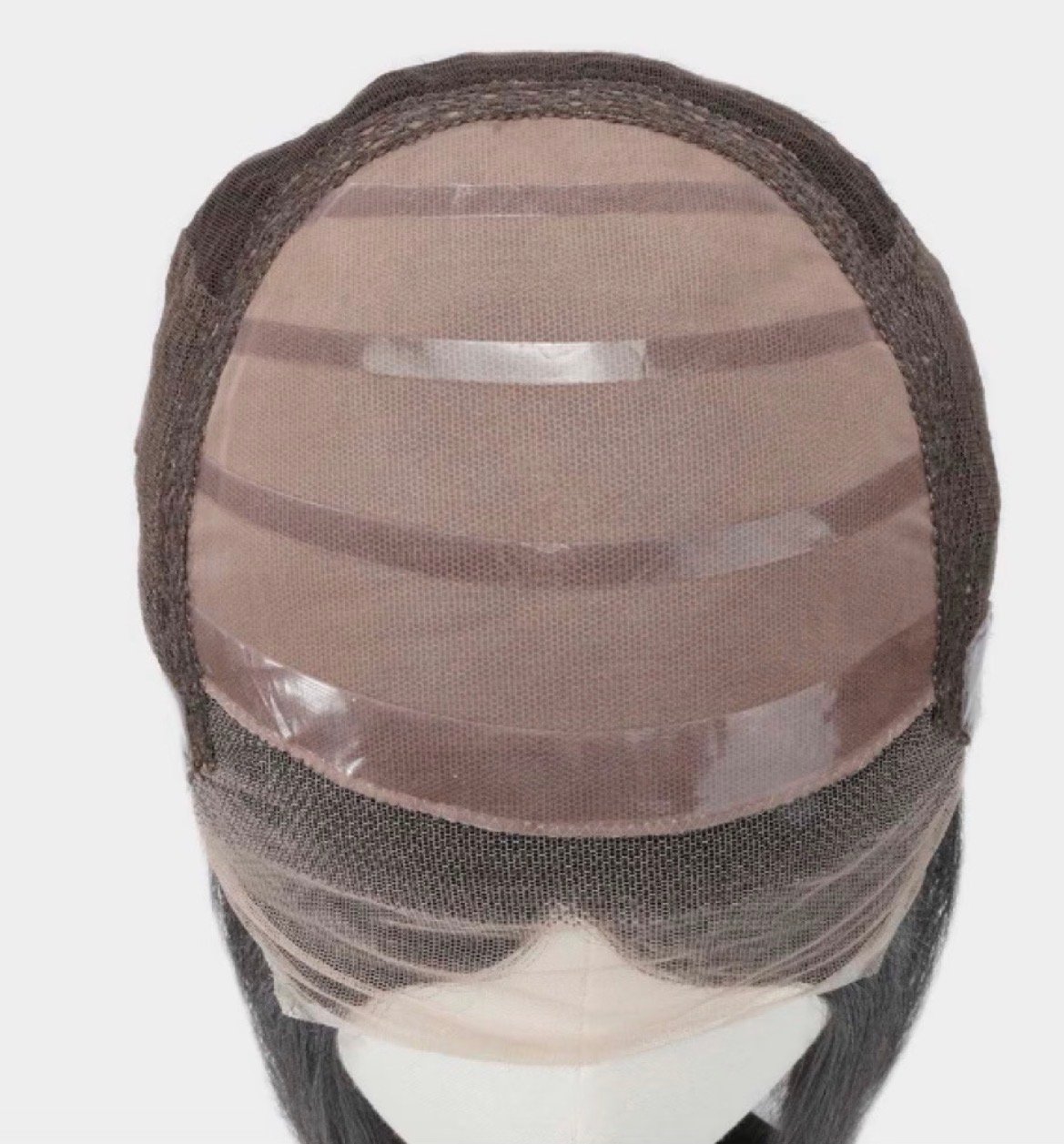
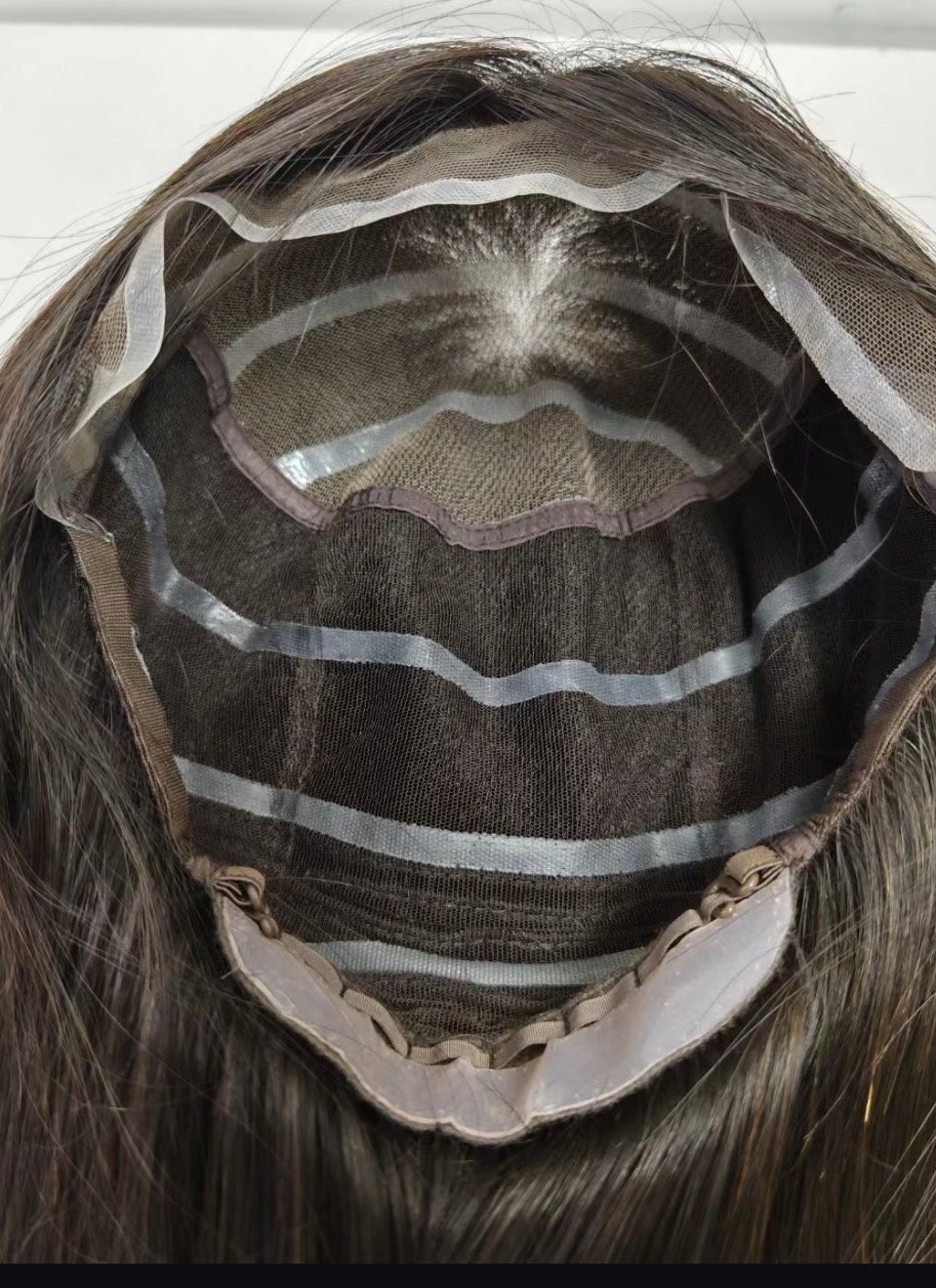
These are options to evaluate, not medical endorsements. A PU perimeter, for example, does not make the entire interior a soft PU-lined construction. The exact surface area, contact material and attachment design must be documented. Likewise, some users dislike grips, clips, combs or adhesive; the right choice should be confirmed through fitting rather than assumed.
Sizing and Fit Matter More Than a Marketing Label
Take circumference, front-to-nape and ear-to-ear measurements. Confirm the proposed cap’s finished measurements, stretch and adjusters, then assess the fit on the intended wearer or a relevant fitting model. Observe whether the cap pinches around the temples, creates pressure at the nape, scratches at seams or shifts during ordinary movement.
A listed “small / 21 inch” inventory cap is a defined size reference, not proof of suitability for every patient or wearer. If the customer needs medium or large sizes, a custom configuration may be reviewed; do not present it as stocked until inventory or manufacturing feasibility is confirmed.
What to Inspect in a Physical Sample
- Inside-cap photographs: Show all fabric panels, PU/silicone zones, lace joins, stitches, combs and clips clearly.
- Contact feel: Check for rough edges, raised seams, hard components or exposed fastening that may contact the scalp.
- Fit and weight: Record measured dimensions and finished unit weight, including any removable components.
- Heat and ventilation: Discuss the intended climate, wearing duration and the user’s preference; do not claim a fabric is inherently “breathable” without evidence.
- Cleaning and hygiene: Verify recommended washing, drying and liner-cleaning instructions for the specific construction.
- Visual design: Assess front appearance, parting, hairline and color if those are important to the user’s preference.
- Wearer feedback: Record pressure, slipping and comfort after a consent-based trial, including any reason a design was rejected.
A sample review is not a clinical trial and does not establish medical safety for a broad patient group.
Procurement Checklist for a Nonprofit or Medical Wig Program
For each proposed SKU, ask the supplier to record: construction drawing or inside-cap photos; exact materials and location of skin-contact components; cap measurement range; adjustment mechanism; hair type and processing claims; color and length; finished weight; cleaning guide; sample/revision ID; packaging; MOQ, stock position and lead time when verified; and the procedure for handling fit or quality complaints.
For an organization distributing products to different people, sample more than one representative cap size if appropriate. Consider staff training on fitting and adjustment. The program should have a clear consent and privacy approach: keep health information out of routine product records unless genuinely necessary and properly protected.
Stock Units vs Custom Sizes
An available stock wig may help where a common construction and size meets the wearer’s fit needs. A custom wig can address a different fit, lace, material or style specification, but usually introduces extra design and approval work. Compare the proposed sample, final product specification and schedule before promising a delivery date.
A buyer should not assume that a custom item is automatically more comfortable; a carefully selected standard sample may work well, while a poor custom fit can still require revision. Packaging and care guidance should make it clear whether a product includes accessories such as a liner or adjustable grip band.
Responsible Claims and Customer Communication
Prefer measurable descriptions such as “soft interior fabric specified,” “adjustable band,” “PU perimeter section,” or “cap circumference measured at the finished product.” Avoid claims such as “safe for all chemotherapy patients,” “medical grade,” “hypoallergenic,” “FDA-approved,” or “prevents scalp irritation” unless appropriate substantiation, applicable legal review and product-specific evidence are available.
For independent consumer guidance on sizing and comfort, the American Cancer Society’s wig selection guide discusses measuring, adjustable fit and soft liners. Its general advice does not certify any manufacturer’s product.
Frequently Asked Questions
Is PU lining automatically better for sensitive scalps?
No. Comfort depends on the location and composition of the material, seams, temperature, pressure, cleaning and individual preference. Evaluate the actual sample rather than relying on the material name.
Are wig combs essential for a medical hair replacement wig?
No. Some wearers prefer alternatives to combs or clips. Security options should be considered in a professional fitting and according to the person’s comfort and hair condition.
Is a small wig cap suitable for everyone with hair loss?
No. Measure the individual and assess the finished cap. A single stock cap circumference cannot cover all head sizes or shapes.
Can a buyer request a custom cap with fewer hard contact points?
Potentially. Share the required changes, reference photos and measured size. Feasibility, sampling, commercial terms and final performance need confirmation for the individual project.
Do you provide medical certification for a particular cap?
Any certificate or regulatory claim must be verified for the exact product and market. Do not assume that the term “medical wig” conveys an independent certification or therapeutic function.
Discuss a Medical Hair Replacement Supply Program
VAYORA can review product requirements for organizations seeking human hair wigs with particular comfort and fitting features through its manufacturing partnerships. Send intended sizes, cap and liner preferences, visual references, initial quantity range, packaging and destination. We will discuss actual feasible options and a suitable sample route; no universal medical suitability or fixed inventory is implied.
Related: Cap construction · Samples & MOQ · Manufacturing evidence · Request a quote.