
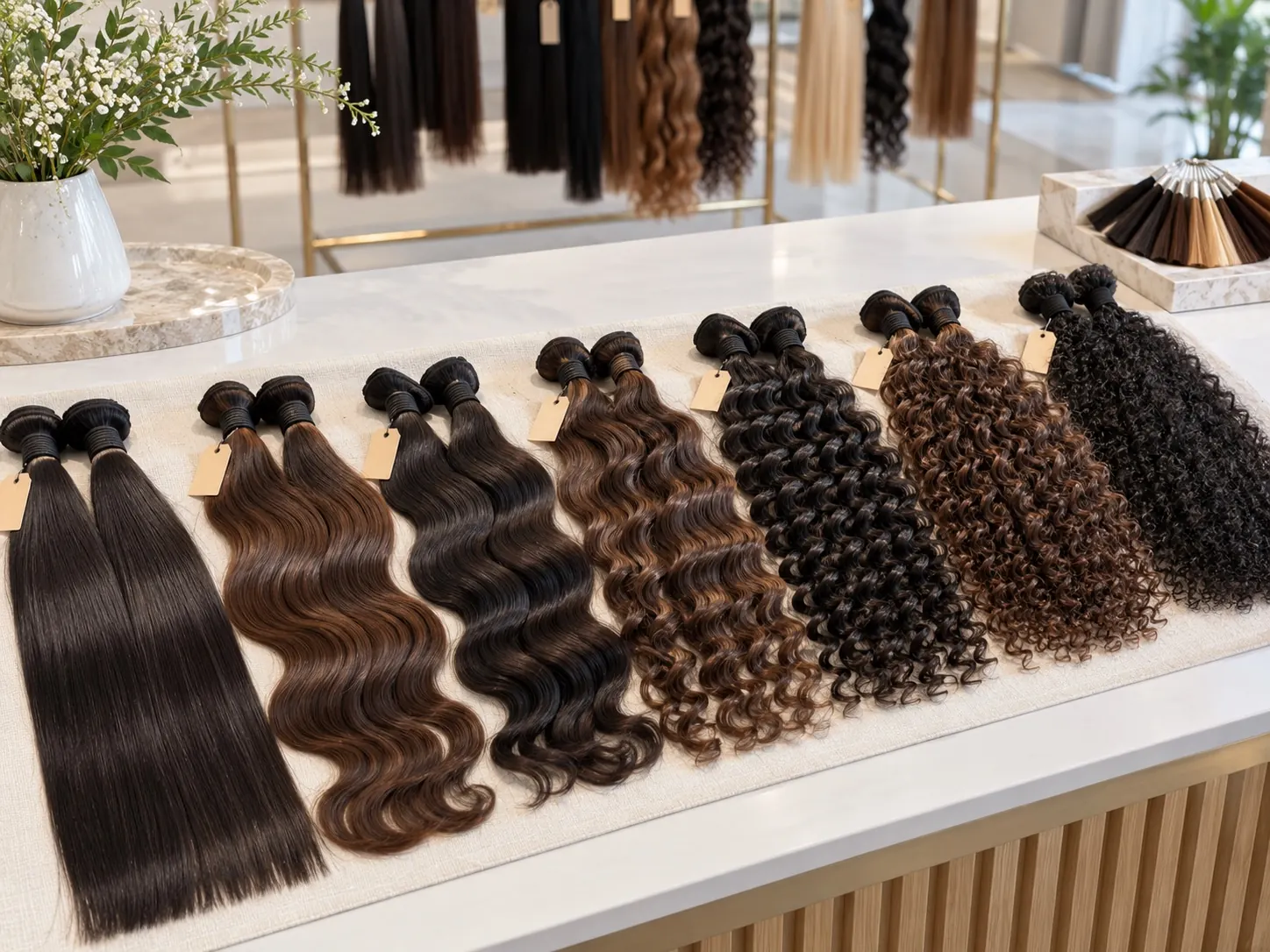
Why Texture Names Need a Physical Reference
Texture names are useful for product communication, but they are not universal technical standards. One supplier's Body Wave or Loose Deep may look different from another supplier's interpretation.
For wholesale programs, texture should therefore be controlled with an approved physical sample, reference photos and written notes on curl size, wave depth, root pattern and finish.
Common Human Hair Texture Families
Straight
Straight hair should be checked for natural movement, end condition, density distribution and whether excessive finishing is being used to create temporary smoothness.
Body Wave
Body Wave is usually a soft, large S-pattern. Buyers should confirm whether the pattern is intended to remain visible after washing or is mainly a styled finish.
Loose Wave / Loose Deep
Loose wave and loose-deep patterns require clear sample references because names overlap across suppliers. Curl spacing, wave depth and root-to-end consistency are key.
Deep Wave
Deep wave has a more defined repeating pattern. Buyers should inspect pattern consistency after washing and drying, especially through the ends.
Curly / Kinky Curly
Tighter curls create more visual shrinkage and can show variation more clearly. Buyers should inspect pattern recovery, tangling, dryness and density through the ends.
How to Approve a Texture
- Define the target texture with reference images and physical samples.
- Confirm whether the target is steam-set, naturally textured or styled.
- Wash the sample using a consistent method.
- Air dry without reshaping one section to observe pattern recovery.
- Check root, mid-length and end consistency.
- Record the approved pattern as the production reference.
Texture, Length and Color Interact
A texture can look different when the length changes. Curly hair also appears shorter because of shrinkage. Light colors may behave differently from dark colors after chemical processing, so representative samples should include the riskier combinations in the assortment.
Discuss Your Project
Send Vayora your target texture, length range, colors and reference samples. We can help translate visual texture expectations into a sampling and approval standard.
Frequently Asked Questions
Is texture naming standardized across the industry?
No. Naming is not fully standardized, so physical approval is more reliable.
Should curly hair length be measured stretched?
The measuring method should be agreed in advance and used consistently for samples and bulk inspection.
Can two colors have slightly different curl behavior?
Yes. Processing history can affect how a texture behaves after washing.
Should texture be approved before bulk production?
Yes. Keep a final approved sample as the reference.
Translate the selected curl or wave reference into a complete wig construction and sample brief. Review wave and curly wig construction options when preparing the next project decision.