
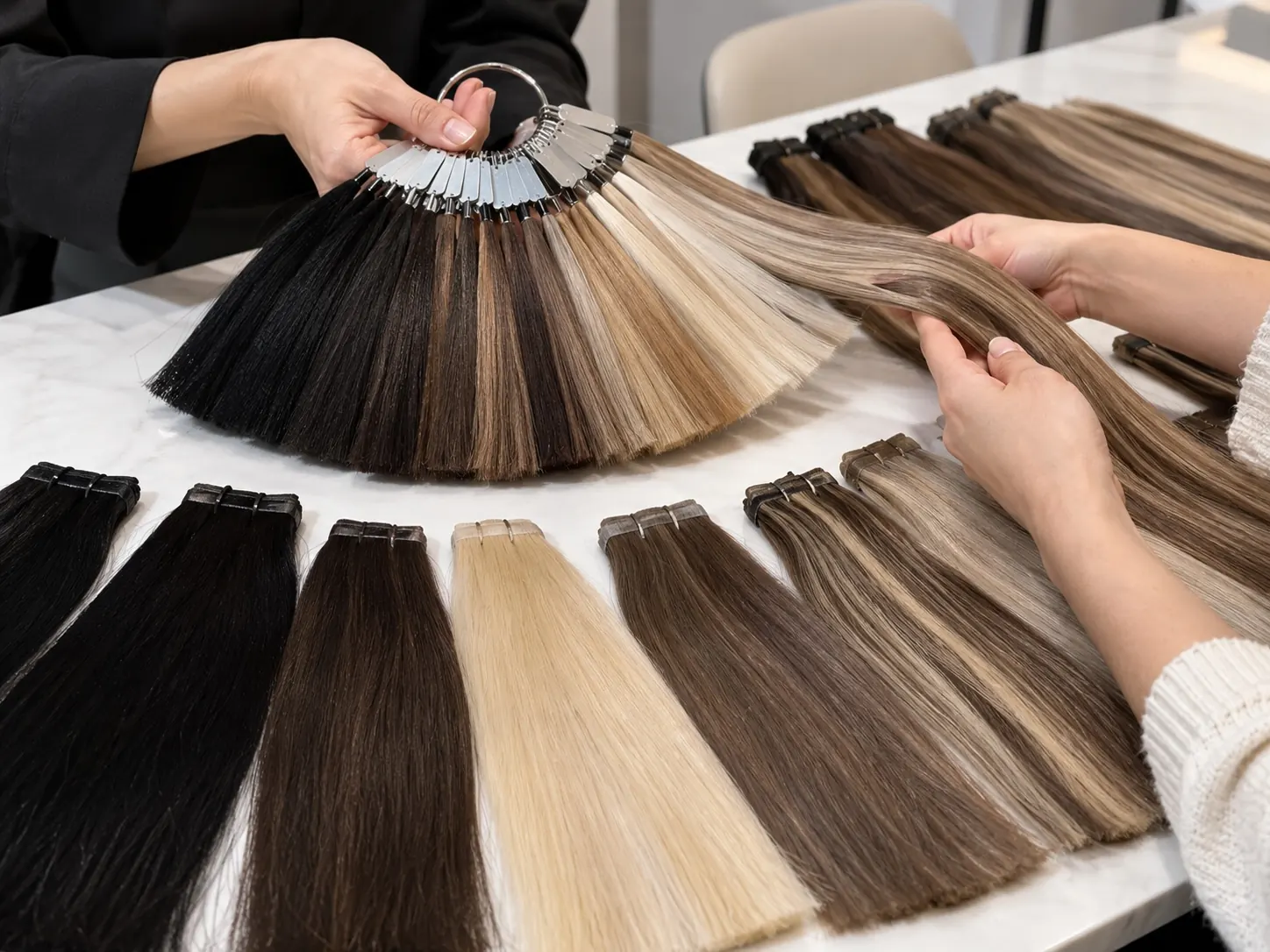
Why Blonde Hair Is a Higher-Risk Sourcing Category
Producing very light human-hair shades requires significant processing. As the hair is lifted toward #613, #60 or other pale blonde targets, the risk of dryness, reduced elasticity, weak ends and breakage increases.
For wholesale buyers, a blonde sample should never be approved by color alone. The hair condition after washing is equally important.
What to Inspect on #613 and #60 Hair
- Tone: warm, neutral, cool or custom target.
- Evenness from roots to ends.
- Elasticity when wet.
- Dryness after washing.
- Breakage during combing.
- End condition.
- Tangling wet and dry.
- Shedding versus fiber breakage.
Raw Hair Selection Matters Before Bleaching
The ability to reach a pale blonde without excessive damage begins with raw-hair selection. Hair that is already weak, highly mixed or previously processed has less tolerance for aggressive lifting.
A stable blonde program therefore requires controlled incoming hair selection and defined processing standards.
Color and Quality Must Be Approved Together
A lighter result is not automatically a better result. Buyers should approve a balanced outcome in which the target tone is commercially acceptable while the hair retains sufficient strength, softness and manageability.
Recommended Sample Test
- Record the shade under neutral lighting.
- Wash and condition using the planned aftercare method.
- Comb gently while wet and observe breakage.
- Air dry part of the sample.
- Heat style another section if heat use is expected.
- Inspect ends, elasticity, tangling and shedding.
- Compare with the approved reference after several wash cycles.
Repeat-Order Control
Blonde orders should retain an approved shade and quality reference. Each production batch should be checked against the agreed target before shipment.
Set realistic color tolerances and use sample approval rather than relying only on generic #613 or #60 naming.
Blonde Processing Checks for Extension Systems
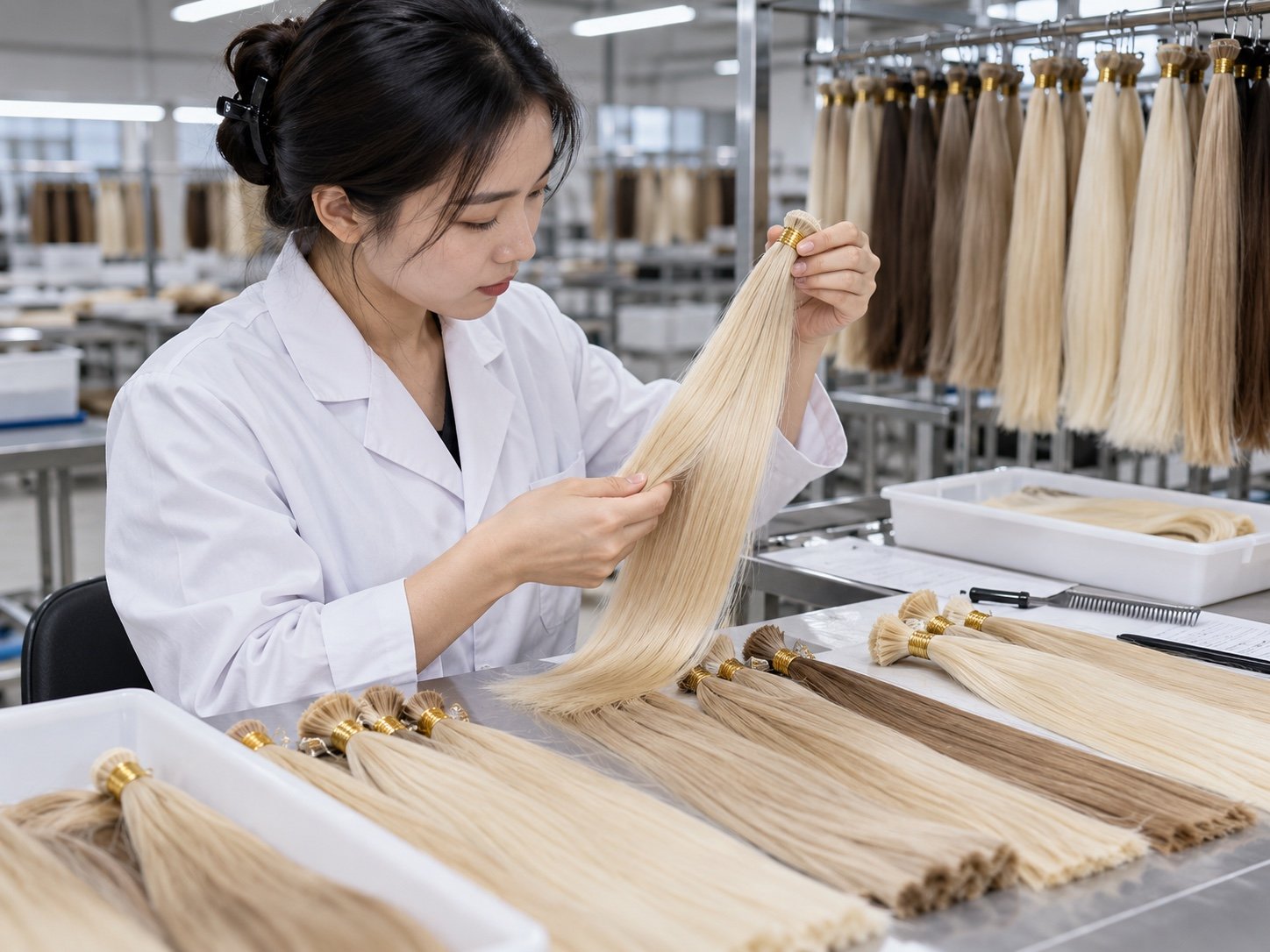
For blonde tape-in, weft and keratin-tip products, approve the shade and hair condition together. Compare tone uniformity, end strength, wet-comb breakage, dryness and tangling after the agreed wash and dry method. Record any fiber breakage separately from hair shedding out of the attachment.
Check the Attachment After Color Processing
Examine tape bases, weft edges and keratin bonds on the finished blonde sample rather than assuming the same construction behavior as a dark shade. Confirm hair anchoring, tab cleanliness or bond shape as applicable.
Retain a Blonde Master Reference
Keep an approved physical swatch and final construction sample for repeat orders, along with neutral-light photos and the agreed test observations. Any tone change is subject to final specification and sampling.
Discuss Your Sourcing Project
Send Vayora your product brief, target colors, lengths, construction and reference samples. We can review the requirements and prepare the next sampling or quotation step.
Frequently Asked Questions
Is #613 always the same shade?
No. Warmth and depth vary between suppliers and batches.
Why is very light blonde hair more fragile?
The lifting process can weaken the hair structure if processing is too aggressive or the raw hair is unsuitable.
Should #60 be tested differently from #613?
The evaluation points are similar, but very pale or cooler targets can require additional processing.
Can a blonde sample look good before washing but poor afterward?
Yes. Finishing products can temporarily improve feel, so repeated wash testing is important.
For a blonde wig brief, identify the construction and shade reference before comparing finished products. Review blonde wig construction and product options when preparing the next project decision.