
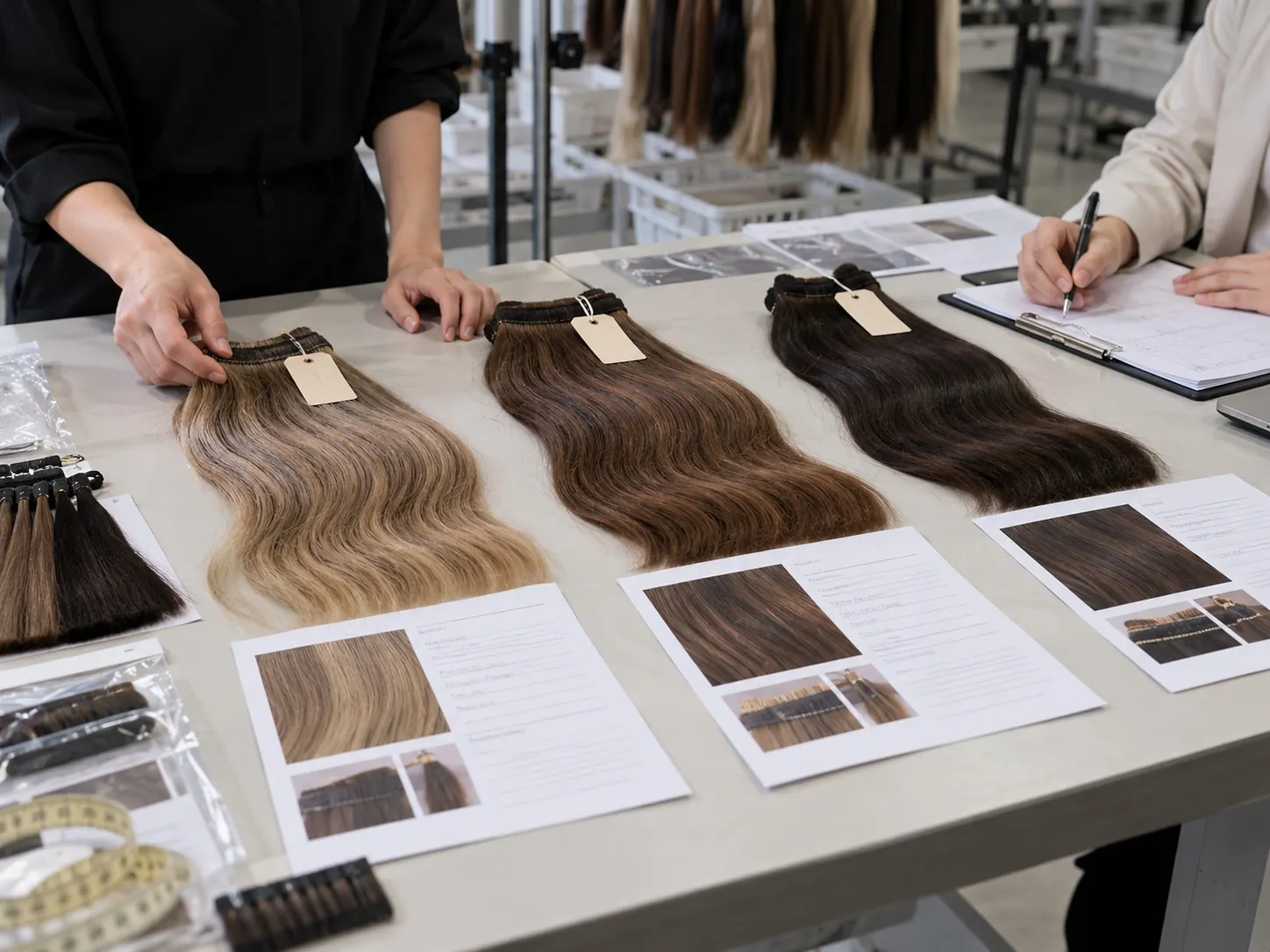
Why Extension QC Must Be Method-Specific
Hair extensions use different attachment systems, so one generic inspection checklist is not enough. Tape-in can fail because of adhesive, weft because of edge shedding and keratin tips because of inconsistent bonds.
A strong QC system separates universal hair checks from construction-specific checks.
Universal Hair Quality Checks
- Color against approved reference.
- Length using the agreed method.
- Weight per pack, piece or weft.
- Texture consistency.
- Hair direction.
- Shedding.
- Tangling after washing.
- Dryness, elasticity and end condition.
- Odor or abnormal residue.
- Packaging identification.
Tape-In QC
- Tape alignment and clean edges.
- Base thickness and flatness.
- Hair distribution across each tab.
- Adhesive tack and removal behavior.
- Shedding around the attachment.
- Piece count and pack weight.
Genius / Machine Weft QC
- Weft thickness and consistency.
- Stitching or edge construction.
- Cut test where applicable.
- Shedding before and after cutting.
- Return-hair control.
- Width and weight accuracy.
Keratin / I-Tip / U-Tip QC
- Bond size and shape.
- Hair amount per bond.
- Keratin consistency.
- Clean bond edges.
- Loose hairs around the bond.
- Piece count and color consistency.
Pre-Shipment Inspection Workflow
- Confirm the approved specification and reference sample.
- Select units according to the agreed inspection plan.
- Check packaging, shade and SKU identity.
- Measure weight and length.
- Inspect hair condition and color.
- Run attachment-specific tests.
- Record defects with photos and counts.
- Approve, rework or hold according to the agreed standard.
Why the Approved Sample Matters
QC should not be based on memory or general expectations. The most reliable reference is the written specification together with the approved physical sample.
VAYORA · Wholesale Buyer Control
Final inspection is evidence for a release decision, not the whole decision. This extension-specific release checklist connects the approved PO, product specification, sample, packing approval and inspection record so open issues are resolved before shipment.
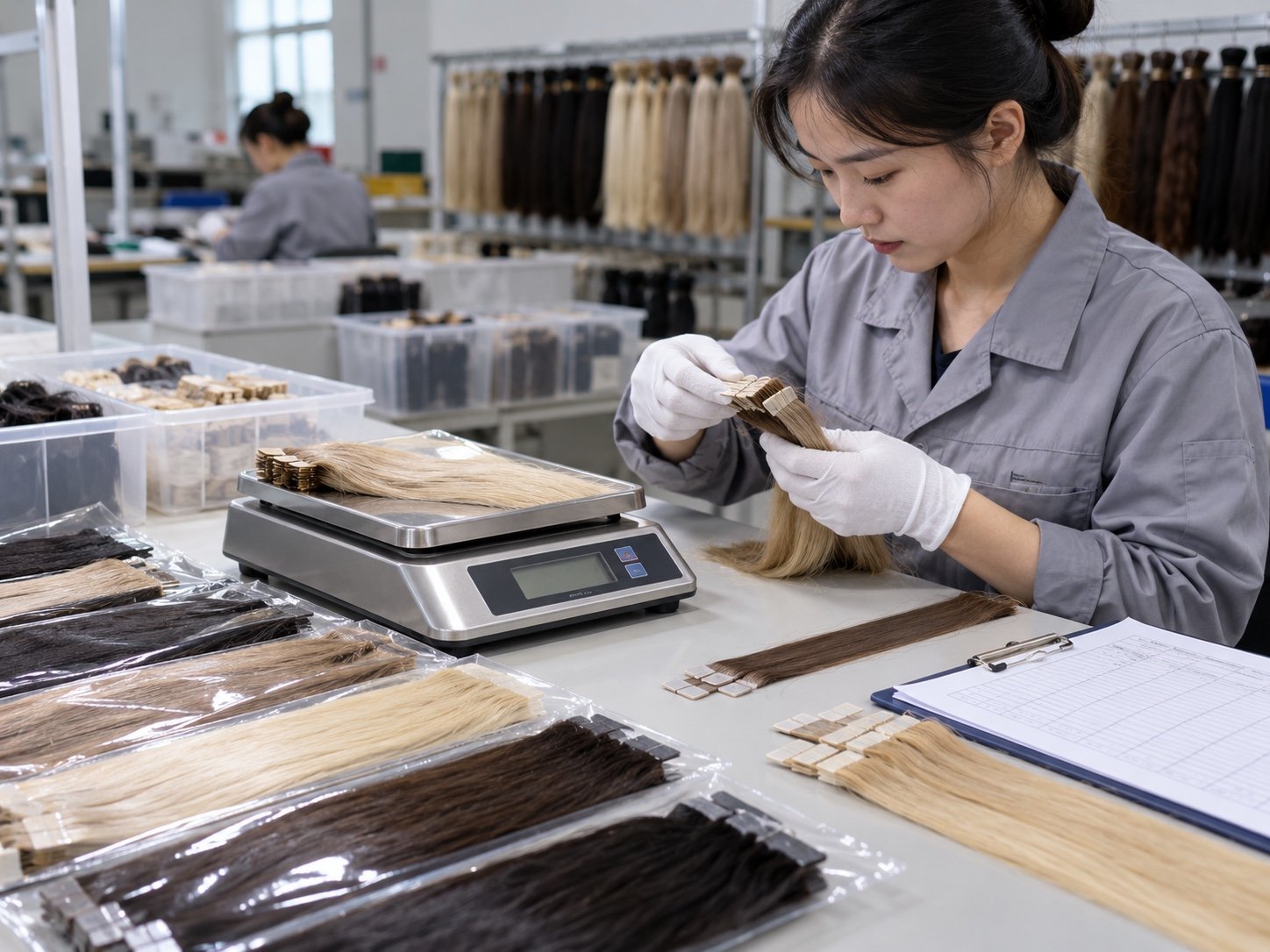
Hair Extension Pre-Shipment Inspection & Release Checklist
Confirm the current approved standard before checking a finished lot. Identify the PO, SKU matrix, golden sample, shade / texture masters, artwork and inspection method. A superseded sample or prior-order photo cannot authorize a changed requirement.
| Release gate | Evidence to review | Hold or clarify when |
|---|---|---|
| Product | System, construction, length, mass / count, shade, texture and visible condition | A result differs from the agreed criteria or the reference version is unclear |
| SKU | Product code, length / shade, pack structure, label and barcode | Physical product, label and matrix do not agree |
| Inspection | Covered lots / cartons, results, defect records and commissioned tests | Coverage is incomplete, a test is pending or disposition is unresolved |
| Packing | Inner contents, carton quantities / markings and destination details | Pack identity, count or protection has not been reconciled |
| Release authority | Named reviewer, approved deviations, status and date | No authorized decision exists for the affected lot |
Review Measurements, Batch Controls and Packing Together
Use the measurement record and bulk sampling plan to understand what was actually checked. Review attachment dimensions, shade batch comparisons and texture references against the same SKU revision.
Verify the finished packaging and label checks as well as the hair. Inspecting a loose sample does not confirm that a sealed pack contains the right count, shade or insert.
Resolve Deviations Before Shipment
Identify the difference → document the affected SKU / lot / carton → agree disposition → complete correction or obtain authorized acceptance → confirm the release status. A minor-looking difference should still follow the agreed defect definition and approval route.
Use the existing deviation approval workflow as a shared record framework. Do not invent a tolerance or acceptance level after seeing the result. Hold unresolved issues rather than labeling the lot released.
Keep an Order-Level Release Record
| Record field | Required detail |
|---|---|
| Order / SKU / lot | PO, product code, lot and carton references with specification revision |
| Inspection result | Report / photo references, sampled coverage and commissioned test status |
| Open issue | Affected units, finding, owner and pending action |
| Deviation decision | Written acceptance or correction / reinspection reference |
| Release status / date | Released, partial release or held; authorized reviewer and scope |
Retain the final record for receiving checks and repeat-order review. If part of an order is released, identify exactly which lots or cartons the decision covers.
Procurement Questions
Is final inspection sufficient by itself?
It must connect to the approved standard, packing review, commissioned test scope and authorized release decision.
Which documents should be reviewed?
Current PO, SKU specification, approved sample and masters, artwork / packing approval, inspection evidence and deviation decisions.
What if a minor deviation is found?
Document it and apply the agreed classification and disposition. Obtain authorized acceptance or correction before releasing the affected lot.
Should packaging be part of the review?
Yes. Product identity, labels, contents, cartons and destination information affect successful receiving.
Can buyers request inspection photos?
Yes, agree the views and SKU / lot traceability. Photos support the record but do not replace unperformed tests or complete coverage.
Apply the Standard to Your Extension Program
Build these controls around your human hair extension program, the selected Tape-In, I-Tip / U-Tip / Flat-Tip or Weft construction. Coordinate the brief with private label collection planning and OEM / ODM manufacturing.
For project approval, consult VAYORA quality controls and sample and MOQ review. Commercial quantities, timing, test scope and acceptance limits are confirmed for your specification.
Discuss Your Order Inspection Requirements
Send your extension systems, SKU matrix, approved references and the control questions your team needs to resolve. We will review the brief before confirming sampling, inspection and quotation requirements.
Request a QuoteDiscuss Your Sourcing Project
Send Vayora your product brief, target colors, lengths, construction and reference samples. We can review the requirements and prepare the next sampling or quotation step.
Request a QuoteFrequently Asked Questions
Is the same QC checklist suitable for all hair extensions?
No. Hair quality checks can be shared, but attachment systems need different checks.
Should QC be done before or after packaging?
Critical construction checks should occur during and after production, while final inspection should also confirm labels and packaging.
How important is weight checking?
Very important because inconsistent weight changes perceived value and installation planning.
What should happen if bulk production differs from the approved sample?
The difference should be documented and reviewed before shipment.
Connect your inspection criteria with the sample and bulk manufacturing standard. Review the OEM and ODM approval process →
Related Guides
Advanced Weft Sample Inspection Checklist
Use this blank verification framework when reviewing a Feather, Butterfly, PU Hole or Pre-Beaded sample. Complete it with measured results, actual photographs and project-specific acceptance criteria. It records what to inspect; it does not represent a completed factory test or guarantee.
| Inspection field | Sample record to complete | Approval / pending action |
|---|---|---|
| Identity and construction | SKU/sample ID: ___; revision: ___; lot: ___; continuous track / linked units / strands: ___. | Verify the stated product name against front/reverse/edge views. |
| Base and edge | Material as confirmed: ___; height/thickness: ___; width/section count: ___; measurement method: ___. | Compare with the retained reference and agreed dimensional limits. |
| PU holes, where present | Hole shape/size: ___; spacing: ___; count: ___; edge finish and photograph IDs: ___. | Review alignment, finishing and compatibility with the intended components. |
| Beads or attachment hardware | Pre-attached or supplied separately: ___; size/material/lining: ___; count/placement: ___. | Confirm hardware identity, fixing and professional installation/removal instructions. |
| Hair and finished pack | Length/condition: ___; net hair weight basis: ___; shade reference: ___; unit/section count: ___. | Keep hardware and packaging weight distinct. Check labels and the actual pack contents. |
| Handling and professional trial | Permitted cutting/end treatment: ___; method/tools: ___; observations/photo IDs: ___. | Define applicable checks and criteria before testing; log deviations and the agreed disposition. |
Sample-to-Bulk Evidence
Retain the approved physical construction with dated close-ups, a measurement reference, shade approval and the current specification. Keep sample results separate from later bulk-lot inspection records. Agree the sampling coverage and test conditions for the actual order, then record correction, deviation approval or hold before shipment release.
Document the Attachment Trial Separately
Dimension conformity does not establish wear duration, comfort, durability or removal performance. A qualified installer should evaluate the actual base and hardware using the intended professional method. Record the conditions and observations; approval applies to that construction and specification.
Advanced Weft Buyer Questions
Can this checklist be used as evidence that an advanced weft passed QC?
No. It is a record template. Approval requires identifiable samples or lots, actual measurements and observations, agreed criteria and a documented decision.
Should pre-beaded hardware weight count as net hair weight?
Define the weight basis in the specification. Record hair, hardware and packaging separately where applicable so the pack description and inspection result use the same basis.
Specify the Construction Before Requesting a Quote
Include the intended construction, sample or lot identity, target measurements, hardware, shade reference, pack configuration and the inspection questions to resolve. Available samples and inspection scope are confirmed for the project.
Request a QuoteWeft construction approval · Advanced attachment comparisons · Attachment dimension control · Measurement methods · Pack configuration · OEM approval records