
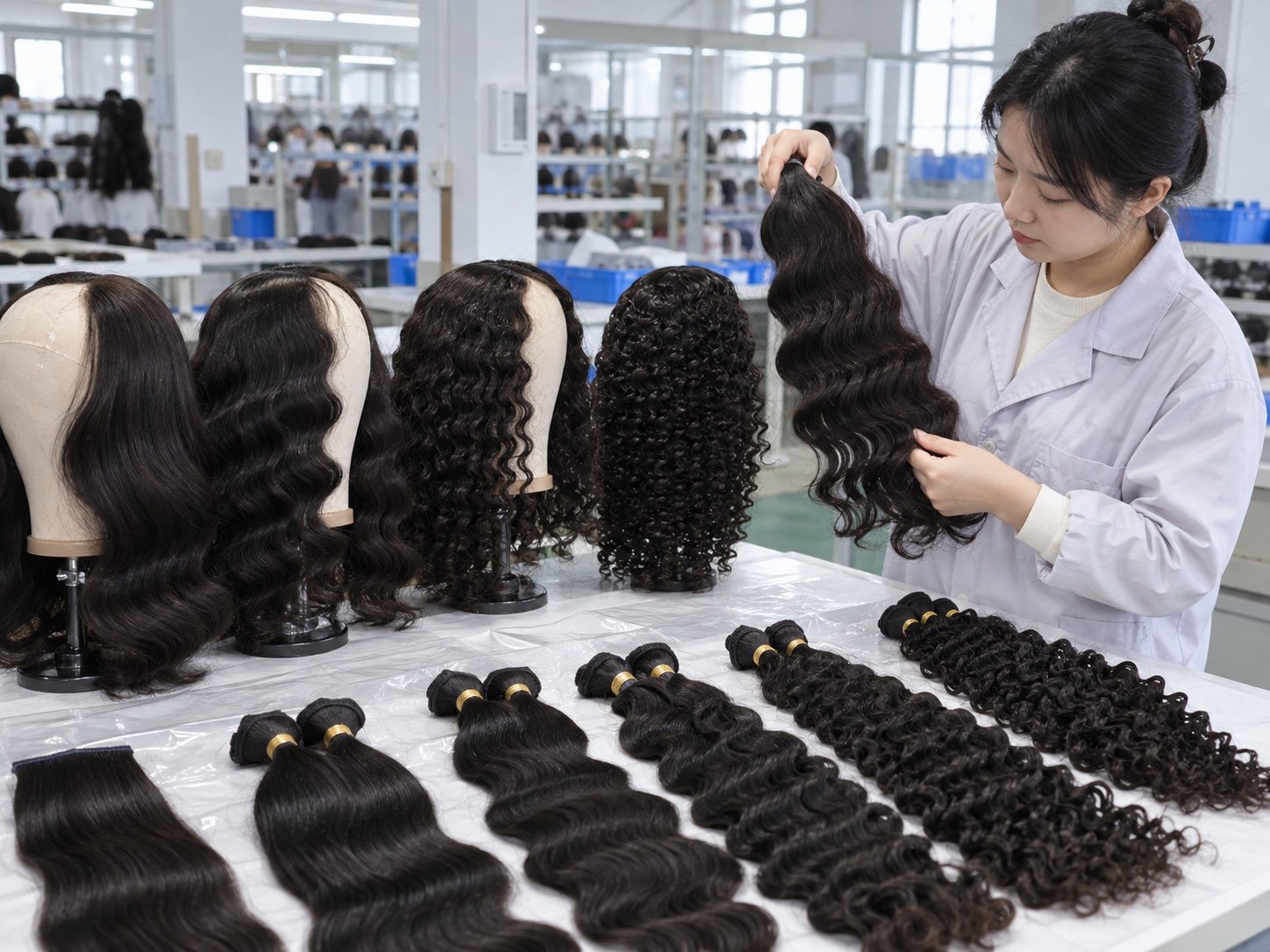
Texture Names Are Not Precise Specifications
Body wave, loose wave, deep wave and curly are commercial names, not exact technical standards. Physical references are stronger.
What to Compare
Wave or curl size; root-to-end pattern; uniformity; post-wash pattern; frizz and dryness; relationship between texture and end fullness.
Texture After Washing
Buyers should understand whether the packed appearance is expected to remain, reform naturally or require restyling after washing.
Batch Consistency
Compare bulk production with the approved texture reference under similar conditions.
Repeat-Order Control
Retain the approved texture reference and only replace it when an intentional product change is approved.
VAYORA · Wholesale Buyer Control
A texture name cannot approve a production lot. For extension buyers, the texture master must show the condition being compared, important lengths and the actual attachment format. This module extends the existing human-hair texture guide with a repeatable extension batch review.
Define the Extension Texture Master
Retain an identified physical reference with the approved pattern from roots to ends, distribution and end fullness. Record sample ID, system, hair length, shade / processing direction and condition. Body Wave, Deep Wave and Curly are useful collection names, but are not precise acceptance criteria by themselves.
A longer length can display a wave or curl differently. Approve commercially important lengths rather than judging the whole range from one short sample. Tape-In, Weft and Tip formats also distribute the hair differently, so each construction needs a relevant reference.
Use the Same Condition for Sample and Bulk Review
| Comparison stage | Record | Avoid |
|---|---|---|
| Freshly unpacked | Packing time / state, release from ties and agreed handling | Comparing a tightly packed sample with a brushed-out master |
| After washing if required | Approved wash protocol, products, handling and sample identity | Assuming an uncommissioned wash test was completed |
| Drying | Agreed drying method and whether styling is permitted | Comparing heat-styled hair with an unstyled reference |
| Visual review | Orientation, root / mid / end pattern, fullness and condition | Treating a texture name or one promotional photo as the standard |
| Batch evidence | Lot, SKU, sampled units, photos and reviewer | Mixing results from unrelated shades or constructions |
Agree Performance Criteria Before the Test
When post-wash texture matters, define the procedure and the expected review condition during sampling. Keep curl appearance, frizz, dryness and tangling observations separate. Do not publish curl-retention percentages, wash cycles or numerical texture tolerances without agreed methods and evidence.
Use reference → approved wash and dry protocol → comparable photos → side-by-side review → documented approval. Commission performance review separately from the basic bulk inspection plan.
Close Texture Differences Before Reordering
Identify whether the difference comes from packing, condition, length, hair distribution or an actual production change. Hold affected references for review, document disposition and carry the result into final release control.
A change in the approved texture is a revision, not an automatic replacement of the old master. Update the sample, specification and repeat-order reference set together. Coordinate color appearance with batch shade control.
Procurement Questions
Why can one wave look different at another length?
Length and distribution can change its visual fall. Retain relevant length-specific samples for approval.
Should texture be checked before or after washing?
Specify the required condition. If post-wash behavior matters, agree a procedure and criteria as well as packed appearance.
Can tape-in and weft share a texture reference?
They may share a direction, but approve the finished formats because attachment and distribution affect presentation.
How should repeat orders be compared?
Use the current retained master, same review condition and documented batch identity.
Can texture tolerances be written into a specification?
Yes, if the method and acceptable variation are reviewed and approved for that SKU. No universal numerical limits are assumed.
Apply the Standard to Your Extension Program
Build these controls around your human hair extension program, the selected Tape-In, I-Tip / U-Tip / Flat-Tip or Weft construction. Coordinate the brief with private label collection planning and OEM / ODM manufacturing.
For project approval, consult VAYORA quality controls and sample and MOQ review. Commercial quantities, timing, test scope and acceptance limits are confirmed for your specification.
Approve Your Extension Texture Standard
Send your extension systems, SKU matrix, approved references and the control questions your team needs to resolve. We will review the brief before confirming sampling, inspection and quotation requirements.
Discuss Your Sourcing Project
Send Vayora your product brief, sample references and quality requirements for review.
Frequently Asked Questions
Is deep wave standardized across suppliers?
No.
Should texture be checked after washing?
Yes when post-wash behavior matters.
What is the best repeat-order reference?
An approved physical sample plus photos and notes.
Carry the accepted texture reference and agreed evaluation conditions into the next order version. Review approved-reference and revision control when preparing the next project decision.