
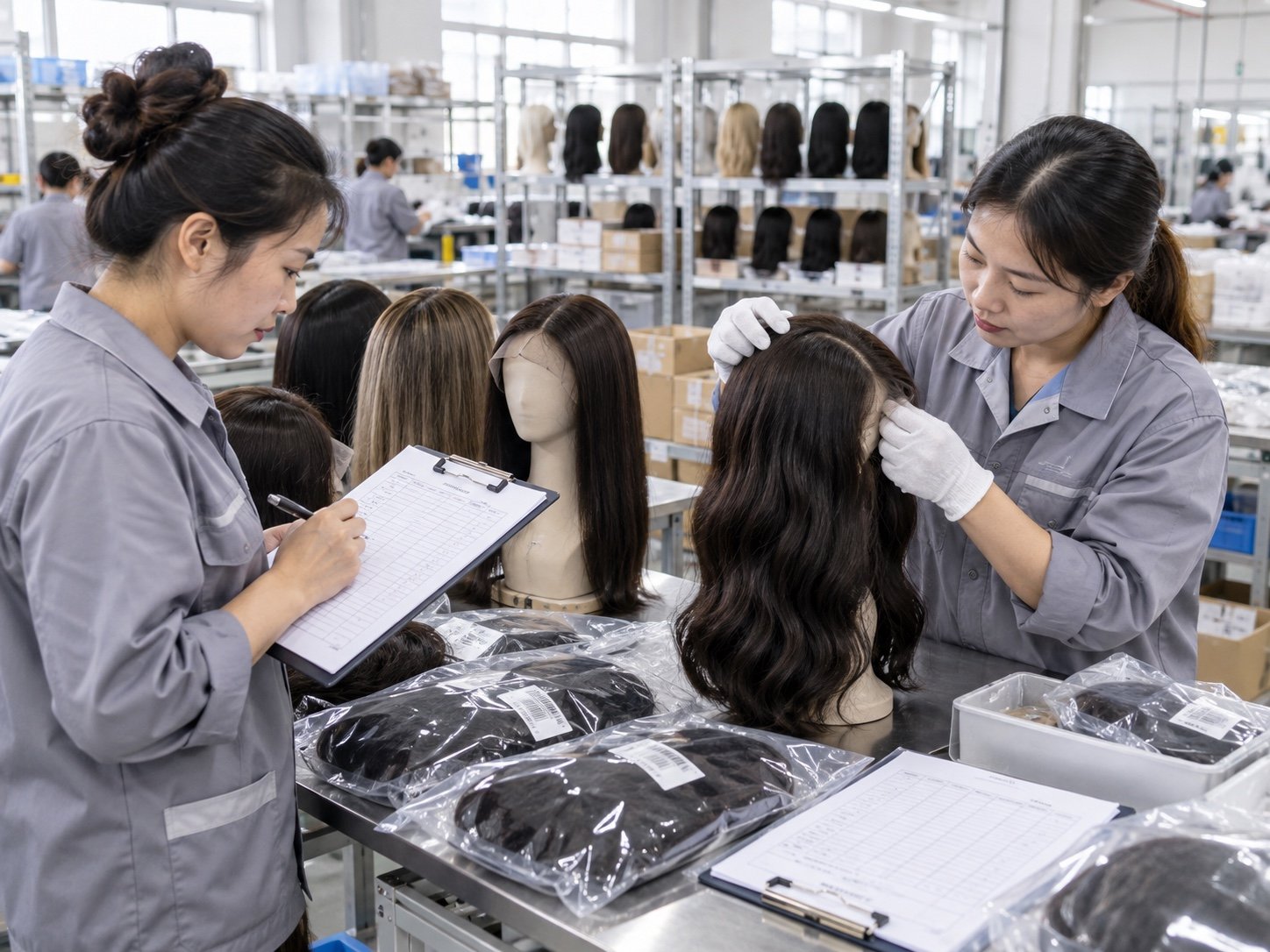
Why Repeat Orders Can Drift
Later orders can gradually change in color, density, texture, lace, packaging or hair feel when references are not controlled.
The Repeat-Order Control System
For the resource path across wigs, extensions, packaging, deviations and corrective action, see the Repeat Order & Specification Control Hub. Use this guide for product-consistency and extension comparison checks.
Current specification; golden sample; retained color/texture references; approved packaging artwork; SKU matrix; incoming material requirements; previous inspection records.
Review Changes Before Production
Confirm whether requested changes are intentional and formally approved.
Use Previous QC Data
Prior inspection and complaint data can identify SKUs that need extra control in the next order.
Managing Natural Material Variation
The goal is controlled commercial consistency, not an unrealistic promise of absolute identity.
Extension-Specific Repeat Order Reference Set
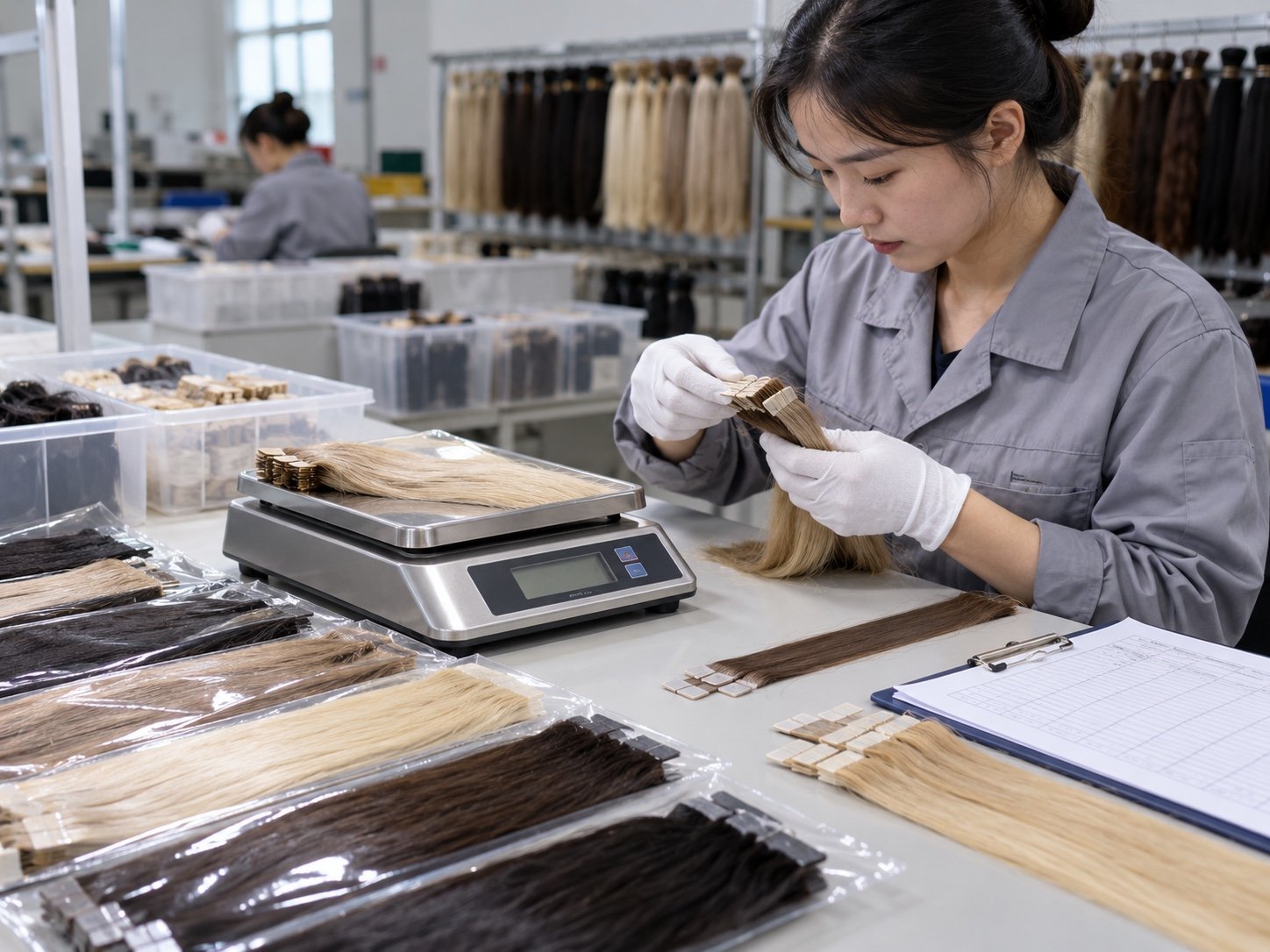
Hair condition is only one part of an extension repeat order. Keep a versioned color ring, approved hair swatch, actual attachment sample, pack weight and count method, construction photos, packaging artwork and the prior inspection record together under the same SKU revision.
Check Each System Separately
- Tape-in: compare tab dimensions, base finish, adhesive appearance and hair anchoring using the agreed sample and test method.
- Keratin tips: compare bond shape, dimensions, strand count and hair retention without treating an origin or grade label as a quality test.
- Wefts: compare seam profile, cut-edge stability, width, weight and end fullness.
- All formats: verify shade under consistent lighting, texture after the agreed wash, usable count, net weight and packaging revision.
Approve Changes Before Release
Log a proposed component substitution or changed color recipe as a new version; sample and approve the affected feature before treating it as equivalent to the prior order. Any tolerance, wear condition or commercial specification remains subject to final specification, sampling and project requirements.
See the color ring and matching guide, pack weight guide and extension inspection guide for the corresponding release checks.
VAYORA · Wholesale Buyer Control
“Same as last order” needs a named approved version. This extension change-control module helps brands and distributors distinguish an exact repeat from a commercial adjustment or product revision, and decide which changes require renewed sample approval.
Start With the Previous Approved Version
Retrieve the previous PO, current specification revision, approved attachment / hair sample, shade and texture masters, pack configuration, artwork and barcode mapping, prior release record and relevant complaint findings. Confirm that each reference belongs to the same SKU version.
A previous invoice description alone does not identify approved tape dimensions, bond geometry, hair distribution or packaging contents. Keep those references with the product-code and SKU matrix.
Classify the New Order Before Quotation
| Order type | Example decision | Approval route |
|---|---|---|
| Exact repeat | No intended product or packaging change; quantities and commercial terms reviewed | Confirm current reference set and planned QC coverage |
| Repeat with commercial changes | Quantity allocation, delivery split or carton instructions change | Record the change and check its product / packing impact |
| Product or packaging revision | New shade / length, changed weight, tape / tip / texture or artwork | Review feasibility, affected references and need for re-sampling |
Create a Version Comparison Table
| Field | Previous version | New requirement | Approval and sample decision |
|---|---|---|---|
| Construction / attachment | Record actual prior reference ID | Specify requested tape, tip or seam change | Identify reviewer and whether revised sample is required |
| Shade / texture | Current physical master and condition | New tone, placement or pattern requirement | Compare affected formats; approve updated master where needed |
| Weight / count / pack | Current mass basis, count and contents | Changed commercial configuration | Review pack structure and measured reference |
| Artwork / barcode / carton | Current file and applicability | New label, assignment or carton instruction | Approve mapping, contents and packing checks |
This is a record template, not a completed VAYORA approval. Fill the previous and proposed values, decision, approver, date and affected SKU before production.
Re-Sample Material Changes Without Assuming Every Change Requires It
A revised reference may be appropriate for attachment construction, processed color, texture, substantial weight configuration or other material characteristics. A delivery-address change may require a document review instead. Assess the impact and record the decision rather than applying a universal re-sampling rule.
When approved, update the sample and specification together, identify superseded versions and prevent silent substitution. Feed previous QC and complaint data into the next inspection plan.
Close the Revision Trail Through Release
Record proposed change → impact review → sample or document approval → version update → production instruction → verification → shipment release. Adding a shade means checking the new master, SKU, pack label and batch comparison; it does not automatically approve the whole collection again.
Use shade control and texture control to compare current batches with their relevant masters. Retain the final approval record for the next order.
Procurement Questions
Does every repeat order need a new sample?
No. Assess the change and risk. Retain prior references for an exact repeat and document when a new sample is required.
What should be referenced from the previous order?
The approved SKU version, PO, specification, physical sample, shade / texture masters, pack and artwork versions, and relevant QC evidence.
When should a specification revision change?
When an approved requirement changes. Identify affected fields and SKU applicability, even if a sales code is retained.
Can packaging change without the hair changing?
Yes, but artwork, barcode mapping, protection, pack contents and carton impact still require documented review.
How are new shades added?
Approve their physical references and format-specific appearance, then update SKU, label and batch-control records before production.
Apply the Standard to Your Extension Program
Build these controls around your human hair extension program, the selected Tape-In, I-Tip / U-Tip / Flat-Tip or Weft construction. Coordinate the brief with private label collection planning and OEM / ODM manufacturing.
For project approval, consult VAYORA quality controls and sample and MOQ review. Commercial quantities, timing, test scope and acceptance limits are confirmed for your specification.
Plan Your Next Extension Order
Send your extension systems, SKU matrix, approved references and the control questions your team needs to resolve. We will review the brief before confirming sampling, inspection and quotation requirements.
Discuss Your Sourcing Project
Send Vayora your product brief, sample references and quality requirements for review.
Frequently Asked Questions
Is 'same as previous order' enough?
No. Reference the approved SKU version, physical samples and specific component requirements so intentional and unintentional changes are distinguishable.
Why retain physical samples?
A retained hair and attachment sample lets buyers compare color, feel, construction and finish alongside documented measurements.
Should complaint history be reviewed before repeat orders?
Yes. A prior defect or salon complaint should inform the next sampling and inspection points before release.