
VAYORA · Wholesale Buyer Control
A nominal length or pack weight does not tell an inspector how to measure the product or when to hold a lot. This guide helps wholesale buyers write a measurement method, project-specific acceptable range and reference record before sample approval or bulk production.
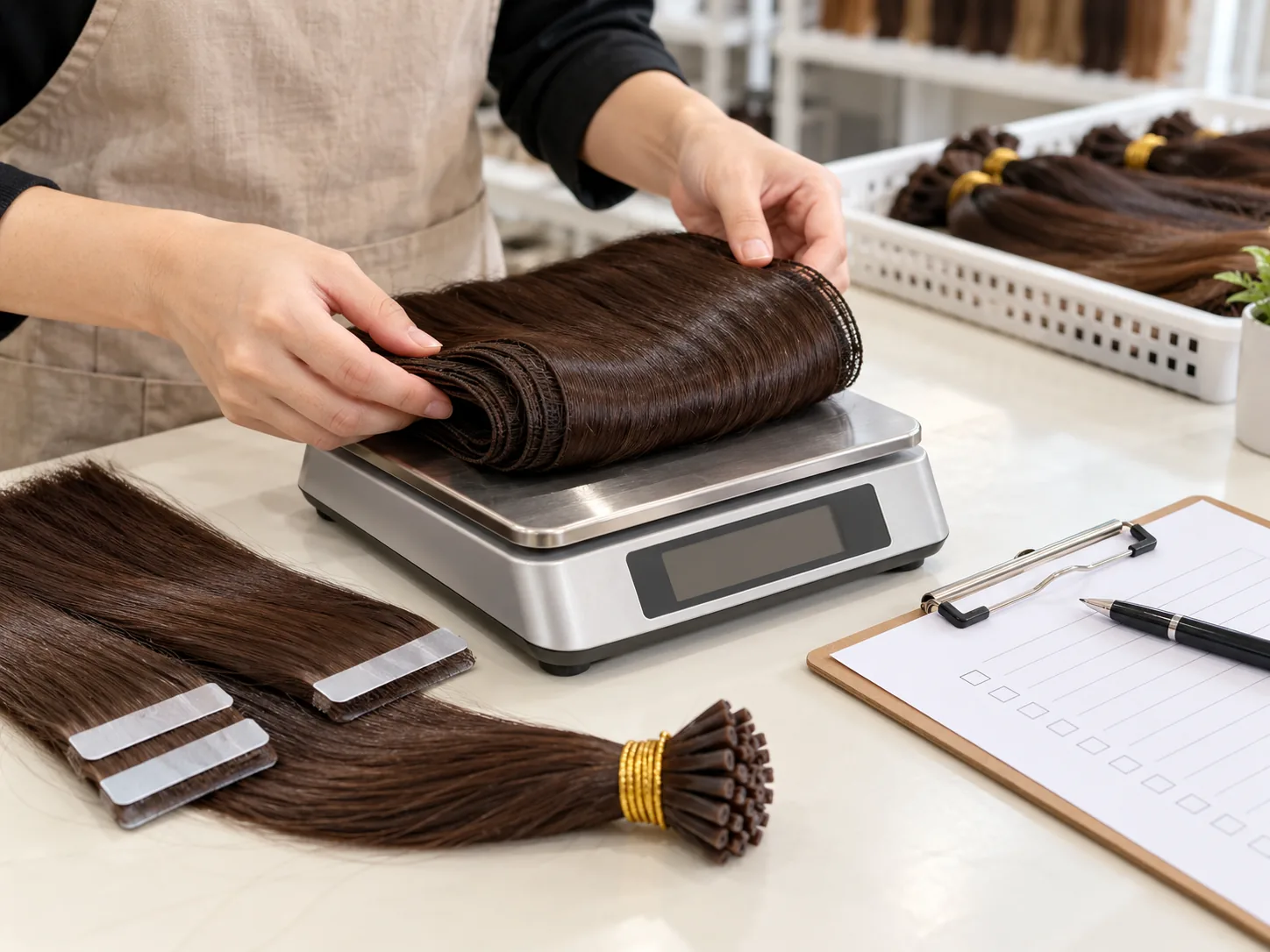
Separate the Target, Method and Accepted Range
The target describes the ordered product. The method defines the start point, product condition, instrument and counting rule. The accepted range records the variation the buyer and supplier approve for that SKU. A physical sample supports appearance and construction approval, while written values support repeatable measurements.
Do not infer a tolerance from an online product description. Agree it in the specification, together with how borderline readings and repeated outliers will be reviewed.
Measurements by Extension System
| System | What to measure | Method to agree |
|---|---|---|
| Tape-In | Piece and pack weight, individual tab count, tab width and height, adhesive area, hair length | Identify the tab boundaries and separate packaging mass; record whether count means individual tabs or paired sets. |
| I-Tip / U-Tip / Flat-Tip | Strand weight and count; bond width, length and thickness; hair length | Define whether the reported strand mass includes the bond and approve measurement pressure for the tip. |
| Machine / Hand-Tied / Genius Weft | Pack weight, unfolded track length, seam profile, section count and hair length | Unfold without stretching the track; distinguish track length from falling hair length. |
Define Hair Length Before Comparing Results
Specify straight, naturally relaxed or gently stretched measurement, where the measurement begins, and the endpoint used. Curly or wavy hair measured in its natural state cannot be compared directly with a stretched reading. Record the condition and photograph the start and end points.
Keep end-fullness approval separate: a long tail does not establish that the full length carries the approved density. Use the existing length measurement guide for that measurement distinction.
Define Weight and Instrument Conditions
Tare the scale, record its resolution and verify that it is suitable for the selected piece or pack. Separate gross packed mass from the agreed net product or hair mass. State how tape bases, keratin bonds, clips and accessories are treated; a published piece weight should not silently become a hair-only claim.
Check representative units across relevant SKUs using the agreed bulk sampling plan. An average result can conceal individual outliers. Compare count and mass separately, using the pack weight and strand-count guide.
Create a Measurement Record
| Record field | Buyer instruction |
|---|---|
| Identity | PO, SKU, lot, sample ID and specification revision |
| Measurement | Target, agreed range and unit; leave pending limits unapproved rather than filling them with assumptions |
| Method | Product condition, start/end point, counting rule and inclusion/exclusion of attachment mass |
| Instrument | Instrument identity, resolution and relevant verification record |
| Result and decision | Actual reading, photo reference, reviewer and accepted / held / revision required |
Use these records for attachment dimension controls and shipment release review.
Procurement Questions
Should every piece weigh exactly the same?
Approve a suitable SKU-specific range and measurement basis. A stated nominal weight is not a promise that every natural-hair piece has identical mass.
How should curly extensions be measured?
Agree natural-state or gently stretched measurement and record the condition. Use the same start point and endpoint for sample and bulk checks.
Is pack weight enough to judge end fullness?
No. Hair length and distribution also affect appearance. Compare the ends with the approved physical reference.
How should bond or tape dimensions be approved?
Use the actual construction sample, written dimensions, photographs and measurement method together.
Can buyers request custom tolerances?
Yes, submit the proposed ranges for feasibility and sample review. No universal tolerance is published here.
Apply the Standard to Your Extension Program
Build these controls around your human hair extension program, the selected Tape-In, I-Tip / U-Tip / Flat-Tip or Weft construction. Coordinate the brief with private label collection planning and OEM / ODM manufacturing.
For project approval, consult VAYORA quality controls and sample and MOQ review. Commercial quantities, timing, test scope and acceptance limits are confirmed for your specification.
Send Your Extension Specification
Send your extension systems, SKU matrix, approved references and the control questions your team needs to resolve. We will review the brief before confirming sampling, inspection and quotation requirements.
Request a Quote