
What Buyers Mean by Genius Weft
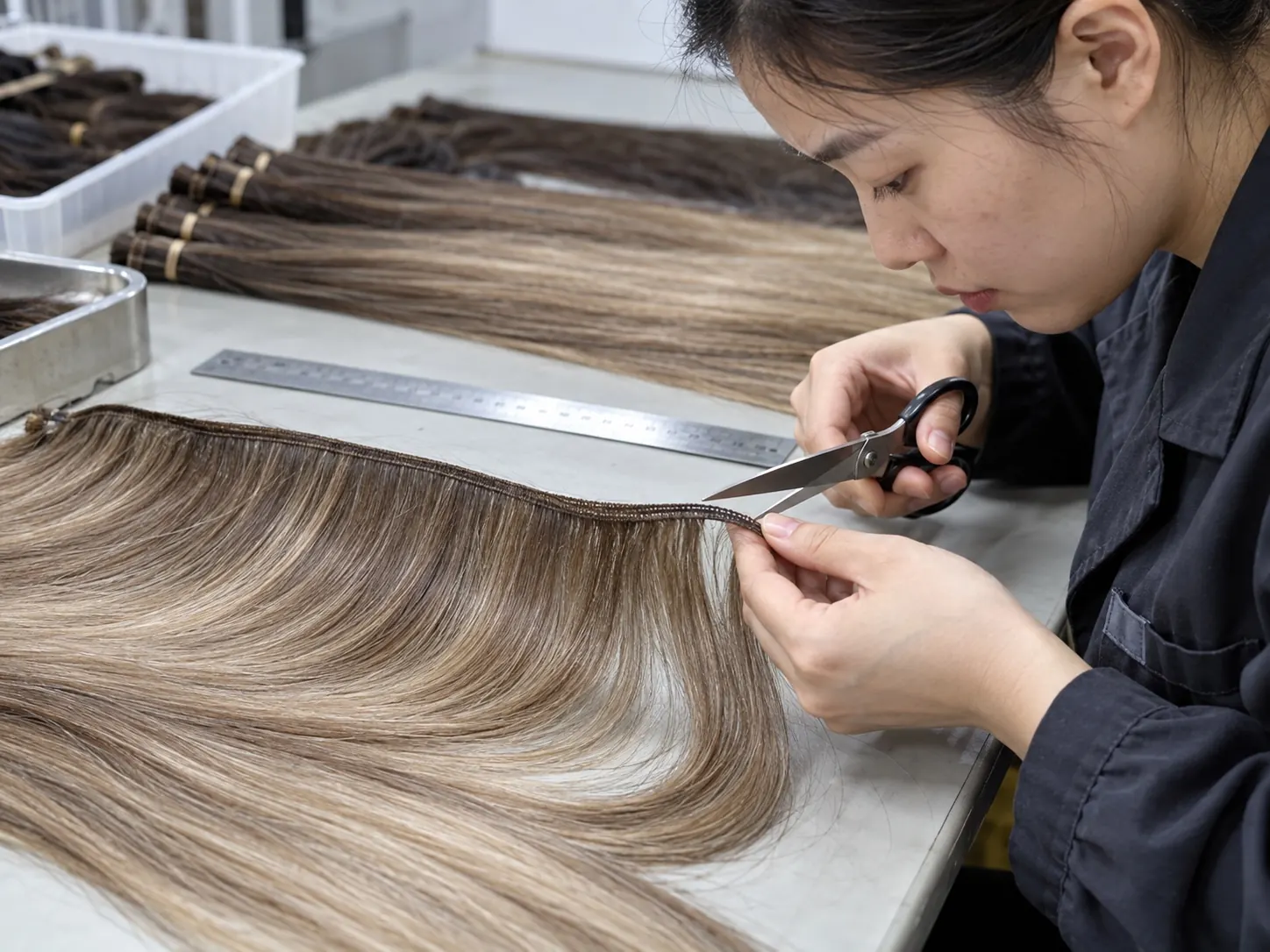
Genius weft generally refers to an ultra-thin, flexible weft construction designed to sit flatter than a traditional machine weft while allowing greater installation flexibility. Product names can vary between suppliers, so buyers should evaluate the physical weft construction rather than the label alone.
The commercial value comes from a combination of thinness, cutability, shedding control, flexibility and consistent hair distribution.
The Six Most Important Quality Checks
- Weft thickness.
- Cutability.
- Return-hair control.
- Flexibility around the head.
- Weight distribution.
- Stitching and edge stability.
Genius Weft vs Machine Weft vs Hand-Tied
Traditional machine weft is efficient and robust but can be thicker. Hand-tied weft can be light and flat but may have cutting restrictions. Genius weft is commonly positioned as a thin, flexible and adaptable construction.
For buyers, the key question is which construction matches the salon technique, target price point and after-sales expectations.
How to Test a Sample
- Measure the weft edge profile at several positions.
- Cut at approved test points and inspect hair release.
- Comb from root area to ends and record shedding.
- Check return-hair zones.
- Wash and dry the sample, then repeat shedding and flexibility checks.
- Compare weight, width and color against the specification.
- Approve the final construction as the production reference.
Long-Length and Light-Color Risk
Long lengths and heavily processed light shades are more demanding because the hair itself is under greater stress. A good weft construction cannot compensate for weak hair preparation.
When buying blonde or long genius weft, evaluate both the edge and the condition of the mid-lengths and ends after washing.
Construction and Edge Stability: Record the Cut Test
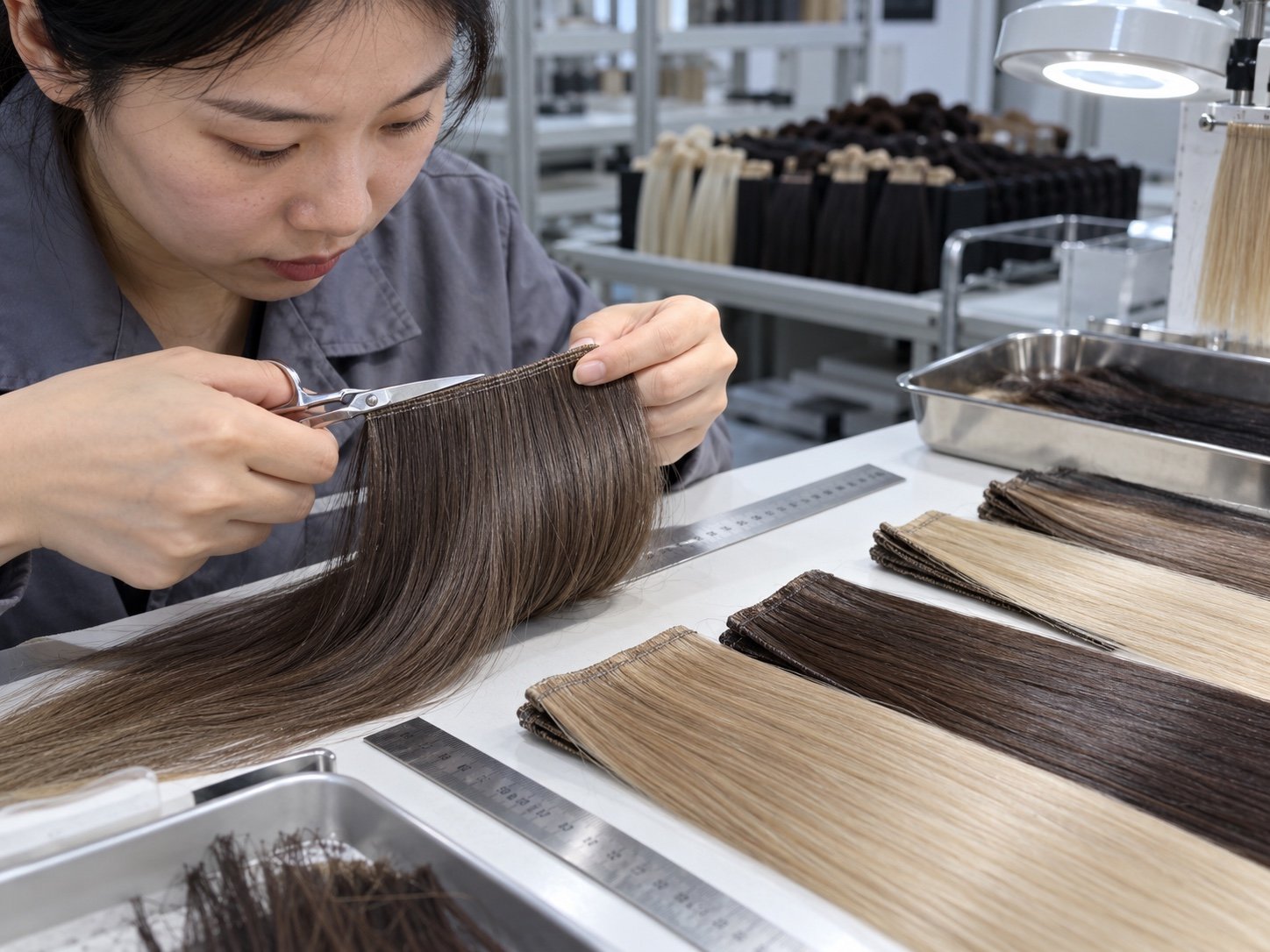
A thin, low-bulk top edge is useful only if hair anchoring and edge stability remain acceptable. Record top-edge thickness at several points, return-hair length, weight per measured width and visible stitch or seal consistency.
Cut-End Verification
If a supplier claims the weft can be cut, mark the permitted cut position on a representative sample, cut using the intended salon method and inspect hair release at the fresh end. Gently comb, wash and dry the sample, then compare shedding and edge shape with the uncut control.
Approval Reference
Keep photos of the intact and cut edge beside the approved sample, exact construction and handling instructions. Do not generalize a result from one weft design to every product sold as “genius weft.”
Discuss Your Sourcing Project
Send Vayora your product brief, target colors, lengths, construction and reference samples. We can review the requirements and prepare the next sampling or quotation step.
Request a QuoteFrequently Asked Questions
Can genius weft be cut anywhere?
Only if the exact construction has been designed and tested for cutting.
What causes shedding from a weft?
Weak edge construction, unsupported cutting points, poor stitching and low-quality hair anchoring can all contribute.
Is genius weft always thinner than machine weft?
It is typically positioned as thinner, but actual thickness varies by supplier and construction.
Should blonde genius weft be sampled separately?
Yes. Blonde processing affects the hair fiber itself.
After evaluating edge quality, define the selected weft construction, weight and packing in your brief. Compare commercial Weft specifications →
Related Guides
Carry the accepted weft construction, edge profile and pack specification into the wider extension brief. Review extension product and attachment options when preparing the next project decision.
Document the Approved Weft for Bulk Checks
Use track profile and dimension controls, agreed measurement records and comparable texture conditions when translating a sample into production instructions.
Compare Construction Claims with a Controlled Sample Record
Keep an uncut control and record the exact construction ID, permitted cut position, tools, end treatment and inspection sequence. Note the measurement points, hair weight basis, combing method and wash/dry conditions before comparing edge stability or hair release. Set acceptance criteria with the buyer; the checklist does not supply a universal pass limit.
For a with-hole request, add hole size, pitch, location, reinforcement and the intended professional attachment instructions. For a Double Flat request, record layers, joined track arrangement and measured edge profile. Keep those samples separate from regular Genius Weft; a shared product name is not evidence of equivalent performance.
Carry the accepted record into the Genius Weft commercial brief and the finished pack specification. Keep machine / hand-tied comparisons on the weft construction page.