
Wig Quality Guide
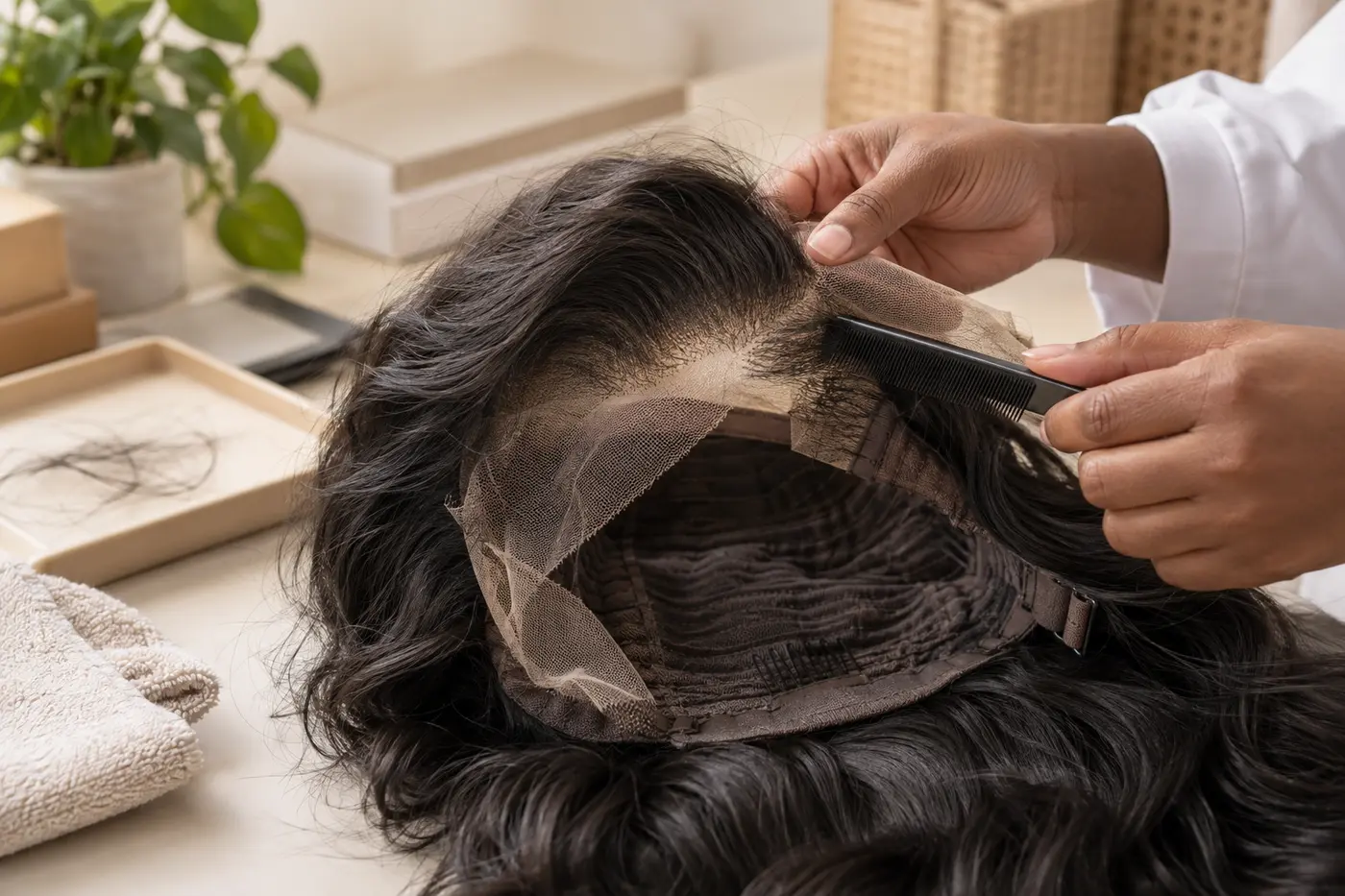
Some loose strands can appear when a wig is first unpacked, combed or styled. However, persistent or excessive shedding may indicate a problem with knotting, weft construction, processing, assembly or product handling.
For wholesale buyers, the key is not to ask whether a wig will lose zero strands. The more useful question is whether shedding remains within an acceptable range for the selected construction and whether samples and bulk orders are evaluated consistently.
Normal Loose Hair Versus a Construction Problem
During ventilation, cutting and finishing, a small number of loose strands can remain in the finished wig. These strands may release during the first gentle comb-through.
A potential quality problem is more likely when shedding:
- Continues after repeated gentle combing
- Increases noticeably after a controlled wash
- Appears concentrated around lace, parting or weft attachment areas
- Is accompanied by visible loose knots or damaged stitching
- Creates rapid thinning in a specific section
- Differs significantly between approved samples and bulk units
The assessment should consider the construction, length, density, texture and processing of the wig rather than relying on one universal standard.
Common Causes of Shedding
Lace Knotting and Ventilation
Lace wigs depend on individual or grouped hairs being secured to the lace. Knot size, knot consistency, ventilation direction and later processing can influence how securely the hair remains attached.
Very fine lace and a natural-looking hairline may require a careful balance between appearance and durability. Aggressive bleaching or processing can weaken knots and lace if the specification is not properly controlled.
Weft Construction and Stitching
Machine-made and combined constructions rely on wefts and attachment points. Loose stitching, cut wefts, poorly secured ends or inconsistent assembly can create concentrated shedding.
During inspection, check the weft lines and the points where wefts are joined to the cap. The inside construction should appear orderly and secure.
Hair Processing
Coloring, lightening, texture setting and other processing steps can affect hair strength. A #613 blonde direction, for example, should not be assessed in exactly the same way as a natural-color product because the processing history is different.
This does not mean processed hair is automatically unsuitable. It means the target appearance, acceptable performance and care direction should be confirmed through samples.
Length, Texture and Density
Longer hair creates more friction during combing and washing. Curly and coily textures also require different handling from straight textures. Higher density can increase the total number of loose strands observed even when the percentage is similar.
For this reason, compare like with like: the same construction, length, texture, color and density direction.
Handling, Installation and Aftercare
Rough combing, pulling from the roots, excessive heat, unsuitable washing methods or adhesive contact with the hair can contribute to shedding. Wholesale evaluation should separate manufacturing issues from installation and care factors.
How to Check Shedding During Sample Approval
1. Inspect the Wig Before Combing
Check the lace, hairline, parting, cap interior, weft lines and attachment points. Photograph any area that appears loose or uneven before further testing.
2. Perform a Controlled Gentle Comb-Through
Use the same type of comb or brush and the same method for each comparison sample. Begin at the ends and work upward without pulling aggressively at the base.
Record the approximate result instead of relying only on memory. The purpose is not to create an artificial stress test, but to compare performance under a repeatable procedure.
3. Check After Washing and Drying
If washing is part of the approval process, use a controlled method and appropriate products. Observe whether shedding changes after the wig has dried and the texture has been restored.
4. Examine High-Risk Areas Again
Recheck the frontal, closure, parting, crown, weft ends and any transition between lace and machine-made sections. Concentrated loss can reveal an assembly issue that is not visible from overall strand counts.
5. Record the Approved Reference
Keep photos, product specifications and testing notes with the approved sample. Bulk inspection should compare production against that reference rather than against a different style or construction.
Information to Give the Manufacturer
When reporting a shedding concern, provide:
- Product name or SKU
- Construction and lace size
- Length, texture, color and density or weight direction
- Whether the issue appeared before or after washing
- The combing or care method used
- Photos or short videos of the affected area
- Number of units checked and number affected
- Whether the problem is general or concentrated in one section
Specific evidence helps the supplier identify whether the likely cause is knotting, wefting, processing, assembly, handling or an isolated unit.
Shedding Checks for Bulk Orders
Bulk quality control should follow the approved product brief and sample. Depending on the project, inspection may include construction checks, controlled comb-through, visual comparison, length and weight checks, packaging verification and review of selected units from the production quantity.
For repeat orders, keep the same evaluation method whenever possible. Changing the test method makes it difficult to determine whether the product or the inspection standard has changed.
Review the wider process on the Quality Control page.
Frequently Asked Questions
Is any shedding normal for a human hair wig?
A small number of loose strands can appear during initial handling and combing. Persistent, concentrated or increasing shedding should be investigated against the construction and approved sample.
Do lace wigs shed more than machine-made wigs?
They use different attachment methods, so the risk points are different. Lace areas depend on ventilation and knots, while machine-made areas depend more heavily on wefts, stitching and assembly. Performance should be checked by construction type.
Can bleaching knots increase shedding risk?
Processing can affect knot and hair strength. The result depends on the lace, knotting, formula, processing control and target appearance. Buyers should approve the final direction through a sample.
Should I test every wig in a bulk order?
The inspection plan depends on order size, product risk and agreed requirements. Critical specifications and selected performance checks should be defined before production and linked to the approved reference.
Confirm Quality Before Bulk Production
VAYORA HAIR can review wig construction, samples, specification points and quality expectations before quotation and bulk production. Use our quotation form to discuss a product or share reference requirements.