
Wholesale Wig Specification Guide

Density is one of the most frequently requested wig specifications, but percentage labels do not always produce the same finished result across suppliers, lengths, textures and constructions.
For wholesale buyers, density should be treated as a product direction that must be confirmed with the finished appearance, hair distribution and weight—not as a universal number that guarantees an identical wig.
What Wig Density Describes
Wig density generally describes how full the hair appears across the cap. It is influenced by the amount of hair used and how that hair is distributed through the hairline, parting, crown, sides and back.
Two wigs carrying the same density label can look different because of:
- Cap and lace construction
- Hairline and parting design
- Length and layering
- Straight, wave, curly or coily texture
- Hair diameter and processing
- Distribution between the top, sides and ends
- Finished weight and styling
This is why a buyer should approve both the written specification and the physical sample.
Understanding 150%, 180% and 200% Directions
150% Density Direction
This usually represents a lighter, more natural-looking fullness. It may suit buyers who prioritize movement, lower weight and an everyday appearance.
However, the finished result still depends on length and texture. A long straight wig at a lighter density can appear thinner toward the ends than a shorter wave style using the same percentage label.
180% Density Direction
This is commonly used as a medium-to-full direction for many commercial collections. It can provide more body while remaining practical for regular wear.
Wholesale buyers should still define the desired end fullness. Adding hair mainly at the crown does not create the same appearance as distributing it through the mid-lengths and ends.
200% and Fuller Density Directions
Higher-density directions can support a fuller visual result, stronger volume and some long or curly styles. They also increase finished weight and may affect comfort, cap balance, packaging dimensions and cost.
A fuller percentage is not automatically a higher-quality product. It must match the target customer, construction and price positioning.
Why Length Changes the Density Result
As length increases, the same amount of hair must create fullness across a larger visual area. Long wigs can therefore appear lighter through the ends even when the density label is unchanged.
When approving a long wig, review:
- Fullness at the crown
- Distribution through the sides
- Mid-length body
- End fullness and shape
- Finished weight
If the buyer’s reference image shows very full ends, density percentage alone may not communicate the requirement. Photos and a target weight direction can help clarify the expected result.
Why Texture Changes Perceived Fullness
Curly, coily and wave textures occupy more visual space than straight hair. A curly wig may appear fuller than a straight wig with a similar amount of hair.
Texture setting, curl size, layering and finishing also affect the result. Buyers should compare density samples in the intended finished texture rather than approving density with one texture and applying the decision to every style.
How Cap Construction Changes Density Distribution
A percentage label cannot show where hair is attached. A lace front, closure, wefted back and hand-tied crown distribute hair differently. The same amount of hair may look flatter at the parting, fuller at the sides or heavier at the nape depending on the cap and ventilation pattern.
- Hairline and lace: Agree the graduation and parting coverage separately from the rest of the cap.
- Crown and sides: Inspect visible gaps, bulky seams and the balance between top and side volume under neutral lighting.
- Back and ends: Check how the weft or hand-tied areas affect drape, comfort and end fullness, especially for long straight styles.
Approve a finished sample in the intended cap, texture and length. Photograph front, parting, crown, sides and back on the same mannequin; record finished weight and any acceptable variation. Use the buyer quality-evaluation matrix for the sample, then compare the same zones during bulk inspection through the quality-control process and document the reference in the sample approval plan.
Density Versus Finished Weight
Density percentage is useful for communication, while finished weight provides another measurable reference. Neither should be used alone.
Weight can vary because of cap components, lace area, combs, elastic, hair length, texture and moisture. The most reliable approval combines:
- Density direction
- Finished appearance
- Distribution of fullness
- Approximate finished weight
- Approved construction, length and texture
For extensions and bundles, weight is often more useful than a wig-density percentage. Product type should determine the specification language.
Hairline and Parting Density
A natural hairline does not always use the same fullness as the rest of the cap. Some products require a lighter transition near the front and more support through the crown and back.
During sample review, check:
- Hairline graduation
- Parting visibility
- Knot concentration
- Crown coverage
- Balance between the front and back
- Whether the finished style matches the intended market
This is particularly important for lace-front, closure and glueless constructions.
Explore relevant options under Wholesale Wigs and Glueless Wigs.
How Wholesale Buyers Should Approve Density
Define the Target Customer
Decide whether the collection should feel lightweight and natural, commercially full or intentionally high-volume.
Match the Exact Product Direction
Approve density for the selected construction, length, texture and color. Do not assume one approved density will look identical across the full assortment.
Use Reference Images Carefully
Reference images help communicate shape and fullness, but styling, lighting and editing can change the appearance. Use them together with written specifications and samples.
Record the Approved Sample
Document the density direction, approximate weight, hairline, parting, end fullness and finished appearance. Later production should be compared with this approved reference.
Review Packaging Fit
Fuller or longer wigs may require different internal packaging space to protect the texture and presentation. Confirm packaging after the final product dimensions are known.
Common Density Mistakes
Wholesale projects often encounter problems when buyers:
- Use percentage labels without approving a sample
- Compare different lengths or textures directly
- Focus on crown fullness but overlook the ends
- Assume higher density always means higher quality
- Apply one density decision to every construction
- Ignore finished weight and cap comfort
- Finalize packaging before confirming product volume
Specify Density by Cap Zone
For repeat orders, compare front, parting, top, crown, sides and back separately. A graduated front can look natural while the crown remains full. A single percentage does not state where the weight is placed.
| Zone | Buyer review |
|---|---|
| Hairline | Natural graduation, knot visibility and direction |
| Parting and top | Scalp appearance, coverage and styling flexibility |
| Crown and sides | Balance, symmetry and smooth transition |
| Back and ends | Track spacing, end fullness and finished weight |
Approve the same measurements and photo angles on the sample and bulk order. Compare cap construction, density quality checks and the buyer evaluation guide.
How should a buyer approve hairline density?
Check the graduated front, knot visibility and hair direction with the approved sample, while confirming overall coverage and finished weight.
Does a higher density percentage guarantee fuller ends?
No. Short-hair ratio, length, layering and how the hair is allocated across the cap affect end fullness.
Can the same density percentage look different on different caps?
Yes. Machine wefts, lace fronts, hand-tied tops and full lace distribute hair differently; compare the finished construction and sample.
Frequently Asked Questions
Is 180% density the same from every wig supplier?
No. Percentage labels can be interpreted differently. Buyers should confirm the finished appearance, distribution and approximate weight through an approved sample.
Is 200% density always better than 150%?
No. The appropriate direction depends on the target customer, style, length, texture, construction, comfort and price positioning.
Why does a long wig look thinner at the ends?
Length, layering and hair distribution affect end fullness. A density percentage does not describe exactly where the hair is placed, so end fullness should be reviewed separately.
Should curly and straight wigs use the same density?
Not automatically. Texture changes perceived volume and finished weight. Each texture direction should be sampled and approved for its intended appearance.
What information should I include in a density request?
Provide the construction, length, texture, color, target market, desired appearance, reference images and any preferred weight direction. Final specifications can then be confirmed during sampling and quotation.
Confirm the Right Density for Your Collection
VAYORA HAIR can review construction, length, texture, density or weight direction, sample requirements and private-label packaging as one wholesale project. Submit your target products and reference information for review.
Batch Density Consistency Check
After approving the target density, compare production units against the same cap construction and approved reference. Record the sample version, viewing angle, styling state and zones checked so a repeat order can be judged on the same basis.
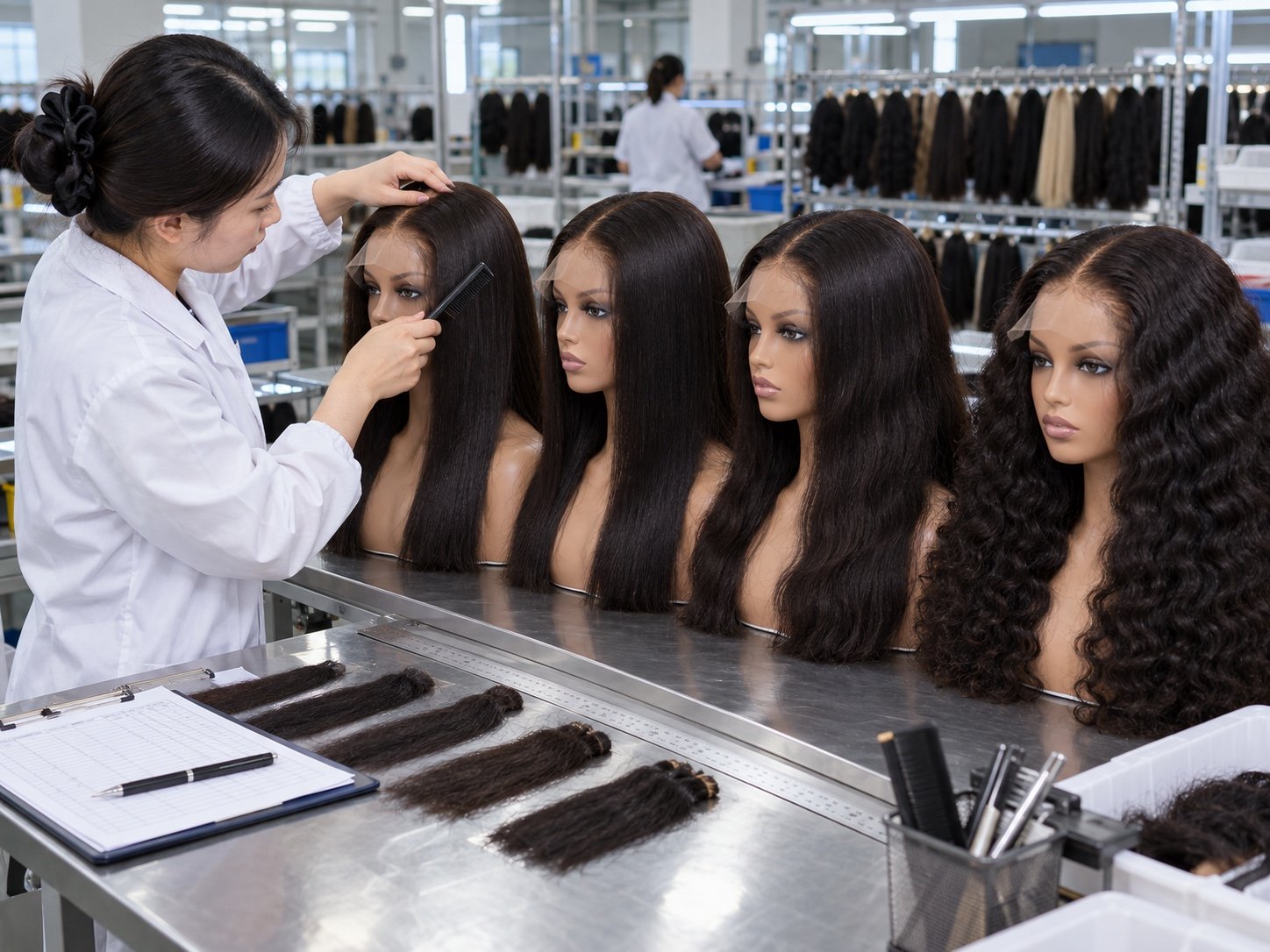
- Compare hairline transition, parting, crown, sides, back and end fullness under consistent lighting.
- Review visual distribution together with finished weight; do not treat either measure alone as a pass or fail decision.
- Record deviations by zone, photo and sample version before accepting rework or a changed specification.
- Escalate repeated variations through the defect classification guide and the wig inspection guide.
Acceptance thresholds are subject to the final specification, sampling and project requirements.