
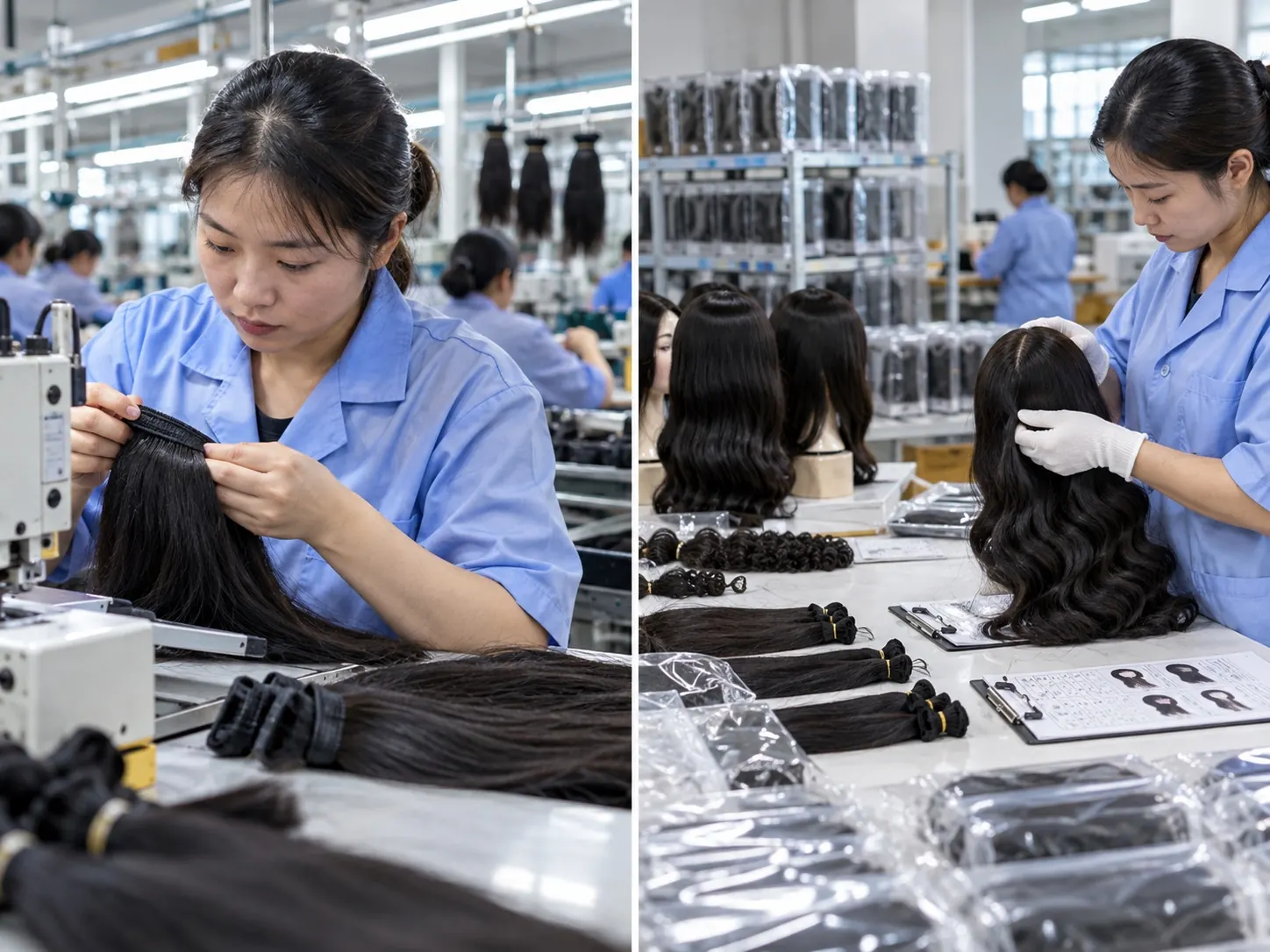
Final Inspection Cannot Fix Every Problem
Some defects are easiest to prevent during production. If color, ventilation, weft construction or cap sewing has already been completed incorrectly, final inspection may only discover the problem after rework becomes expensive.
Examples of In-Process Controls
- Incoming hair sorting and reference checks.
- Texture and color confirmation.
- Machine wefting / weft construction checks.
- Ventilation and lace checks.
- Cap sewing and component placement.
- Length / weight / density checks at defined stages.
- Styling and finishing verification.
What Final Inspection Should Confirm
Final inspection verifies the finished SKU against the latest approved specification and sample, including appearance, construction, labels, packaging and order identity.
Why Documentation Matters
Inspection records, reference photos, approved samples and version control allow production teams to identify the current standard rather than working from memory.
Discuss Your Project
Vayora can build project-specific QC checkpoints around the construction, approved sample and key risks of a wholesale wig or extension program.
Frequently Asked Questions
Is final inspection enough for human hair products?
Not for complex programs. In-process checks help prevent defects earlier.
What should determine QC checkpoints?
The product construction, buyer specification and known risk points.
Should every process have the same inspection frequency?
No. The inspection plan should be risk-based and agreed for the project.
How does a golden sample support QC?
It provides a physical reference for subjective visual and tactile details.