
VAYORA · Raw Material & Quality · B2B Buyer Education
Why Hair Origin Alone Does Not Determine Human Hair Wig Quality
When wholesale buyers compare human hair wigs, one of the first questions is often:
Is the hair Chinese, Indian, Vietnamese, Burmese, Cambodian or European?
Hair origin matters — but it does not tell the whole story.
Two wigs described as being made from the same origin of human hair can perform very differently after washing, coloring and repeated wear.
For professional buyers, the more important question is not simply “Where is the hair from?”
It is:
“What condition was the hair in before manufacturing, and what happened to it afterward?”
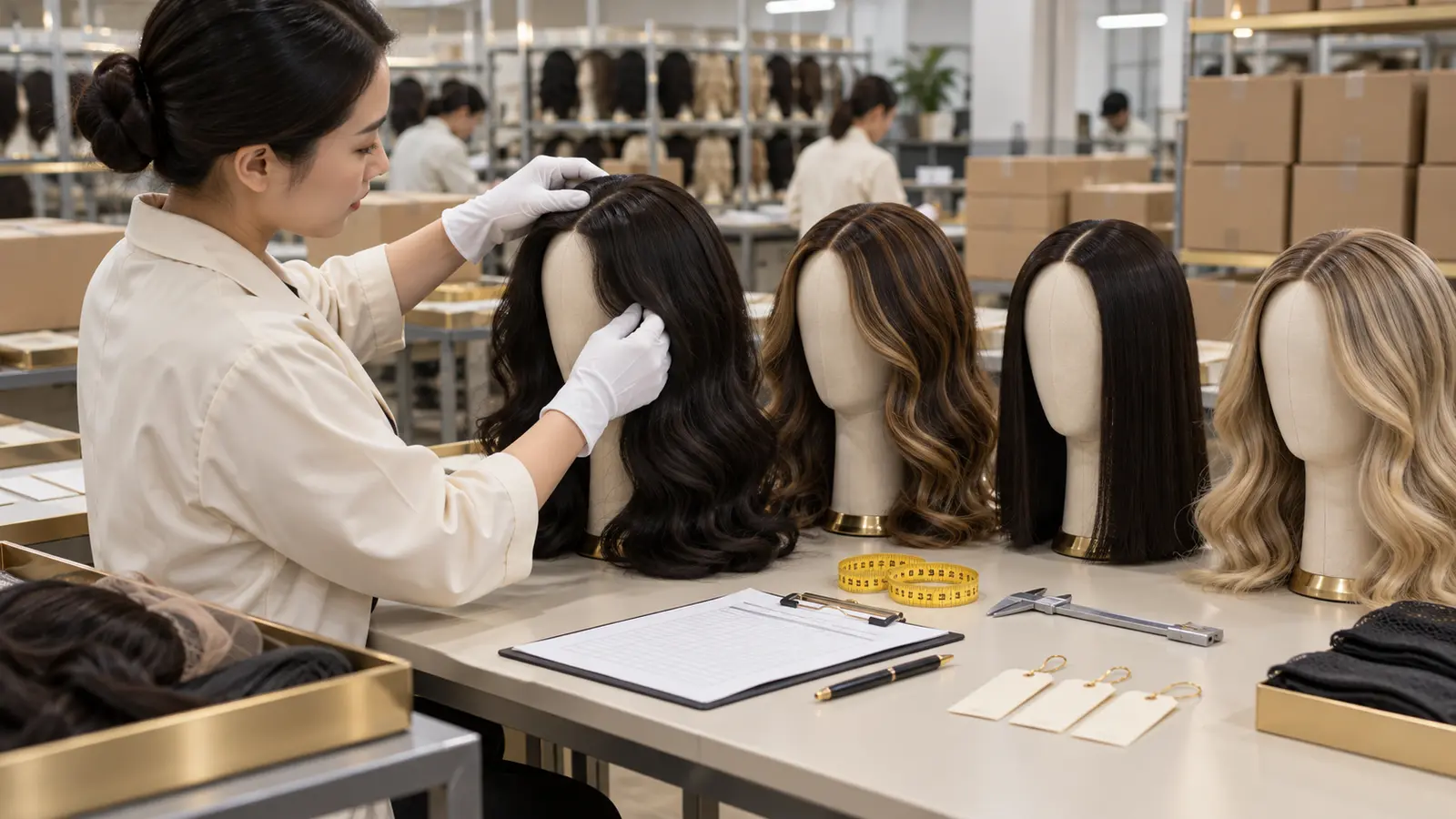
Hair Origin Is Only One Part of the Specification
Human hair varies naturally between donors and sourcing regions.
Diameter, natural color, wave pattern, strength and texture may all be different.
However, commercial hair goes through several additional stages before it becomes a finished wig:
- collection
- sorting
- detangling
- washing
- cuticle handling
- color processing
- texture processing
- drawing and length sorting
- ventilating or wefting
- finishing
Every stage can affect the final product.
This means that a well-selected and carefully processed batch of Indian hair may outperform a poorly processed batch sold under a more expensive origin label.
The same applies to Chinese, Vietnamese, European and other hair categories.
Cuticle Condition Matters More Than Marketing Names
One of the most important characteristics of premium human hair is the condition and direction of the cuticle.
When hair is collected and handled with the root-to-tip direction preserved, the cuticles can remain aligned.
This generally helps reduce friction between strands and improves performance during washing and everyday use.
Problems can occur when:
- hair directions are mixed
- cuticles are heavily damaged
- aggressive chemical treatment is used
- damaged strands are mixed into higher-grade material
- heavy coating temporarily hides poor underlying quality
This is why terms such as Raw Hair, Virgin Hair and Remy Hair should never replace physical inspection and testing.
Processing History Is Critical
Wholesale buyers should ask what has happened to the hair before it reaches the factory.
For example:
Has it already been dyed?
Has the cuticle been chemically modified?
Has the texture been created through processing?
Has silicone or another finishing treatment been applied?
Has hair from different sources or quality levels been blended?
A beautiful sample immediately after production does not necessarily predict long-term performance.
The real differences often become visible after repeated washing, heat styling and color processing.
Full Ends Are Also a Sorting Decision
Hair origin does not automatically determine whether a wig has full ends.
End fullness is strongly affected by raw-material sorting and the drawing specification.
Single-drawn hair naturally contains more variation in strand length.
Double-drawn or more heavily selected hair removes a greater proportion of shorter strands and can create a fuller appearance toward the ends.
For buyers purchasing long wigs — particularly 24", 30", 36" and 40" lengths — this distinction becomes especially important.
A 30-inch wig and another 30-inch wig may have the same total weight but look completely different at the bottom.
Test the Batch, Not Just the Name
Instead of relying only on origin claims, Vayora recommends evaluating several measurable characteristics during sample approval:
1. Strand and End Fullness
Inspect the density from root to tip rather than looking only at total weight.
2. Wash Performance
Observe tangling, matting, texture change and surface feel after washing.
3. Shedding Performance
Check both the raw material and construction method.
4. Color-Lift Performance
For brands selling blonde or custom-colored products, test how the selected batch responds to controlled color processing.
5. Heat and Styling Recovery
Evaluate how the hair behaves after straightening, curling and subsequent washing.
6. Batch Consistency
Compare the approved sample with repeat production.
For a wholesale business, repeat-order consistency is often more important than an impressive first sample.
Where Chinese, Indian and Vietnamese Hair Fit
Different origins can all be suitable for premium products when the material is properly selected.
Chinese ponytail hair can be valuable for certain premium wig, topper, hair-system and extension programs where appropriate raw material is available.
High-quality Indian temple hair is also widely used for premium wigs and extensions, particularly when the cuticle remains intact and aligned.
Vietnamese hair has become increasingly popular for straight wigs, bundles and extensions, with buyers often focusing on strand strength, length and processing flexibility.
European and Slavic hair occupy another premium segment, particularly where naturally lighter shades and fine textures are required, but genuine supply can be limited.
There is no single origin that is automatically best for every product.
The Better Question for Wholesale Buyers
Instead of asking:
“Which country has the best hair?”
Ask:
“Which raw-material specification is best for this product, price level and end customer?”
That changes the entire sourcing conversation.
A successful wholesale program requires the right balance of:
Origin + Cuticle Condition + Processing History + Sorting + Construction + Quality Control + Repeat-Order Consistency
At Vayora Hair, we believe these specifications should be evaluated together rather than relying on a single origin label.
Looking for the Right Hair Specification for Your Brand?
Tell us the wig type, target length, texture, color requirement, density, quality level and target market.
We can help compare suitable human hair options and develop samples before bulk production.
Frequently Asked Questions
Does hair origin guarantee wig quality?
No. Material condition, cuticle handling, processing history, sorting and finished construction also affect quality. Compare actual samples against the intended specification.
Are Raw, Virgin and Remy labels enough to approve a sample?
No. These terms should not replace physical inspection, documentation of processing history and agreed performance tests.
What should buyers compare beyond origin?
Compare cuticle condition and direction, processing history, strand consistency, short-hair ratio, end fullness, wash behavior and sample-to-bulk consistency.
Related Commercial & Buyer Resources
Prepare Your Sample & Quotation Brief
Share your target market, product format, material requirements, length, texture, color and construction for sample comparison and specification review.
Request a Quote