
Practical sourcing advice for wig brands, salon owners, wholesale distributors and private-label buyers.
Quick answer: To source human hair wigs from China, start with a written product brief, shortlist suppliers with relevant production experience, verify the legal company and actual manufacturing arrangement, request comparable quotations, test physical samples, approve a reference specification, and confirm inspection and shipping terms before paying for a bulk order. A supplier’s photographs, low price or claimed “hair grade” should never substitute for a sample and verifiable documentation.
China offers many sourcing routes for human hair wigs, from specialized manufacturing operations to export companies that coordinate production with partner factories. This variety creates choice—but it also means that two suppliers selling a “24-inch HD lace wig” may be quoting products with different hair materials, cap constructions, density, finishing and after-sales terms.
This guide explains a procurement process you can actually use. It focuses on how to buy, not a ranking of “best factories.” If you need detailed criteria for choosing between manufacturers, see our wig manufacturer evaluation guide.
The China Wig Sourcing Process at a Glance
| Stage | Buyer action | Evidence to keep |
|---|---|---|
| 1. Define | Write the product and target-market brief | Versioned specification |
| 2. Discover | Build a shortlist of potential suppliers | Company names and product links |
| 3. Verify | Confirm legal entity, production model and category fit | Registry details, factory evidence, written responses |
| 4. Quote | Send the same RFQ to each shortlisted supplier | Itemized, comparable quotations |
| 5. Sample | Test the actual hair, lace, cap and construction | Sample notes, photos and test records |
| 6. Approve | Finalize the production reference and packaging | Approved sample and signed specification |
| 7. Order | Agree on inspection, payment and shipping terms | Proforma invoice, order terms and QC plan |
| 8. Repeat | Compare delivery with the approved reference | Inspection and reorder records |
Step 1: Define the Wig You Actually Want to Source
Before contacting factories, decide who will wear the wig and where it will be sold. A beauty brand focused on premium ready-to-wear glueless wigs will need a different construction and cost target from a distributor sourcing basic salon inventory.
Your initial brief should specify:
- Product category: glueless wig, lace-front wig, closure wig, full-lace wig or another construction.
- Hair: human hair type and processing requirements; any raw, virgin or Remy claim you want evidenced.
- Lace: HD or transparent lace, size (for example 5×5, 13×4 or 13×6) and hairline expectations.
- Cap: circumference or size chart, adjustable components, straps and intended fit.
- Appearance: length, finished texture, color reference, parting, density and approximate target weight where relevant.
- Commercial scope: sample needs, estimated units per SKU, target market and packaging requirements.
Avoid sending only “best quality 24-inch wig, please quote.” It gives suppliers too much room to assume different constructions. Density percentages and grade labels may not be directly comparable between sellers; ask for a physical reference and a measurable finished specification.
Illustrative RFQ item—not a VAYORA stock or price promise: 24-inch body wave human hair wig; 13×6 transparent lace; glueless adjustable cap; natural black; target density to be confirmed by sample; branded packaging under review. Request prices for a sample and separate tentative quantities, without assuming any particular MOQ is available.
Step 2: Find Suppliers Through More Than One Discovery Route
Common starting points include specialist wig supplier websites, business-to-business sourcing marketplaces, professional exhibitions, industry referrals and direct contact with manufacturers. Use several discovery routes to build an initial list; finding a supplier online is the beginning of verification, not its conclusion.
Where are wigs manufactured in China? Xuchang in Henan province is an established hair-products manufacturing cluster. The People’s Government of Henan Province has published reporting on its wig industry. Buyers may also encounter hair-product suppliers and export offices in other Chinese cities. A supplier’s showroom or export address, however, does not automatically identify the facility responsible for production.
A practical shortlist might include three to five candidates with experience in your exact wig construction. Record the company name, website, contact, claimed manufacturing location, products and unanswered questions in a simple comparison sheet. Do not rank suppliers by advertised factory size, followers or low unit price alone.
Step 3: Verify Who Will Actually Make Your Wigs
A legitimate sourcing partner may be a factory, a trading company or a company coordinating production through manufacturing partners. None of those models is automatically right or wrong. What matters is clarity about who contracts with you, who makes the product and who is responsible when the sample and bulk order differ.
Before placing a meaningful order, ask for:
- The full legal name of the contracting company and its business registration details.
- The business address and, where disclosure is permitted, the actual production location.
- The manufacturing arrangement: owned plant, partner plant, subcontracted process or a combination.
- Current photos or a live video showing the specific construction relevant to your order—not just a generic workshop image.
- A written explanation of how sample approvals, production changes and quality issues are handled.
When warranted by order size, buyers can engage a qualified independent inspection or factory-audit provider. Verify any certificate with its issuer; do not assume a PDF image proves that a facility, product or process is certified.
A supplier who cannot disclose a partner factory’s full public name may still provide meaningful evidence of the production process, product samples, responsible contracting entity and inspection procedure. Equally, a company calling itself a “direct factory” should be able to explain its actual production control.
For a deeper comparison framework, use our wig supplier comparison scorecard.
Step 4: Request Comparable Quotations and Understand MOQ
Send each shortlisted supplier the same specification version. Ask for the quote to separate product cost, sample development, branded packaging, freight and other charges instead of providing only one total number.
| Quotation field | What you should ask |
|---|---|
| Product | Exact construction, lace, hair, length, color and cap specification |
| Quantity | MOQ per style, length, color or SKU—not just total units |
| Sample | Price, preparation time, revisions and shipping cost |
| Branding | Label, box, insert and printing MOQ if applicable |
| Production | Lead time after final sample and deposit approval |
| Delivery | Currency, Incoterms, freight quotation basis and destination |
| Quality | Inspection criteria, acceptable variations and remedies |
| Payment | Payee company, payment schedule and order documentation |
Why can MOQs differ? A stock wig in an existing shade, a newly colored hair program and a custom printed box may each have different minimum quantities. There is no single China-wide wig MOQ. Ask for the breakdown before planning a multi-shade launch. A low total order quantity may still be impractical if spread across many complex SKUs.
A low unit quote is not necessarily a low landed cost. Factor in sample charges, packing, shipping, import duties where applicable, inspection, possible rework and product returns. Confirm import classification and destination-market requirements with an appropriate logistics or customs professional.
For product-specific quantity planning, see Samples & MOQ.
Step 5: Test the Sample Beyond the First Unboxing
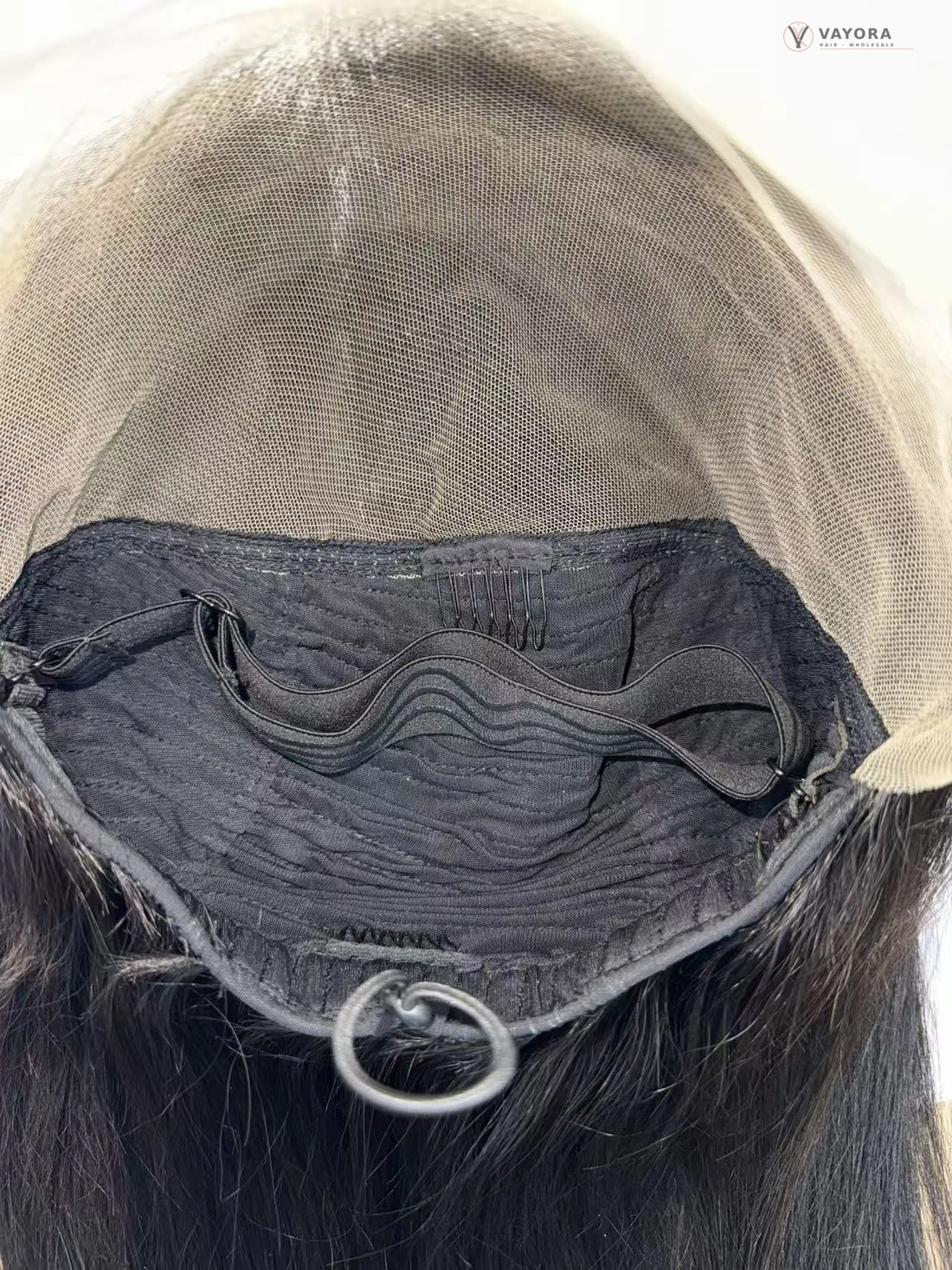
A glossy photograph cannot tell you how hair behaves after washing, how the lace looks on the intended wearer, or whether the cap matches your brand’s fit requirements. For a new supplier or new specification, evaluate at least one physical reference before committing to significant bulk production.
Use a consistent testing procedure and photograph the results:
- Construction: verify lace dimensions, parting area, cap circumference, straps, elastic and workmanship.
- Hair appearance: inspect texture, color consistency, ends, fullness and any obvious coating or residue.
- Wash and dry: follow appropriate care instructions, then assess tangling, shedding and texture after drying.
- Combing: use the same gentle method for candidate samples and record any unusual resistance or shedding.
- Wear and fit: test hairline appearance, cap security, comfort and intended glueless functionality.
- Measurements: record the actual length method, product weight if relevant, and any agreed tolerances.
- Packaging: check labels, shade identification, presentation and the ability to identify the correct SKU.
Some sellers use terms such as “raw,” “virgin,” “Remy,” or “10A.” Definitions and verification practices are not uniform across suppliers. Ask what those terms mean for the specific hair supplied, including processing history and performance, rather than relying on a grade label alone.
Important: A single sample does not statistically prove that a full production batch will match. It establishes a reference that must be supported by written specifications, production controls and appropriate inspection.
See also the golden sample approval guide.
For brand-development requirements, review private label wigs.
Step 6: Approve a Golden Sample and Private Label Details
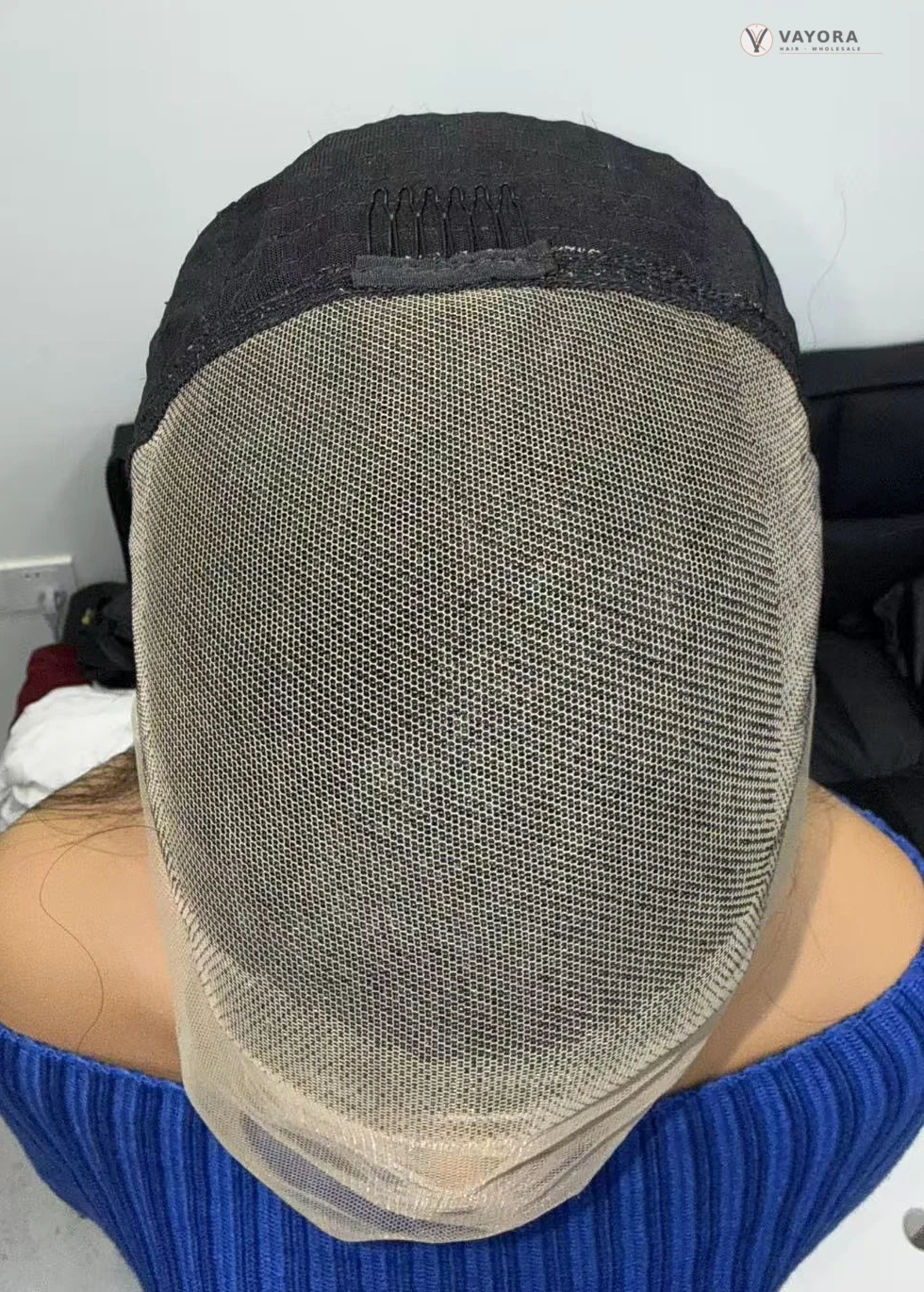
Once a sample is acceptable, record it as a controlled reference. A “golden sample” is useful only when everyone knows exactly which version has been approved and which details can or cannot change.
Keep a dated approval record for the product, color, texture, lace, cap, components and packaging artwork. Include close-up photographs where they help explain appearance. Ask how the supplier will handle substitutions, changes in raw hair batches, color variation and sample-to-bulk discrepancies.
For a private-label wig collection, agree on product identity and packaging separately. A stock wig with a logo sticker is different from a custom construction with a fully printed box. Confirm artwork dimensions, label placement, SKU codes, barcode needs and packaging approval before large-scale packing begins.
VAYORA’s custom wig packaging information explains the packaging decisions that buyers can include in their brief.
Step 7: Confirm Quality Inspection, Payment and Shipping
The approved reference should become part of the purchase order or written product agreement. Before payment, clarify:
- Who is the legal seller and named payment beneficiary?
- What is the final itemized specification, quantity and approved artwork?
- Which production and dispatch milestones are agreed?
- What inspections occur, who performs them, and when can the buyer review results?
- What happens if products differ materially from the approved specification?
- Which shipping term applies, and who handles insurance, customs paperwork and import charges?
For marketplace orders, use the platform’s documented order and payment process if you rely on its buyer protections. For example, Alibaba’s own Trade Assurance guidance explains protections for eligible orders paid through its platform; payments made outside the platform should not be assumed to have those protections. For direct contracts, verify updated bank details independently using a previously established contact route.
Check the shipping documentation and the destination country’s applicable import obligations. Incoterms alone do not replace a full agreement on specifications, inspection, title, payments, claims or remedies.
A useful factory-facing workflow is: approved specification → production → defined checkpoints → pre-shipment review → packing → dispatch. Read VAYORA’s manufacturing process and quality control overview for more detail about the product decisions involved.
Step 8: Build a Repeat-Order System, Not Just a First Purchase
Wholesale sourcing becomes easier when the second order can reproduce the first approved product. Keep a unique SKU and version number, sample approval record, last agreed construction, color reference, packaging artwork, inspection results and customer feedback.
When changing lengths, colors, lace or cap components, record the revision before production. Compare the new shipment against both the latest approved specification and the previous delivery. Consistency is more valuable to a growing brand than a promise that every batch will be “perfect.”
Copy-and-Send RFQ: Human Hair Wig Sourcing from China
You can adapt the following message for your supplier shortlist:
Hello, we are sourcing human hair wigs for a wholesale/private-label business in [country]. Please quote the following specification: [wig construction], [hair requirement], [length], [lace type/size], [cap size], [texture], [shade], and [estimated quantities by SKU]. We would like to evaluate a physical sample before bulk production. Please confirm your legal company name, manufacturing arrangement, sample price and preparation time, MOQ per variation, branding options, production lead time, QC process, shipping basis and payment terms. If any specification is unclear or unavailable, please identify the alternative before quoting. Thank you.
Frequently Asked Questions About Sourcing Wigs from China
How do I find a real wig factory in China?
Start with relevant suppliers, verify the contracting business and ask which facility performs the key manufacturing operations. Request production evidence for your exact wig category and evaluate a real sample. Consider an independent audit when the order risk warrants it.
Where are many wigs made in China?
Xuchang in Henan is a well-documented hair-products manufacturing hub. Buyers may also encounter sourcing offices and suppliers elsewhere. A city’s reputation cannot establish an individual company’s production capability.
Can I buy one wig sample before a wholesale order?
Many suppliers discuss sample orders, but availability, customization, cost and timing vary. Ask whether the sample is from stock or must be produced to your specification; do not confuse an evaluation sample with a guaranteed one-piece retail program.
What is the minimum order quantity for private-label wigs?
MOQ depends on the wig, color and length mix, custom construction and packaging. Ask for MOQs per SKU and per packaging design rather than relying on one advertised minimum.
Is a factory always better than a trading company?
No. An owned factory can offer direct process control; a sourcing company or manufacturing partner network can offer useful coordination and product breadth. Evaluate the specific supplier’s accountability, transparency, sample quality and control over subcontracted work.
How can I tell whether wig hair is truly high quality?
Assess the actual finished product and its behavior after an appropriate wash and dry cycle, plus construction, tangling, shedding, color, ends and repeat-order consistency. Grade labels alone are insufficient.
What should I check before paying for a bulk wig order?
Confirm the seller, beneficiary, approved specification, quantity, sample version, inspection plan, delivery term, freight responsibility, payment schedule and written remedies if goods materially differ.
How can I reduce differences between samples and bulk wigs?
Use a version-controlled golden sample, measurable specifications, change approvals and defined inspection points. Compare pre-shipment results to the approved reference and keep records for repeat orders.
Source with a Clear Product Brief
If you are launching or expanding a human hair wig collection, VAYORA HAIR can help review your product direction, prepare specifications, discuss available sample and production options, and coordinate project requirements with manufacturing partners. We work with wholesale buyers and private-label brands; exact product availability, MOQ, costs and lead times are confirmed for each project rather than promised universally.
Request a Wholesale Wig Quote · Review Samples & MOQ · Browse Wig Sourcing Guides
Editorial note: This is an educational B2B purchasing guide, not a guarantee of any supplier’s legal status, product origin, performance or delivery. Buyers should independently validate claims and destination-market requirements.