
A successful sample order does not remove the need for bulk-order inspection.
When a wholesale order moves from one approved sample to many finished units, buyers need a clear way to verify that the bulk production matches the agreed specification.
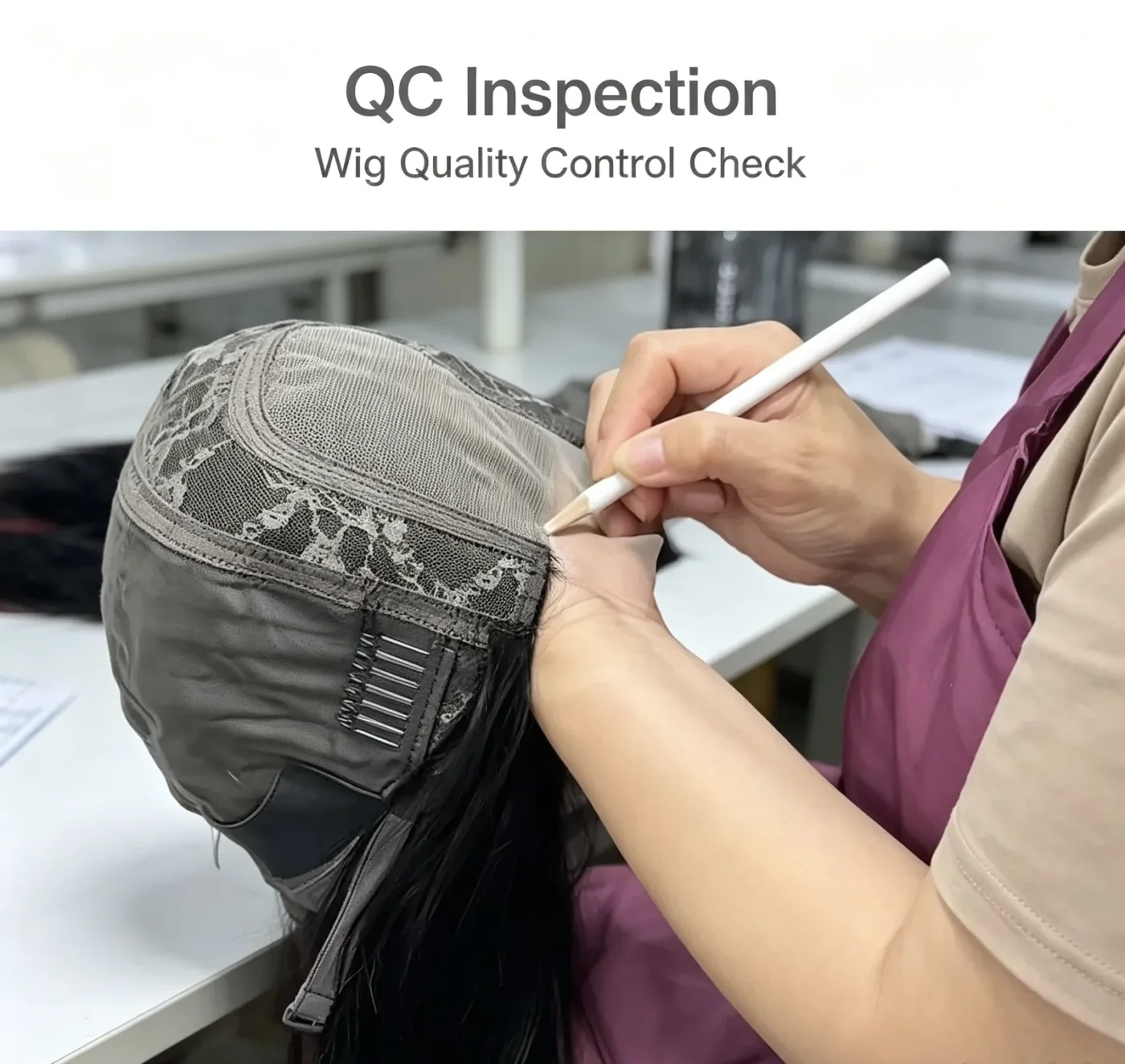
Bulk inspection is not only about asking whether the hair feels soft or looks attractive.
The buyer should check the complete order: product identity, quantity, length, weight or quantity basis, color, texture, construction, branding, packaging and any other confirmed requirements.
The most important reference is the approved specification and sample — not a vague idea of what “good hair” should look like.
This guide provides a practical inspection framework for wholesale wig and hair extension orders.
Why Bulk Inspection Is Different From Sample Evaluation
A sample answers one question: can the supplier produce the requested specification?
Bulk inspection answers a different question: has the approved specification been reproduced consistently across the production order? A buyer should therefore avoid evaluating the bulk order only by comparing one random piece with memory.
Use the confirmed specification, approved sample, purchase order and packaging requirements as the inspection reference.
Start With the Approved Specification
Before opening cartons or comparing individual units, gather the documents and references that define the order.
- approved product specification
- approved sample or approved sample notes
- purchase order / SKU list
- confirmed color references
- confirmed packaging and label requirements
- any agreed measurement method for length, weight or quantity
- any approved revisions made after sampling
Without a defined specification, inspection becomes subjective. One person may call a product acceptable while another rejects it for a requirement that was never clearly documented.
1. Verify Product Identity and Order Quantity
Start with the basic order structure before detailed quality checks.
- correct SKU / product type
- correct length
- correct color
- correct texture
- correct construction
- correct quantity by SKU
- correct carton / package labeling where applicable
For mixed orders, separate the products by SKU before evaluating quality. This prevents one color, length or construction from being confused with another.
2. Confirm Length Using the Agreed Method
Length should be checked using the method agreed for that product category.
A straight wig, a curly wig, a machine weft and a keratin-tip extension may not be evaluated in exactly the same way.
For textured products, buyers should confirm whether the specification is based on stretched length, natural-state length or another agreed method before placing the order.
Do not introduce a new measurement rule only after the goods arrive.
3. Verify Weight or Quantity Where Applicable
Weight and quantity are important, but the correct inspection basis depends on the construction.
Some products are specified by package weight, some by piece count, some by strand specification, and others by a combination of construction and finished weight. The buyer should verify against the confirmed product-specific basis rather than applying one universal rule to every hair product.
| Product Category | Typical Inspection Logic |
|---|---|
| Wigs | Confirm the agreed finished construction, density/length specification and any weight requirement only if weight was part of the confirmed order. |
| Wefts | Check the confirmed weight basis, width/construction and SKU quantity. |
| Keratin-tip extensions | Check the agreed strand specification, tip construction and quantity/weight basis. |
| Tape / PU extensions | Check the agreed piece/pack structure, PU/tape construction and weight/quantity basis. |
| Clip-in / Halo / Ponytail | Check the set construction, attachments, finished weight/quantity basis and completeness of each set. |
4. Check Color Against the Approved Reference
Color should be evaluated against the approved sample or confirmed reference, not against a screen image alone.
Human hair products can show reasonable variation depending on material, processing and lighting conditions.
The buyer should focus on whether the bulk order falls within the agreed commercial range and whether units within the same SKU are acceptably consistent.
Color Inspection Tips
- compare units under consistent lighting
- compare the same SKU together rather than mixing colors
- use the approved physical sample or confirmed reference when available
- check highlighted, mixed or multi-tone products for pattern and overall balance
- document any repeated color difference with clear photos and SKU references
5. Check Texture Consistency
Texture should also be compared within the same SKU and against the approved sample.
For straight, wave, curl or other textured products, look for whether the overall pattern matches the commercial specification.
The purpose is not to demand that every strand look mechanically identical. The purpose is to identify meaningful differences that would affect the buyer's product presentation or customer expectation.
6. Inspect Wig Construction
For wigs, inspect the complete construction rather than only the hair surface.
- correct lace or closure construction
- correct lace size where specified
- cap construction
- density / fullness according to the confirmed specification
- hairline and ventilation where applicable
- parting area
- color and texture
- length
- finished styling if included in the specification
- adjustment components where applicable
- overall finished appearance
Not every wig uses every feature above. Inspect only the characteristics that are relevant to the confirmed product.
7. Inspect Hair Extension Construction
Hair extensions require construction-specific inspection because the attachment system is part of the product.
| Extension Type | Key Buyer Checks |
|---|---|
| Tape / PU | PU/tape construction, attachment consistency, piece/pack structure, length, color, texture, weight/quantity basis |
| I-tip / U-tip / Flat-tip | tip construction, strand consistency, length, color, texture, quantity/weight basis |
| Machine Weft | weft seam/construction, width, finished consistency, weight basis, length, color, texture |
| Hand-tied / Genius Weft | weft construction, width/thickness as specified, weight basis, length, color, texture |
| Clip-in | clip attachment, set completeness, finished weight/quantity basis, color, texture, length |
| Halo / Ponytail | attachment/assembly, set completeness, finished weight/quantity basis, color, texture, length |
8. Check Finished Appearance — But Do Not Stop There
Finished appearance matters because the buyer must sell the product.
However, visual appeal alone should not replace specification checks.
A product can look attractive and still have the wrong length, wrong construction, wrong SKU label or wrong packaging.
Inspection should combine visual review with specification verification.
9. Verify Private Label Elements
For private label orders, branding errors can create commercial problems even when the hair product itself is correct.
- brand name / logo
- product label
- SKU or color/length identification
- hangtag or insert if included
- packaging artwork
- placement / orientation where specified
- correct product inside the correct branded package
The packaging specification should be approved before bulk packing wherever customized branding is involved.
10. Inspect Packaging and Packing Accuracy
Packaging inspection should confirm both presentation and order accuracy.
The buyer should check that the product is packed in the correct format and that the outer or inner identification matches the actual SKU.
For mixed-color or mixed-length orders, clear identification becomes especially important for warehouse receiving and downstream fulfillment.
Sample-Based Inspection vs Checking Every Unit
Not every buyer inspects every unit of every order.
The inspection method should reflect the order value, product risk, supplier history, SKU complexity and the buyer's own quality system.
Some buyers use sample-based inspection plans; others use more extensive checking for high-risk or new products.
If your company uses a formal sampling or AQL-based system, define the inspection level, defect categories and acceptance criteria in your own QC plan before production.
Do not invent acceptance thresholds after the order arrives.
Define Critical, Major and Minor Problems Before Inspection
A buyer's internal QC plan can be stronger when different types of nonconformity are defined in advance.
- Critical: a problem that makes the product unsafe, unusable for the intended market, or fundamentally different from the ordered item.
- Major: a problem that materially affects saleability, function, construction, specification or branding.
- Minor: a smaller issue that does not materially change the core use of the product but still falls outside the agreed standard.
The exact defect definitions should be written for the buyer's own product and market. Do not copy generic defect categories without adapting them to the actual SKU.
Document Problems Before Contacting the Supplier
If an inspection identifies a problem, clear documentation helps both buyer and supplier understand what happened.
Avoid sending only a general message such as “the quality is bad.”
Instead, identify the specific specification difference.
- SKU / product name
- color
- length
- quantity inspected
- quantity affected
- carton / package reference if available
- photos or video
- measurement result where relevant
- approved specification or sample reference
- description of the difference
Use Evidence That Can Be Reproduced
Clear evidence makes corrective action easier. If the issue is length, show the agreed measurement method. If it is color, photograph the product beside the approved reference under consistent lighting. If it is construction, show the specific attachment, lace, cap, weft or tip difference.
This is more useful than subjective statements such as “it feels cheaper” unless the buyer can connect that concern to an agreed product characteristic.
What to Do When Bulk Goods Do Not Match the Approved Specification
When a meaningful nonconformity is found:
- Separate the affected SKU or units from accepted goods.
- Document the issue with the order reference and evidence.
- Compare the finding with the approved specification and sample.
- Estimate the quantity affected using the buyer's inspection method.
- Send the supplier a clear, factual report.
- Discuss the appropriate corrective action based on the commercial situation.
- Record the final resolution so the next repeat order uses the updated reference.
The solution will depend on the type and scale of the issue. This guide should not promise a universal refund, remake or replacement outcome.
Feed Inspection Results Back Into the Next Order
Bulk inspection should improve future purchasing, not end with the current shipment.
If a repeated issue is found, update the next purchase specification, sample notes or QC requirement so the expectation becomes clearer.
Over time, the buyer should build a repeatable SKU reference rather than starting every order from zero.
Bulk Inspection Checklist
| Inspection Area | Buyer Check |
|---|---|
| Order identity | Correct product, SKU, length, color, texture and construction |
| Quantity | Correct quantity by SKU / package / set |
| Length | Matches the agreed measurement method and specification |
| Weight / quantity basis | Matches the confirmed product-specific basis where applicable |
| Color | Within the approved commercial range and consistent within the SKU |
| Texture | Matches the approved pattern / finish within reasonable production consistency |
| Wig construction | Lace/cap/density/hairline/parting/adjustment features as specified |
| Extension construction | Tape/tip/weft/clip/halo/ponytail attachment and construction as specified |
| Finished appearance | Commercially acceptable and consistent with the approved reference |
| Branding | Correct label/logo/SKU information where applicable |
| Packaging | Correct packaging format and correct product-to- package matching |
| Documentation | Any nonconformity recorded by SKU, quantity and evidence |
Sample Approval and Bulk Inspection Should Use the Same Language
The sample stage and the bulk-inspection stage should not use different standards.
The sample is where the specification is confirmed. Bulk inspection is where that same specification is verified at production scale.
This creates a more controlled sourcing process from the first sample through repeat orders.
How VAYORA Approaches Sample-to-Bulk Quality Control
VAYORA works with wholesale buyers, brands, distributors and salon businesses on specification-based wig and hair extension production.
The production process can connect buyer requirements, sample confirmation, bulk manufacturing, quality control and private label packaging according to the confirmed project specification.
Buyers should provide clear product and packaging requirements so that the sample and bulk order can be reviewed against the same reference.
FAQ
What should I check when receiving a bulk human hair order?
Start with the approved specification and verify product identity, quantity, length, weight or quantity basis where applicable, color, texture, construction, branding and packaging.
Should bulk hair be identical to the sample?
The approved sample should be an important production reference, but human hair products can have reasonable material or production variation. Buyers should define acceptable commercial consistency rather than expecting every strand or unit to be visually identical.
How should I inspect wig quality in bulk?
Check the confirmed wig specification, including lace/cap construction, density, length, color, texture, hairline or parting where applicable, finished appearance, labels and packaging.
How should I inspect hair extensions in bulk?
Use construction-specific checks. Tape, keratin-tip, weft, clip-in, halo and ponytail products require different attachment, weight/quantity and assembly checks.
Do I need to inspect every unit?
Not always. The inspection method can depend on order value, risk, SKU complexity, supplier history and the buyer's QC system. If using sample-based inspection or AQL, define the method and acceptance criteria before production.