
Raw Material & Origin · Wholesale Buyer Guide
Burmese Hair vs Cambodian Hair: What Wholesale Buyers Should Verify
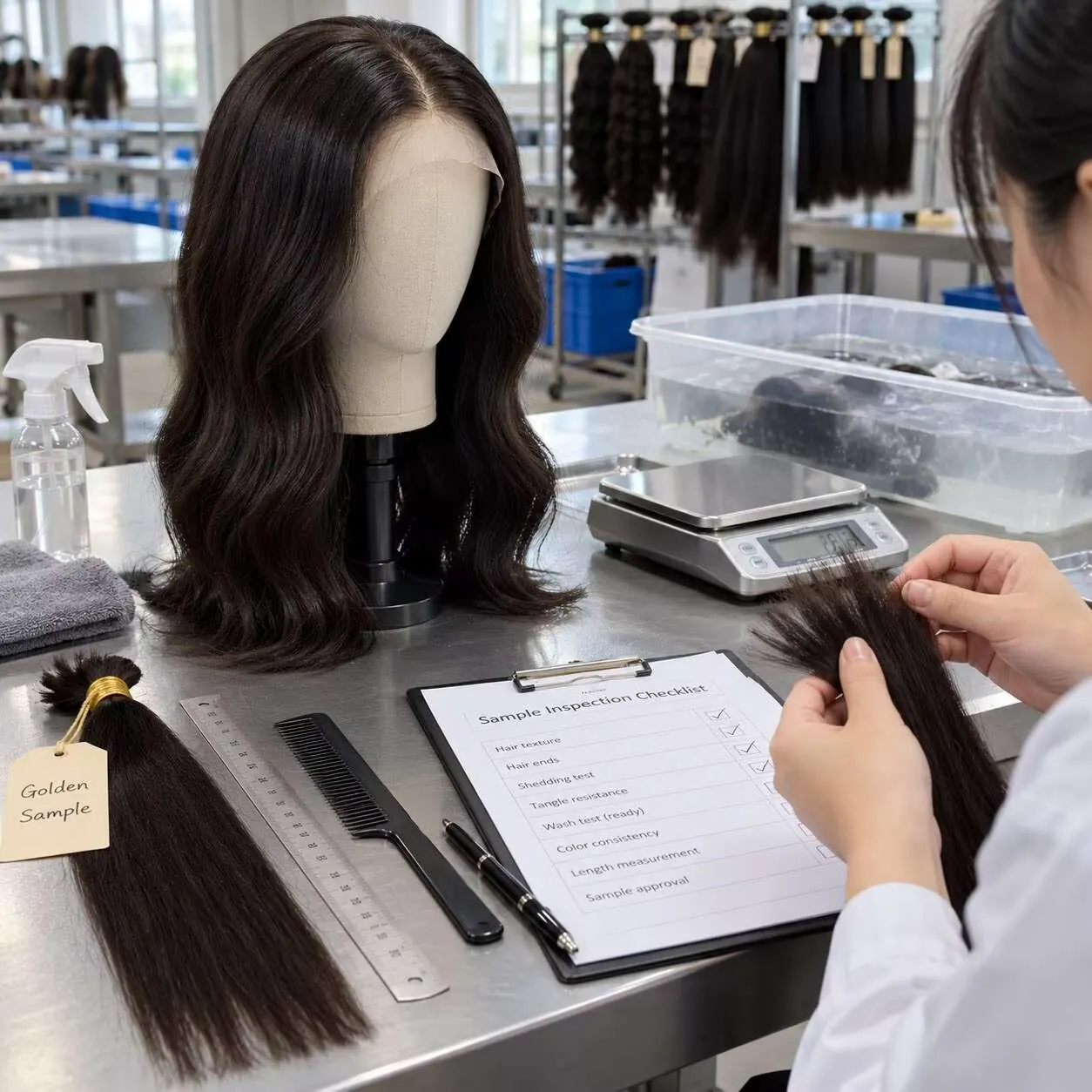
Burmese-origin and Cambodian-origin human hair are increasingly requested by buyers looking for premium or differentiated wig collections.
The challenge is that origin names are often used as marketing categories.
A buyer asking for actual Burmese-origin or actual Cambodian-origin hair should therefore build verification into the sourcing process.
The goal is not to decide that one origin is universally better.
The goal is to establish whether the offered material is authentic to the claimed sourcing route and whether it performs correctly for the intended product.
Why These Origins Need Careful Verification
Compared with broad commercial categories such as Indian or Chinese human hair, Burmese and Cambodian origin claims may be encountered in smaller or more fragmented sourcing channels.
That can create three purchasing risks:
1. **Origin substitution** — another origin is sold under the desired label.
2. **Texture substitution** — a processed texture is marketed as if the origin itself guarantees that pattern.
3. **Grade ambiguity** — the origin name is used without defining processing, cuticle, donor structure or drawing.
For a wholesale brand, those risks matter because the final retail claim may depend on the supplier’s documentation.
Do Not Treat Origin as a Texture Name
“Burmese,” “Cambodian” and similar country names should not be used as shortcuts for a particular curl or wave pattern.
Human hair varies between donors.
In addition, commercial textures can be created through steam setting, mechanical shaping or chemical processing.
Ask separately:
- What is the documented origin?
- What is the natural texture of the proposed lot?
- Has the texture been processed?
- How does the texture recover after washing?
If a buyer wants Burmese-origin hair with a loose deep wave, the origin claim and the texture specification should be written as two different requirements.
What Buyers Should Compare
When comparing Burmese and Cambodian samples, use the same evaluation framework.
Strand Feel and Diameter
Do not assume one origin is always finer or coarser. Compare the actual proposed lots.
Natural Color
Record the starting shade instead of relying on generic “natural black” terminology.
Cuticle Condition
Ask whether the material is claimed to be intact, aligned, altered or removed.
Processing History
Confirm prior dyeing, bleaching, texturing or coating.
End Fullness
Evaluate the final inches, especially on premium long wigs.
Wash Behavior
Use identical washing and drying methods for both samples.
Styling and Color Performance
Test only where relevant to the intended retail product.
Long-Length Programs
Buyers requesting 24–40 inch hair should add extra controls.
Long donor hair is inherently more difficult to source than short or mid-length hair.
For each proposed origin, record:
- measured usable length
- total finished weight
- percentage of shorter strands
- end thickness
- availability by length
- repeat-order capacity
- expected natural variation
A beautiful 40-inch sample has limited commercial value if the same specification cannot be reproduced for future orders.
Raw and Single-Donor Claims
A supplier may describe Burmese or Cambodian hair as:
- Raw
- Virgin
- Remy
- Single donor
- Cuticle aligned
Treat each as a separate specification field.
For example, single donor does not prove that the material is unprocessed.
Likewise, raw does not automatically prove origin.
Buyers should request whatever evidence is commercially reasonable for the claim they intend to make to their own customers.
How to Compare Two Samples Fairly
If a buyer wants to compare Burmese and Cambodian options, keep other variables as close as possible:
- same length
- similar total weight
- same construction
- same density
- same lace
- similar texture target
- same wash method
- same styling test
- same color test, if relevant
This helps isolate the actual material differences instead of confusing origin with construction or weight.
For premium buyers, Vayora recommends comparing performance + fullness + repeatability + cost, not simply first-touch softness.
A Practical Approval Checklist
Before confirming bulk production, record:
1. Claimed country of origin
2. Evidence or supplier documentation available
3. Raw / virgin / processed status
4. Donor structure
5. Cuticle condition and alignment
6. Natural vs processed texture
7. Finished length
8. Finished weight
9. End-fullness requirement
10. Wash result
11. Color/styling result if relevant
12. Golden-sample approval
13. Repeat-order capacity
FAQ
Is Burmese hair better than Cambodian hair?
There is no universal answer. Quality depends on the actual lot, processing, sorting, construction and target product.
Is Burmese hair naturally wavy?
Some donors may have natural wave patterns, but a country name should not be treated as a guaranteed texture specification.
Is Cambodian hair always coarse?
No. Avoid origin stereotypes. Compare the actual strand characteristics of the proposed material.
How can buyers verify true origin?
Use supplier documentation, lot information, sourcing records where available, and clear contractual specifications. Do not rely solely on photos or marketing labels.
What matters most for 30–40 inch wigs?
Usable length, full ends, weight distribution, wash performance, availability and repeat-order consistency become especially important.
Compare Burmese and Cambodian Hair by Actual Specification
If your brand needs true-origin material, long lengths or multiple quality levels, send Vayora the exact product requirements you want to compare.
We can structure the sample review around origin claims, performance, fullness and repeatability.
Explore wholesale wig options, hair extensions and private label development after defining the material specification.
Request a QuotePlan Samples & MOQ