
Where Hand Ventilation Changes the Result
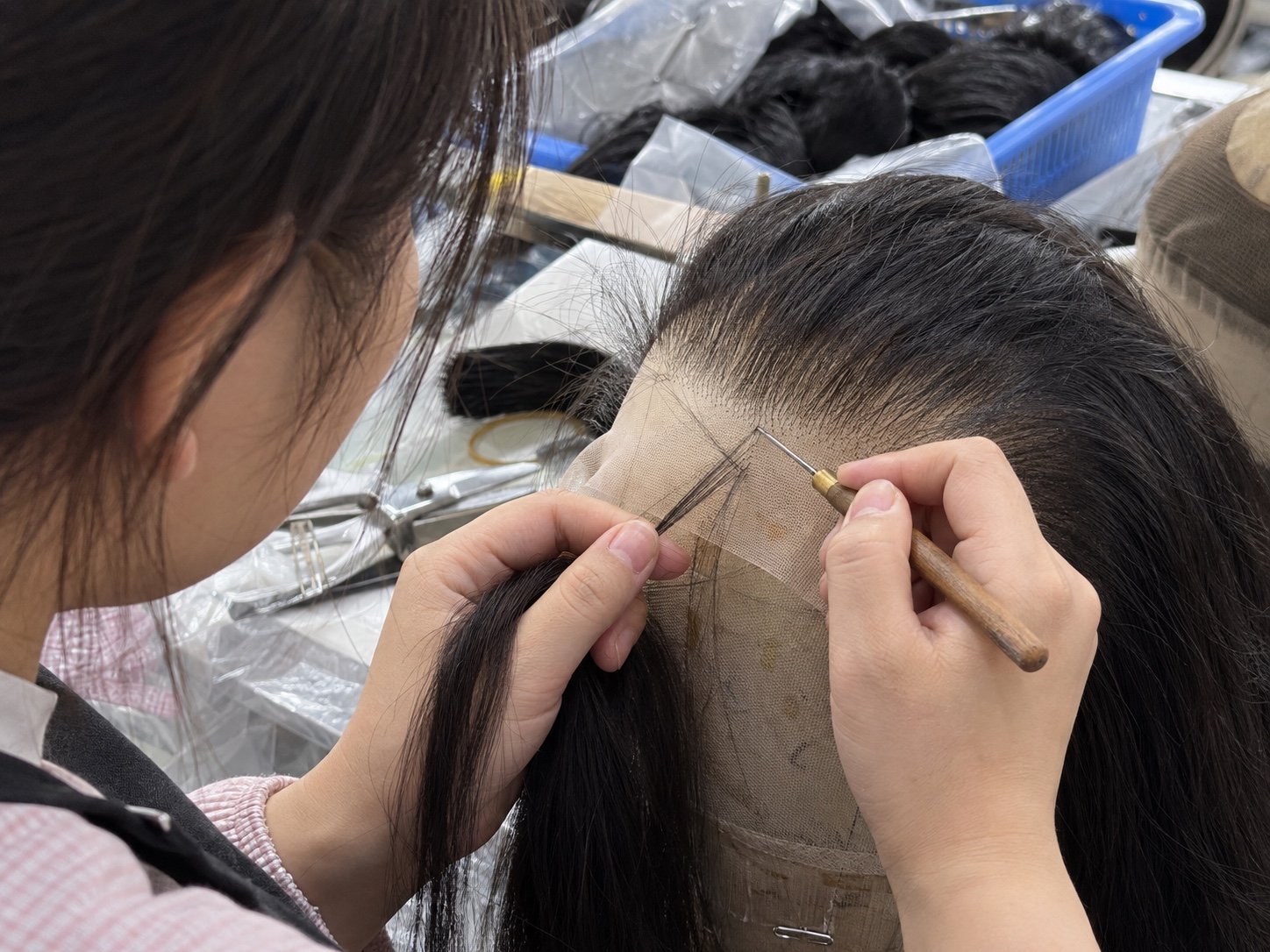
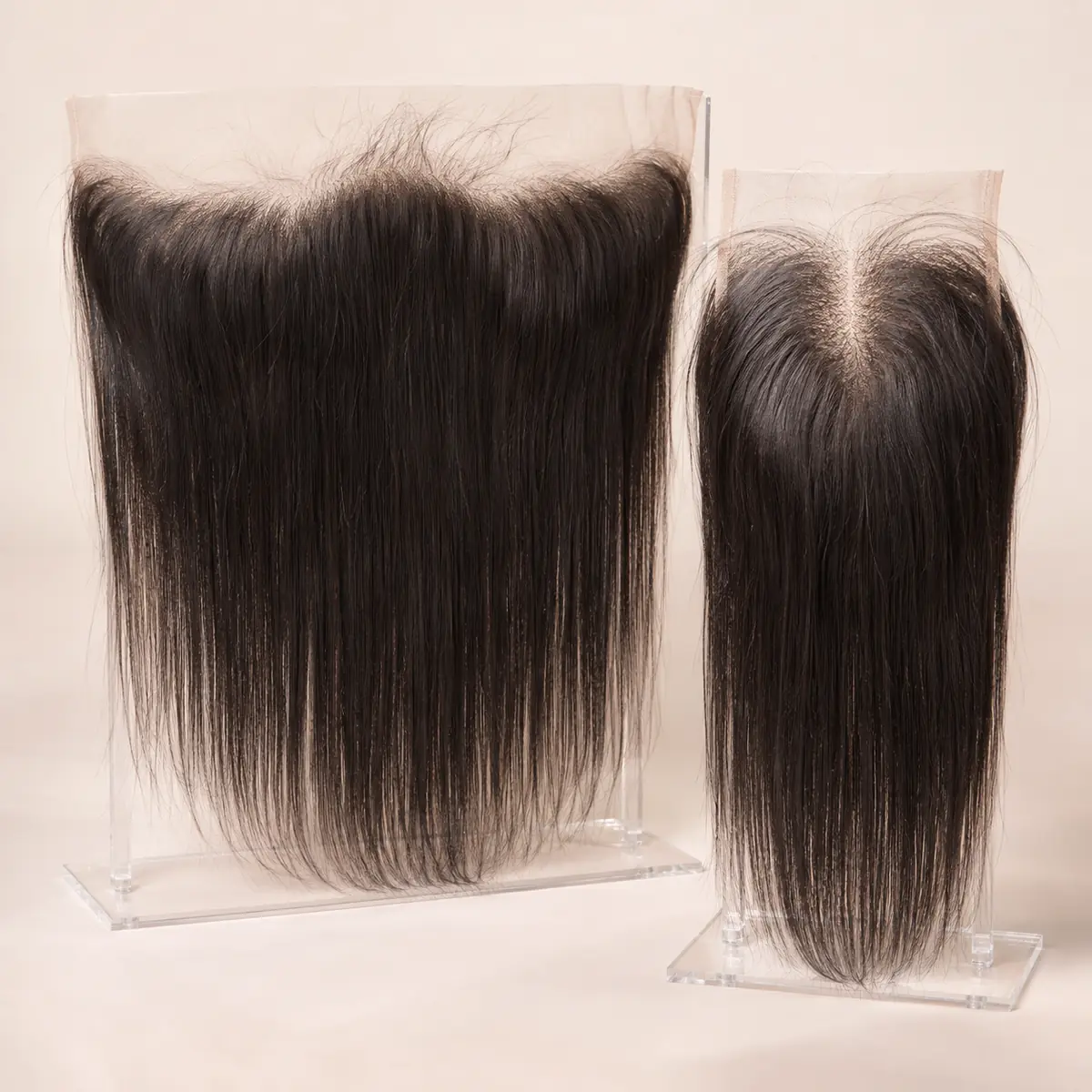
At the front, controlled knot placement and a graduated density can create a softer transition. At a parting, spacing and knot visibility affect how naturally the scalp area appears. Across a larger top or full cap, hand placement can allow more multidirectional movement, while increasing labor, time and cost. A hybrid unit may combine these areas with machine-wefted sides and back.
Compare this specialist method with the broader wig cap construction guide. The chosen lace, cap measurements, hair type and density direction all influence the result.
Knots, Hairline and Parting
Ask for a close view of the knots in neutral light. Confirm the requested knot size and spacing, hairline shape, graduation, parting dimensions and whether bleaching or pre-plucking is part of the approved finish. Treatment can change the appearance and durability of a knot, so inspect the finished unit after normal washing and combing rather than judging a styled photo alone.
Labor and Production Planning
Hand ventilation takes skilled placement. Larger ventilated areas and highly detailed hairlines generally require more work than a limited lace front. Lead time and quotation depend on the area, construction, hair length and specification; agree them for the actual project. Do not infer a fixed MOQ or delivery promise from the method name.
Quality Checks for a Ventilated Unit
- Zone coverage: Check the front, parting, crown, sides and transition to wefts against the approved map.
- Knot security: Inspect visible loosening after gentle combing and washing; distinguish normal loose hairs from recurring root loss.
- Base integrity: Look for lace tears, distortion and excessive tension around dense or bleached areas.
- Density graduation: Assess the hairline and parting under the same light and on the same head form.
- Fit and finish: Compare cap measurements, seam comfort, styling movement and post-wash appearance.
Use the QC framework to define applicable checks and the sample process to document revisions and written approval. For product formats, review lace-front wigs.
Questions to Ask Before Approval
Which exact areas are hand ventilated? What knot and lace finish is proposed? How will the hairline and density be judged? Which alterations require a new sample? Ask for project-specific close-ups or inspection records where available and keep the approved physical reference for bulk comparison.
Define a Hand-Ventilated Specification
Send the target cap, lace area, hairline reference, length, texture, quantity and packaging brief for a project-specific review.
Translate the ventilation requirements into finished cap, hairline and styling specifications. Review wig construction and wholesale range when preparing the next project decision.
Frequently Asked Questions
What does hand ventilation mean in wig making?
A worker knots small groups of hairs into lace or another base to shape the hairline, parting and hair direction in a specified area.
Are all lace-front wigs fully hand tied?
No. Many combine a hand-ventilated lace front with machine-wefted back and sides. Confirm the ventilated area in the specification.
Does hand ventilation always mean better quality?
It offers styling and movement advantages in the ventilated area, but results depend on knotting, density, hair direction, base material and workmanship.
What should a wholesale buyer inspect?
Review knot size and security, natural front graduation, parting coverage, hair direction, shedding and the transition to machine-wefted sections against the approved sample.
See how ventilation fits into the manufacturing process, compare wig cap constructions, and check lace material and area choices.