
Wig lace is a base for the hairline or parting, not a single quality grade. Wholesale buyers need to specify the area, shade, fineness, knot finish, cap connection and intended wear. A softer or finer lace can look discreet but may need more careful handling; durability and appearance should be judged on an actual sample.
Separate Lace Material From Lace Area
Descriptions such as HD and transparent usually refer to appearance and how the base blends under certain conditions. Ask for comparable swatches against the intended skin-tone range and lighting. A frontal, closure or full-lace designation describes coverage and construction. It does not, by itself, establish the material’s feel or durability.
| Area | Typical decision | Inspect on the sample |
|---|---|---|
| Closure, such as 4×4 or 5×5 | Defined top parting with a smaller lace zone. | Parting space, edge transition and integration with the cap. |
| Frontal, such as 13×4 or 13×6 | Wider front hairline and different parting depth. | Front edge, ear areas, hairline density and cap fit. |
| Full-lace or larger lace zones | More areas of lace and potentially more styling directions. | Seams, stretch, ventilation consistency, comfort and handling. |
Listed dimensions are nominal formats. Confirm the actual measurements and placement in the product specification. Compare closure components, frontal components and finished lace-front wigs as separate buying briefs. Use the four-format sample comparison before approving coverage.
Shade, Fineness and Knot Visibility
Photograph lace against a consistent background and on the intended skin-tone range in daylight and neutral indoor light. Review the edge both before and after any intended preparation. Examine knot size, spacing and graduation along the hairline. If pre-bleached knots or pre-plucking are requested, review each finish separately and whether it affects hair security or lace integrity. Define optional baby hair and free/center/side part in the same sample sheet. A pre-cut edge describes an agreed cut line, not the lace material or knot finish. “Invisible” or “smaller-looking” knots must be judged against the approved physical sample, with lighting/background recorded; do not treat those words as an absolute guarantee.
Durability and Wearing Method
Check the lace under gentle stretch and after normal washing. Thin material may show a natural transition yet require a different care instruction from a more robust base. Ask how the lace joins the cap, whether the unit is intended for glueless wear or adhesive, and what parts are likely to receive repeated tension.
Specify Lace Before Bulk Approval
- Define material direction and physical swatch or approved sample.
- Mark the lace area and actual measurements on the cap plan.
- Record shade, hairline shape, knot finish and parting.
- Test fit, washing, gentle handling and expected wearing method.
- Agree tolerances and how production units will be compared with the approval reference.
See cap construction for the whole base, hand ventilation for knot placement, quality control for production checks, and sample planning for case-by-case order terms.
For a sourcing programme, compare the commercial specifications for HD lace development, finished closure wigs, full-lace construction and 360 perimeter-lace programmes. Confirm the physical material and complete cap on the approved sample.
Choose Lace for the Actual Product
Share the lace area, target shade, construction, hairline, cap size, quantity and market so the available sample and quotation can be assessed for the specific brief.
Common Lace Areas and Sizes
| Area | Typical choice | Approval point |
|---|---|---|
| Closure: 4×4, 5×5, 6×6, 7×7; 7×5 request | Defined parting area on top | Check actual width/depth, parting and perimeter join; 7×5 is not 7×7. Confirm development availability separately |
| 13×4 frontal | Wide front hairline with moderate depth | Check temple shape, knot visibility and seam |
| 13×6 frontal | Deeper top coverage and flexible parting | Check ventilation area and density distribution |
| 360 or full lace | Perimeter or extensive lace coverage | Confirm the exact base, cap fit and handwork |
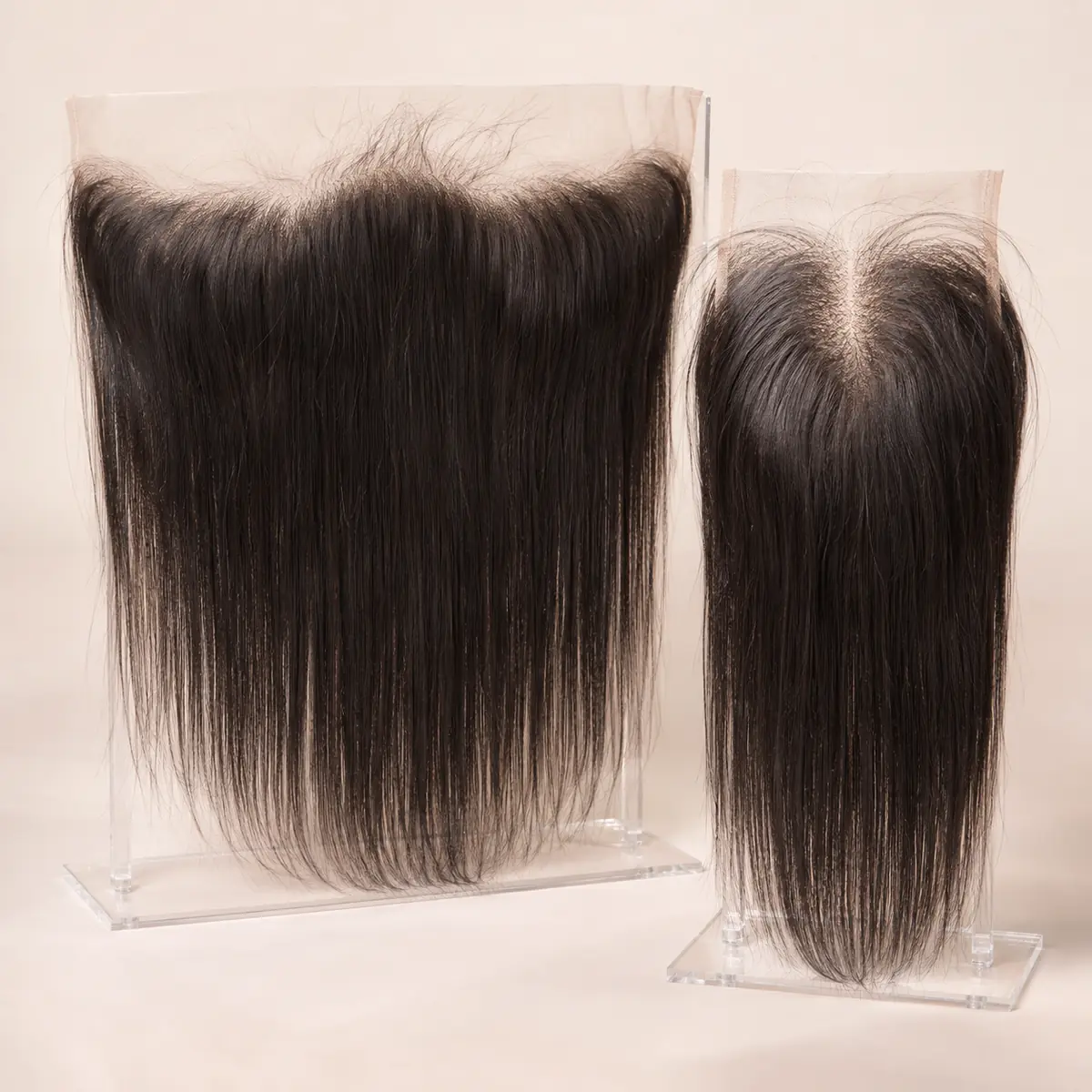
Connect lace selection with the finished construction and intended wig collection. Review wholesale wig product directions when preparing the next project decision.
Frequently Asked Questions
What is the difference between 13×4 and 13×6 lace?
Both span the front hairline, while 13×6 extends deeper into the top for more parting flexibility and usually more hand ventilation.
Is HD lace always better than transparent lace?
No. HD may look less visible, while transparent lace can offer a practical balance of appearance, handling and cost. Compare actual samples for the target wearer.
Which closure size should a wholesale buyer choose?
Match 4×4, 5×5, 6×6 or another size to the target parting area, styling needs, product position and approved sample.
Does lace shade alone determine a natural hairline?
No. Knot visibility, front density graduation, hair direction and installation also affect the result.
Compare cap construction and hand ventilation before finalizing the sample brief.