
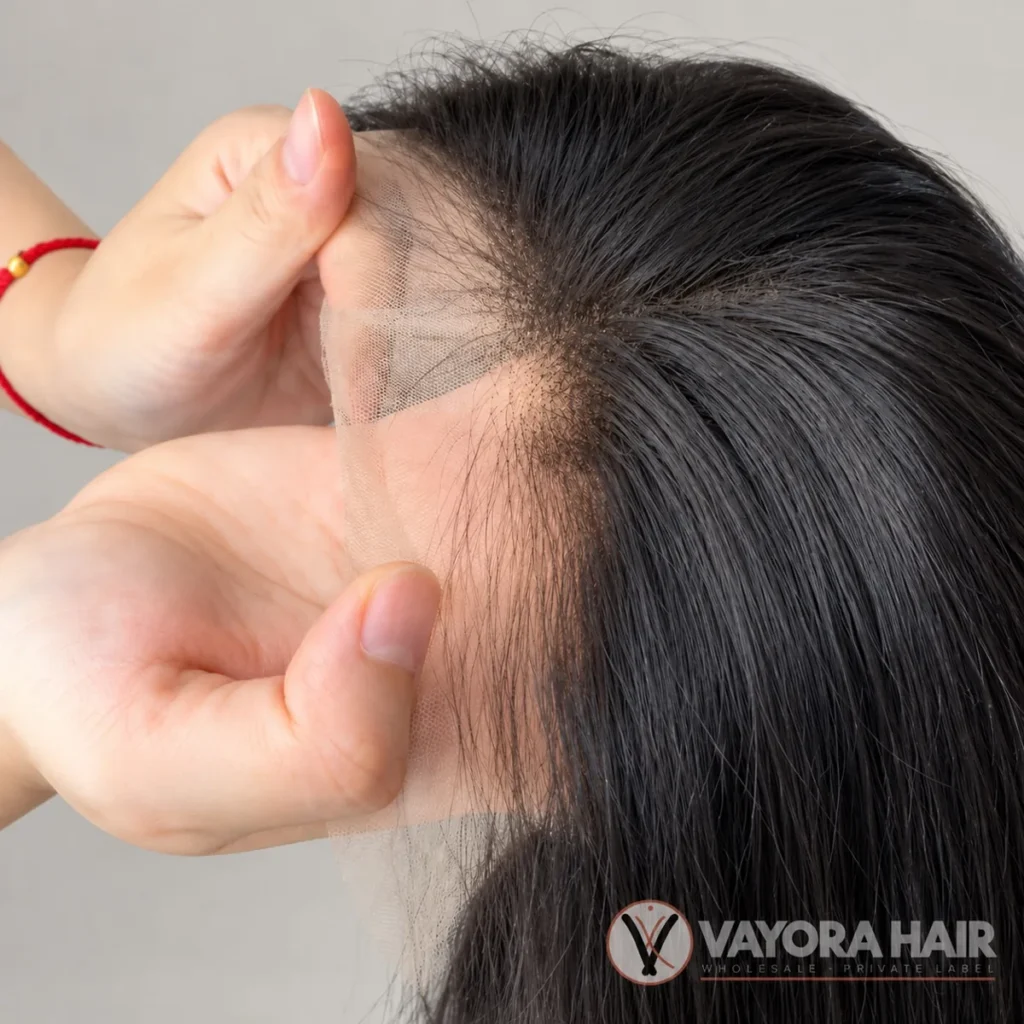
Raw Material & Origin · Wholesale Buyer Guide
Single-Donor vs Multi-Donor Human Hair: What Wholesale Buyers Need to Know
“Single donor” is frequently used as a premium claim in the human-hair market.
For B2B buyers, the useful question is not whether the phrase sounds premium.
It is whether donor structure changes the performance, availability and consistency required for the product being developed.
Single-donor and multi-donor hair can both be commercially valid.
They simply represent different sourcing structures.
What Single Donor Means
In the strictest sense, single-donor hair means the hair in the specified bundle or lot comes from one person.
Potential advantages can include:
- more natural consistency within that donor’s texture
- consistent natural shade within the donor lot
- easier preservation of an individual donor’s strand characteristics
- premium traceability positioning where properly documented
However, single-donor status alone does not prove that the hair is:
- raw
- unprocessed
- cuticle intact
- cuticle aligned
- free from coating
- suitable for aggressive color processing
Those are separate characteristics.
What Multi-Donor Means
Multi-donor hair combines material from more than one person.
This is common in commercial manufacturing because it can help suppliers build consistent:
- lengths
- colors
- weights
- textures
- order quantities
- repeat programs
Multi-donor does not automatically mean low quality.
A carefully sorted multi-donor lot can perform well if root-to-tip direction, processing, strand quality and construction are properly controlled.
For many scalable wholesale programs, controlled multi-donor sourcing can be commercially practical.
Single Donor Is Not Automatically Better for Every Program
A premium custom piece may benefit from the natural consistency of a single donor.
A large retail wig range may place more value on repeatable color, length and supply.
The right choice depends on:
- product positioning
- expected monthly volume
- acceptable variation
- target retail price
- natural texture requirement
- color-processing plan
- replacement/reorder needs
A buyer should therefore choose donor structure as part of the product strategy rather than as a status symbol.
Cuticle Alignment Is a Separate Question
One of the most important distinctions is that single donor and cuticle aligned are different concepts.
A single donor can be mishandled and lose directional control.
A multi-donor lot can be carefully sorted so strands remain oriented root to tip.
Similarly, Raw, Virgin and Remy are separate terms.
A professional specification should list each one independently:
- Origin
- Donor structure
- Cuticle condition
- Alignment
- Processing history
- Drawing
- Finished construction
This avoids ambiguous premium labels.
Availability and Repeatability
Single-donor material is naturally constrained by what an individual donor can provide.
This becomes especially important for:
- 26–40 inch lengths
- naturally light shades
- unusually fine or coarse textures
- large monthly orders
- color-matched repeat orders
If a buyer needs hundreds of identical units every month, the sourcing strategy may require carefully controlled multi-donor sorting or multiple approved lots.
The commercial question is not only “Which sample is best?”
It is also “Which specification can be reproduced?”
How to Choose for Wigs, Extensions and Toppers
Luxury Custom Wigs
Single or tightly controlled donor lots may be useful where natural variation and premium traceability are part of the value proposition.
High-Volume Retail Wigs
Controlled multi-donor sorting can support repeatability, scale and stable specifications.
Hair Extensions
The choice depends on texture uniformity, color, attachment system, length and price position.
Women’s Toppers
Strand feel, shade matching, density and blending may matter more than donor count by itself.
Men’s Hair Systems
Fine strand selection, ventilation behavior and realism may be more commercially important than whether the material carries a single-donor label.
What to Put in the Purchase Specification
A donor-related specification should record:
1. Single / few / multi-donor
2. How the supplier defines the term
3. Origin claim
4. Cuticle condition
5. Direction/alignment
6. Processing history
7. Natural or processed texture
8. Drawing and end fullness
9. Length and weight tolerance
10. Sample approval method
11. Repeat-order tolerance
If single-donor status is essential to the buyer’s brand claim, it should also be included in the commercial documentation.
Grade-Specific Donor Verification
Single-donor hair is often presented as the most desirable sourcing option, while mixed-donor hair is often described as a compromise. For professional buyers, that binary is too simple. Donor composition is one variable among several: sorting, hair history, alignment, processing, grading and finished-product construction also influence consistency. A meaningful comparison starts with clear batch definitions and sample acceptance criteria.
First separate origin, collection form and donor composition
Burmese-origin and Vietnamese-origin are geographic sourcing descriptions, subject to traceability. Braided hair describes how material may be collected or presented; it is not another country of origin. A single braid may originate from one person, but that status should be documented for the lot. Factory feedback indicates that some Burmese and Vietnamese sourcing grades are mixed-donor, while the quoted braided-hair option is described as single-donor. These statements are preliminary supplier information and should be verified against each actual purchase lot.
What single donor does—and does not—establish
A documented single-donor lot can offer a clearer collection history. It does not automatically establish that the hair is virgin, unprocessed, uniformly thick from roots to tips, or cuticle-aligned. The original donor’s hair history, sorting practices and later factory steps remain important. Likewise, a carefully selected mixed-donor lot can meet a buyer’s target for texture, color, length and finish if the supplier can demonstrate consistent grading and production controls.
Compare the measurable finished result
Agree on the length measurement method and minimum strand length; inspect tip fullness, short-hair ratio and consistency across bundles or units. Assess texture uniformity in natural and styled states, and check the same after an agreed wash cycle. For wigs, record actual finished weight, cap size, construction, distribution of hair and the seller’s stated density class. A “250% density” label is a supplier specification rather than an internationally standardized mass value, so request a weight range and reference sample instead of treating the percentage as a universal measurement.
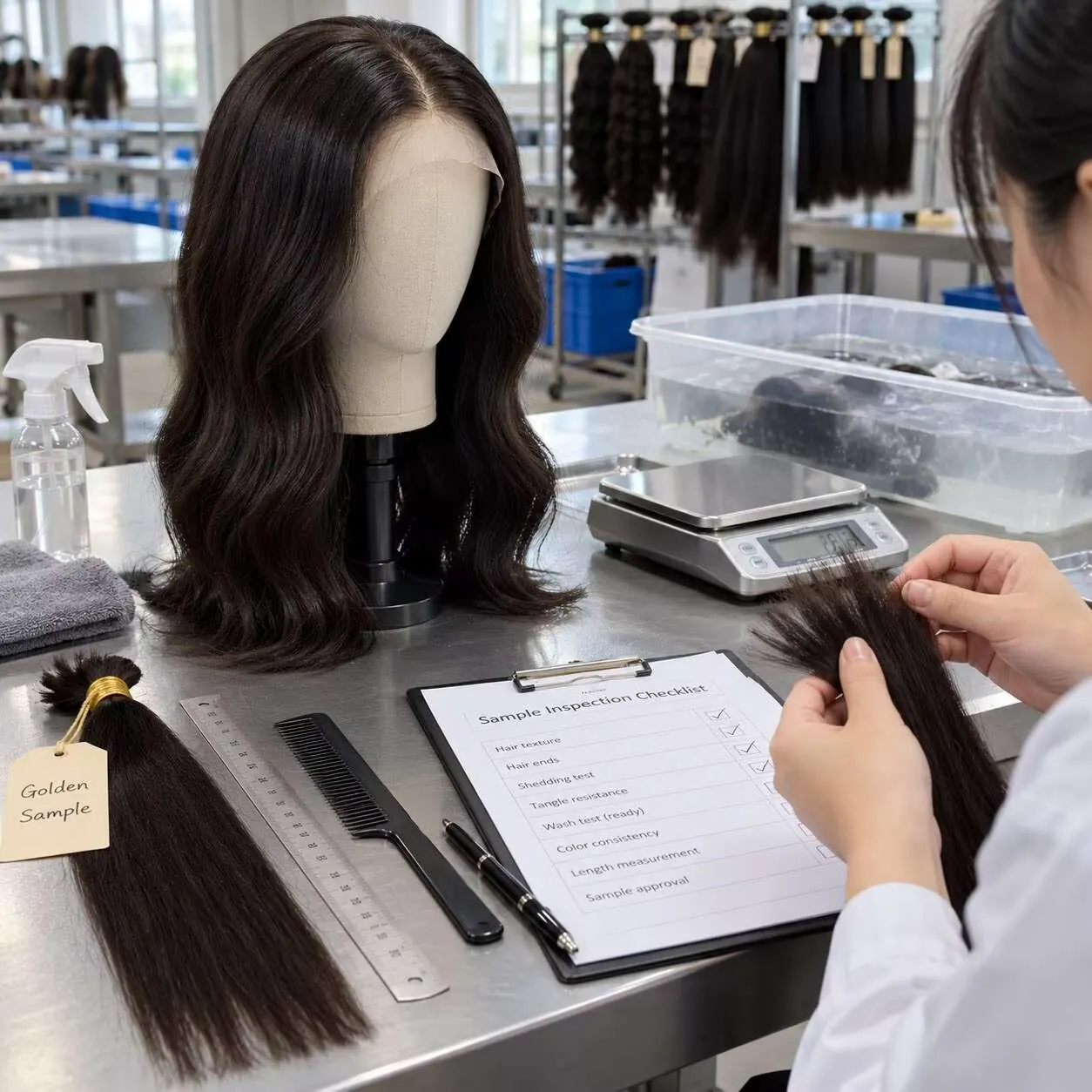
A wholesale sample verification workflow
Order clearly labeled samples of the proposed grades with the same target length, texture and intended wig construction. Photograph and weigh them upon receipt. Measure the longest stretched strands using the agreed reference point; inspect ends and parting/cap workmanship. Apply identical gentle washing and drying procedures, then document detangling, frizz, softness and visible fullness. If the sale depends on specific cuticle condition, color-processing limits or traceable donor count, request additional documentary or laboratory evidence suited to that claim.
Questions to include in the RFQ
Ask whether “single donor” refers to a complete wig, one bundle, a collection batch or only a component. Request the origin statement, any mixing or blending policy, treatment description, texture process, color history, grade code, tolerance definitions and replacement/remediation terms for deviations. Require the supplier to label any comparisons with the exact sample IDs. A single video of attractive flowing hair cannot establish donor count or supply consistency.
How Vayora should position the choice
Vayora can offer sourcing discussions across mixed-donor Burmese/Vietnamese options and a factory-described single-donor braided-hair option, subject to confirmation of lot identity and processing. We recommend matching the sample to the buyer’s price position, target feel, required end fullness and repeat-order requirements, rather than promising that one donor category is automatically superior.
Request a Quote
Request a side-by-side grade comparison with documented donor composition, finishing description and sample IDs.
Related Products & Buyer Guides
Frequently Asked Questions
Is single-donor hair always raw or virgin?
No. Donor count and processing history are independent claims.
Is mixed-donor human hair necessarily inferior?
No. Performance depends on grading, blending, processing and manufacture as well as raw material.
Is braided hair a geographic origin?
No. Braided describes a collection form; geographic origin requires separate evidence.
Does single donor guarantee cuticle alignment?
No. Hair handling, sorting and subsequent processing can affect the claimed condition.
How should buyers compare grades fairly?
Use matched samples, an agreed test method, specification sheets and documented lot identity.
Choose Donor Structure Based on the Product, Not the Label
Tell Vayora whether your priority is premium traceability, natural texture, scale, long lengths, color processing or repeatability.
We can help organize sample options around the attributes that matter to your program.
Explore wholesale wig options, hair extensions and private label development after defining the material specification.
Request a QuotePlan Samples & MOQ