
Three Construction Directions
| Method | Typical use | Buyer trade-off |
|---|---|---|
| Machine-wefted | Rows of hair wefts sewn to a cap base, often with a separate lace front or closure. | Efficient coverage and repeatability; inspect tracks, seams, bulk and airflow. |
| Hand-tied | Individual or small groups of hairs knotted into lace or another base, across part or all of the cap. | Flexible movement and parting in the ventilated area; more labor and careful knot QC. |
| Hybrid | Hand-ventilated lace or top joined to a machine-wefted back and sides. | Balances appearance and cost; inspect the transition between components. |
Cap Materials and Functional Parts
Lace supports a front hairline or parting zone. Check its shade, softness, dimensions, edge finish and knot visibility. Monofilament can provide a sheer parting area with a different feel and durability profile. Elastic mesh contributes stretch and airflow; its recovery and seam strength affect fit. PU or silicone areas may be used for grip, attachment or a defined perimeter; assess skin contact and cleaning requirements with the intended customer in mind.
Ear tabs, nape, combs, clips, adjustable straps and elastic bands are fit systems, not decorative details. Their placement should match the chosen cap size and wearing method. A glueless design may rely on different grip elements from a unit intended for adhesive.
Match Construction to the Buyer Brief
Record cap circumference, front-to-nape and ear-to-ear measurements, lace area, parting direction, attachment preferences and intended wear. Ask whether the product must allow free parting, a specific hairline, frequent washing or extended wear. Construction choices affect both the appearance and the cost and time needed to produce the unit.
Inspection Points Before Bulk Production
- Measure the cap and lace against the written specification.
- Inspect seam and weft security with gentle handling; check exposed or bulky tracks.
- Review knots, hairline graduation and parting coverage in neutral light.
- Test stretch, recovery, adjusters and fit after normal handling.
- Compare the approved sample with a finished unit and record acceptable variation.
For the specialist knotting method, read hand-ventilated wigs. Compare lace-front options, plan samples and quantities, and agree checks through quality control.
Questions to Settle With a Manufacturer
Which zones are hand-tied or machine-wefted? What are the cap measurements and allowed fit variation? Which lace, mono, mesh, PU or silicone components are used? Can the proposed sample show the inside construction and attachment details? Any answer should be captured in the approved specification.
Apply these cap comparisons to a buyer brief for glueless collections, lace-front programmes or full-lace development. A custom manufacturing review can connect the benchmark, specification and golden reference before bulk production.
Specify a Cap for Your Collection
Share the target customer, cap size, lace area, styling requirements and sample reference. Construction, availability, minimum quantities and lead time can then be confirmed for the particular project.
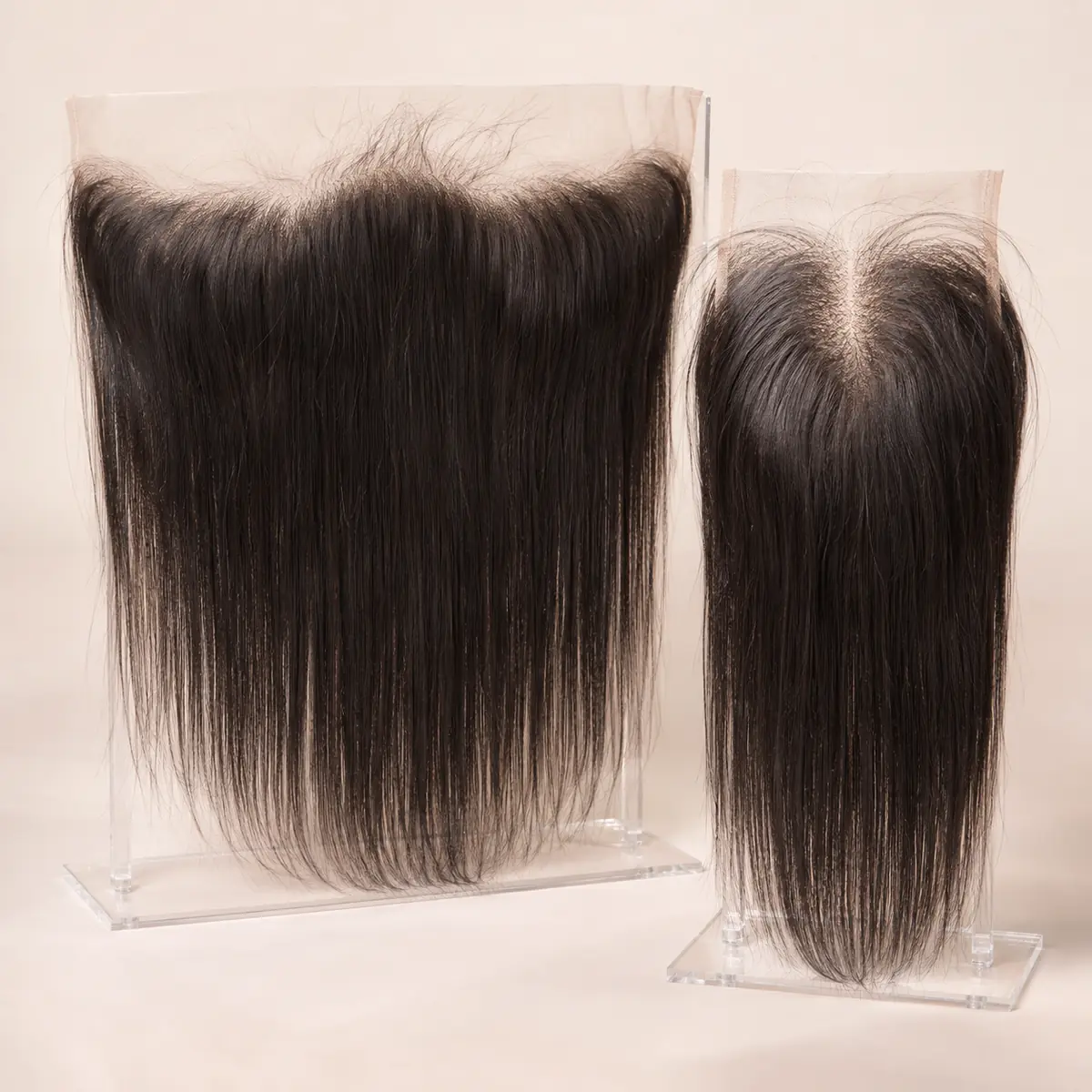
Use the cap construction trade-offs to define a complete wholesale wig brief. Review finished wig collection scope when preparing the next project decision.
Frequently Asked Questions
What is the difference between a machine-wefted and a hand-tied cap?
A machine-wefted cap uses sewn hair tracks. A hand-tied cap ventilates hair into the base for more movement and parting flexibility, with more labor and different QC needs.
Is a hybrid wig cap suitable for wholesale collections?
It can balance a hand-ventilated front or top with machine-wefted back and sides. Approve the transition, fit and hair distribution on a sample.
What measurements should a buyer specify?
Define circumference, front-to-nape, ear-to-ear, lace area, parting and the attachment or adjustment components for the intended wearer.
How should cap construction be checked before bulk production?
Inspect the inside cap, seams, lace alignment, attachment points, fit, symmetry and transition between hand-tied and wefted areas against the approved sample.
Continue with the wig lace guide and manufacturing stages when writing a complete cap specification.