
VAYORA · Raw Material Verification · B2B Buyer Guide
36–40 Inch Wig Sourcing: How to Verify Length, Fullness and Sample Approval
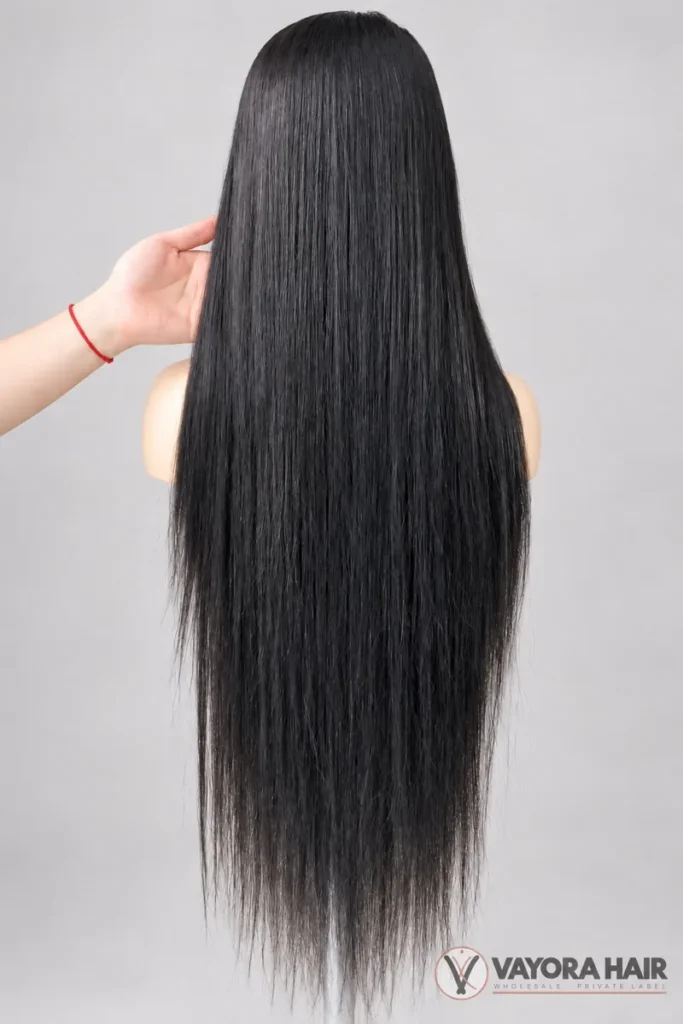
A 36-inch or 40-inch human-hair wig is a more demanding sourcing project than a standard-length style. Photos can exaggerate the effect of hair movement and styling; a high density percentage does not tell you the finished weight; and an apparently full mid-length can still finish with visibly thin ends. The most reliable approach is to approve the construction and measurable sample—not just the product name.
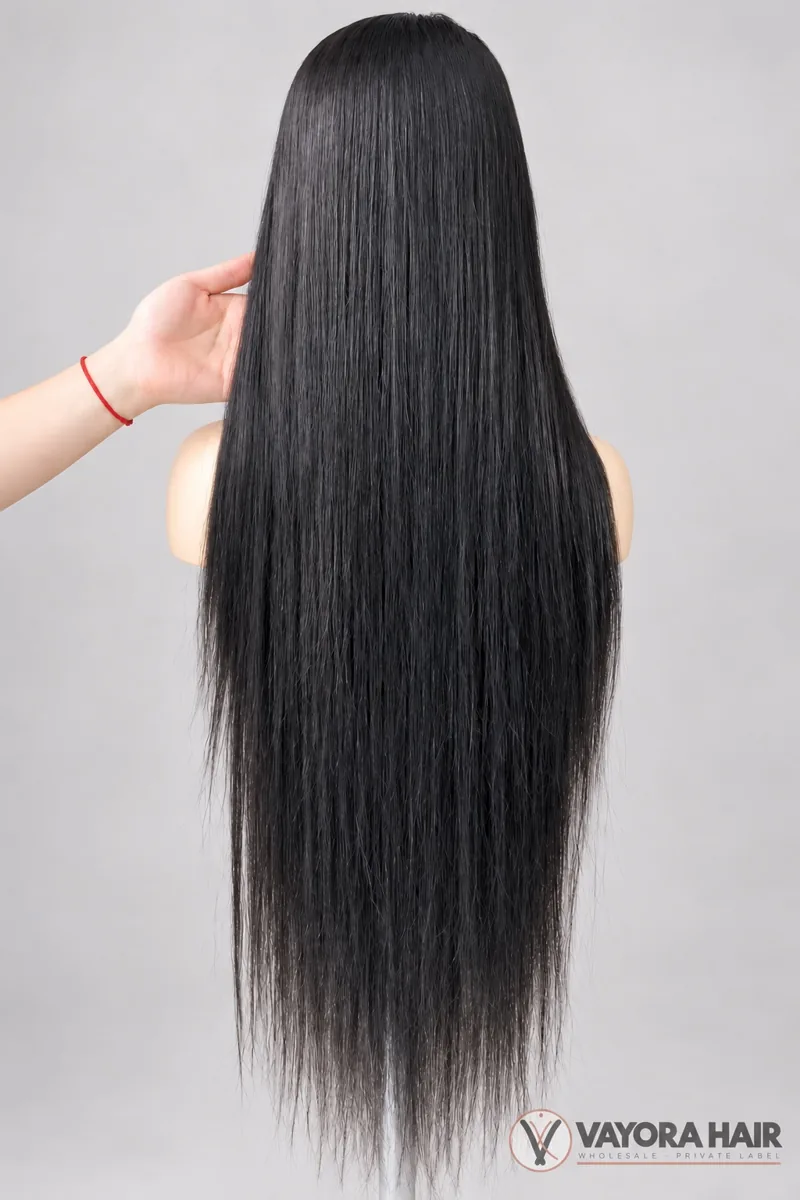
Write a reproducible length specification
Confirm the exact measurement start point—such as crown-to-longest-tip on the finished wig, or the length of specified individual hair components—and put it on the purchase order. For loose-wave or curly products, specify whether length is measured gently extended, and separately record the hanging visual length in its styled state. Clarify whether the target is at least 36 or 40 inches and define acceptable tolerance and measurement conditions. The factory has verbally stated that finished length should meet or slightly exceed the labeled length, but this must be documented and verified rather than published as an unconditional guarantee.
Fullness is more than a density percentage
“250% density” is a commercial descriptor whose reference point varies by supplier. The same stated density can look different across cap size, lace area, curl pattern, layered cutting and allocation of shorter filler hair. Establish target finished net hair weight, cap construction and visual references for crown, mid-shaft and ends. Agree on how full the last several inches should look under the same lighting. A heavier wig is not automatically the best choice: comfort, drape and buyer positioning matter too.
Approve texture, movement and tip finish together
A loose-wave unit can look substantially shorter while styled than when a strand is measured gently extended. Approve the wave reference using unedited front/back/side images plus a movement video. Ask for close-up photographs of the final 6–8 inches and a controlled comparison before and after the wash-and-dry procedure agreed for the project. Do not infer “no tangling” from a short demonstration or promise it universally; record the behavior observed under named test conditions.
Confirm what “in stock” actually means
The factory has reported ample stock for lengths below 40 inches and the ability to arrange production. This does not establish ready-made 36-inch wigs in all textures, that 40 inches is included, or immediate dispatch. A buyer should request stock by raw-material grade, usable length, color, texture and amount, plus production capacity, sample lead time and bulk lead time confirmed on the quotation date. Different origins and collection methods may support different usable lengths.
Sample approval checklist for a 36–40 inch program
Record the exact origin/collection claim, donor composition, grade, color history and finishing. Record lace dimensions, cap size, curl reference, agreed measured length and point of measurement, tolerance, total hair weight, claimed density, construction method, tip-fullness reference, wash/dry procedure, packaging and approved photo/video references. Link every approved detail to a physical golden sample or uniquely identified sample record. For repeat orders, require a documented variation-approval process.
Example: 40-inch loose-wave, high-density inquiry
For a buyer asking for a 40-inch loose-wave wig at “250% density,” an initial specification should be treated as a request to quote rather than an approved finished product. Vayora should confirm the material grade, whether 40-inch usable stock exists, actual weight target, lace construction, cap size, treatment disclosure, texture reference, measured versus worn length and sample testing. A separate 36-inch product video can demonstrate appearance but cannot validate the 40-inch SKU.
Vayora wholesale next step
Share the target length, preferred hair grade, density positioning, lace and cap requirements, order quantity and reference images. Vayora can then discuss the appropriate sample, production feasibility and documented approval criteria; availability and lead times are confirmed case by case.
Frequently Asked Questions
Why does a 40-inch loose-wave wig look shorter when worn?
Wave shape reduces its vertical hanging length. Specify both gently extended measurement and styled appearance.
Does 250% density mean a fixed weight?
No. Request the supplier’s reference definition and the finished weight range for the exact cap and length.
Can a 36-inch video prove the quality of a 40-inch wig?
No. It provides visual context, not validation of the different SKU.
Is 40-inch hair always available from stock?
Not necessarily. Verify usable raw-material inventory and ready-made wig stock separately.
What should a golden sample record include?
Measurements, net weight, construction, appearance references, wash observations and a unique sample identifier.
Request a Quote
Request a 36–40 inch wig feasibility review and sample specification before placing your wholesale order.
Related Products & Buyer Guides
- Raw Human Hair Wigs
- Virgin Human Hair Wigs
- Vietnamese Hair Wholesale
- Custom Human Hair Wig Manufacturer
- Samples & MOQ
- Quality Control
- Request a Quote
- Natural-Color Human Hair vs Unprocessed Hair: A Buyer’s Verification Guide
- Single-Donor vs Mixed-Donor Human Hair: What Wholesale Buyers Should Verify
- Wholesale Long Wigs
- Length Measurement Standard
- Weight & Density Tolerance
Premium Extra-Long Wig Sourcing
- Why Are 40-Inch Human Hair Wigs So Expensive? A Wholesale Cost Guide
- 36 vs 38 vs 40 Inch Wigs: Planning an Extra-Long Wholesale Collection
- 250% Density Wigs: Weight, Fullness and Production Cost for Wholesale Buyers
- Premium 13×6 HD Lace Wigs: Custom Length and High-Density Options
- Why Extra-Long Human Hair Wig Production Requires Advance Planning
- 40 Inch Human Hair Wigs Wholesale & Custom Manufacturing