
VAYORA · Wholesale Sourcing
250% Density Wigs: Weight, Fullness and Production Cost for Wholesale Buyers
A 250% density label signals a very full design target in some supplier catalogues, but it does not establish a standardized number of grams across factories. Buyers should approve a visible fullness reference and a measurable weight range for each specific cap, texture and length.


What the percentage means—and what it does not
Density labels such as 150%, 180% and 250% are widely used marketing and factory specification shorthand. They are not globally standardized conversion formulas. Ask the supplier for its own density benchmark and manufacturing tolerance.
Visual fullness vs finished unit weight
Weight may vary with length, texture, strand diameter, cap design, lace area, and hair-length distribution. A numerical weight target helps repeatability but does not replace photographs showing crown, perimeter and end fullness.
Why extra-long high-density wigs are harder to specify
A very long length plus high density can increase material consumption and cap weight. Discuss comfort, cap fit and styling practicality alongside the requested appearance. The heaviest construction is not always the best choice for an end customer.
Specify the lace and hairline
Document lace dimensions, lace shade where applicable, knot finish, parting options, hairline design, cap circumference and adjustability. A 13×6 frontal specification should not be assumed to cover every cap construction detail.
Account for texture and processing
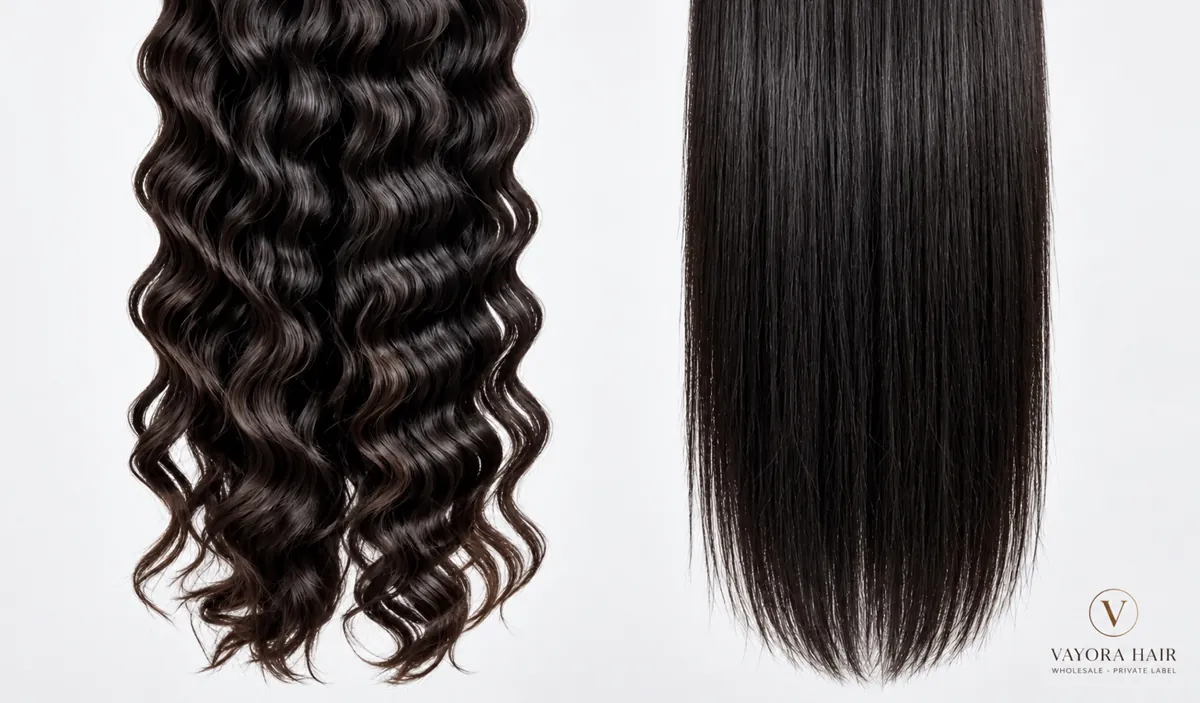
Straight, body-wave and curly textures can present differently even at similar declared density. Require photos in both the presentation style and a repeatable inspection state, and confirm any smoothing or conditioning treatments that affect initial appearance.
Sample approval protocol
Record finished net hair-and-cap weight with an agreed measuring method, length, end profile, density visual reference, parting view, lace close-up, shedding assessment, detangling observations and after-care instructions. Confirm acceptable deviations before bulk production.
RFQ specification for a 250% design
Provide hair type and origin claim; texture; finished length; cap design; lace dimensions; density target and supplier reference; finished-weight range; color; packaging; planned quantity; destination; and test or documentation expectations. Ask for a written statement of assumptions and exclusions.
Frequently asked questions
How many grams is a 250% density wig?
There is no universal weight. Request a style-specific target backed by a physical sample.
Is 250% density better than 180%?
Not inherently. The right density depends on intended appearance, comfort, length, texture and customer preference.
Does HD lace change the density percentage?
Lace type and area affect construction but density labels still require supplier-specific definitions.
How can a brand control bulk consistency?
Approve a golden sample and written weight, visual and construction acceptance criteria before production.
Planning a premium extra-long human hair wig range? Share your specifications, target quantity and reference images. Our team will review feasible custom options and sampling requirements.
Related Products & Buyer Guides
Explore the Extra-Long Wig Range and Guides
- Why Are 40-Inch Human Hair Wigs So Expensive? A Wholesale Cost Guide
- 36 vs 38 vs 40 Inch Wigs: Planning an Extra-Long Wholesale Collection
- Premium 13×6 HD Lace Wigs: Custom Length and High-Density Options
- Why Extra-Long Human Hair Wig Production Requires Advance Planning
- 40 Inch Human Hair Wigs Wholesale & Custom Manufacturing