
VAYORA · Premium Material Sourcing · B2B Buyer Guide
European Hair vs Slavic Hair: What Wholesale Buyers Should Know
For the complete sourcing framework, read the European & Slavic Hair Wholesale Guide. This article focuses on the definitions buyers need to verify.
European Hair and Slavic Hair are often presented as separate premium categories.
In practice, the terminology can vary between suppliers.
For wholesale buyers, the safest approach is to avoid treating either term as a complete quality grade.
Instead, define the actual origin, natural characteristics, processing history and supply conditions behind the label.
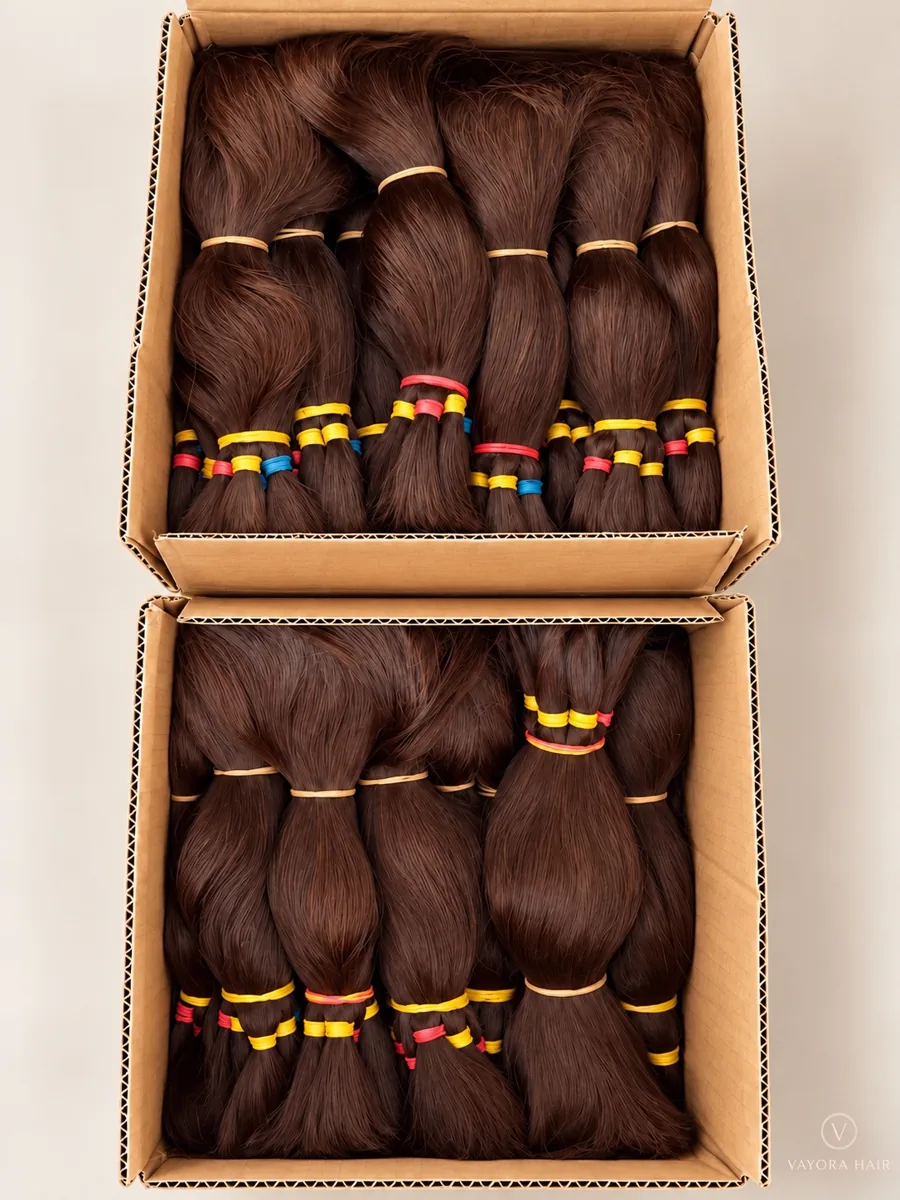
What Does “European Hair” Mean?
European Hair is a broad geographic sourcing term.
Depending on the supplier, it may refer to hair sourced from different parts of Europe.
A buyer should ask for the exact definition rather than assuming that all European hair shares the same:
- strand diameter
- natural color
- texture
- donor structure
- processing history
- availability
What Does “Slavic Hair” Mean?
Slavic Hair is commonly used as a narrower premium trade term associated with sourcing from parts of Eastern Europe and surrounding regions.
However, supplier usage is not standardized.
Some suppliers may use “Slavic,” “Russian,” “Eastern European” or “European” with overlapping meanings.
For this reason, origin terminology should be supported by written supplier documentation when it matters to the buyer's retail claim.
Natural Shade Is Often More Important Than the Label
For many premium buyers, the most valuable feature is not the wording “European” or “Slavic.”
It is the ability to access naturally lighter shades.
Examples can include:
- ash brown
- light brown
- dark blonde
- neutral blonde
- warm blonde
A naturally lighter starting shade can be useful when the final product is intended to remain within a similar tonal range.
Fine Texture Can Be Commercially Important
Premium European/Slavic lots are often selected for a soft, fine strand feel.
This can be useful for products that need:
- natural blending
- soft movement
- low-bulk density
- delicate ventilation
- fine-hair matching
But buyers should not assume every European-origin donor has fine hair.
Approve the actual sample.
Scarcity Creates a Repeat-Order Problem
The major commercial issue with premium European/Slavic material is not only cost.
It is repeatability.
A supplier may have an excellent lot today and a different shade or strand profile next month.
Wholesale buyers should therefore define:
- acceptable shade range
- acceptable texture variation
- acceptable strand variation
- substitution rules
- lot reservation
- repeat-order approval method
This is especially important for established retail SKUs.
Where the Material Fits Best
European or Slavic hair can make sense for:
Premium Toppers
Where natural shade matching and fine texture are important.
Luxury Wigs
Where the brand can support a higher raw-material cost.
Custom Hair Replacement
Where matching an individual client's texture and natural shade matters more than high-volume repeatability.
Premium Extensions
Where lighter natural shades or fine texture are specifically required.
What Buyers Should Verify
A strong purchasing specification should include:
- Claimed country or region of origin
- Supplier definition of European / Slavic
- Donor structure
- Natural shade
- Natural texture
- Strand profile
- Previous processing
- Cuticle condition
- Available lengths
- End fullness
- Wash performance
- Repeat-order availability
- Acceptable natural variation
- Golden sample
Frequently Asked Questions
Is Slavic Hair different from European Hair?
Slavic Hair is often used as a more specific trade category, but supplier definitions vary. Ask for the actual sourcing definition.
Is Russian Hair the same as Slavic Hair?
Not automatically. These terms can overlap in trade language, but the exact origin should be defined.
Is European Hair always finer?
No. Fine texture is common in some premium lots, but natural variation exists.
Which is better for toppers?
The best option depends on natural shade, strand feel, density, construction and the target wearer's hair.
Should buyers pay extra for an origin label?
Only when the origin or natural characteristics create measurable product value and the claim can be supported.
Compare Premium Hair by Specification
Tell Vayora your target shade, texture, length, density and end-customer profile.
We can help structure sample comparisons around the actual characteristics that matter.
Related Commercial & Buyer Resources
- European & Slavic Hair Wholesale Guide
- How to Evaluate Human Hair Wig Quality
- Samples & MOQ
- Quality Control
- Discuss Wig & Topper Specifications
- Why Is European Hair More Expensive Than Asian Human Hair?
- Why Naturally Lighter Human Hair Can Reduce Processing Stress
- Is European Hair Worth the Cost for Premium Wigs and Toppers?