
VAYORA · Premium Material Sourcing · B2B Buyer Guide
Why Is European Hair More Expensive Than Asian Human Hair?
For the complete sourcing framework, read the European & Slavic Hair Wholesale Guide. This article focuses on price and sourcing cost drivers.
European and Slavic hair often appear at the premium end of the human-hair market.
For wholesale buyers, the price difference is not simply a question of one origin being “better” than another.
The higher cost can come from a combination of limited supply, natural shade availability, strand characteristics, sorting requirements and the difficulty of reproducing the same material in repeat orders.
Understanding those factors helps buyers decide when European-origin hair is commercially justified — and when another high-quality material may be a better choice.
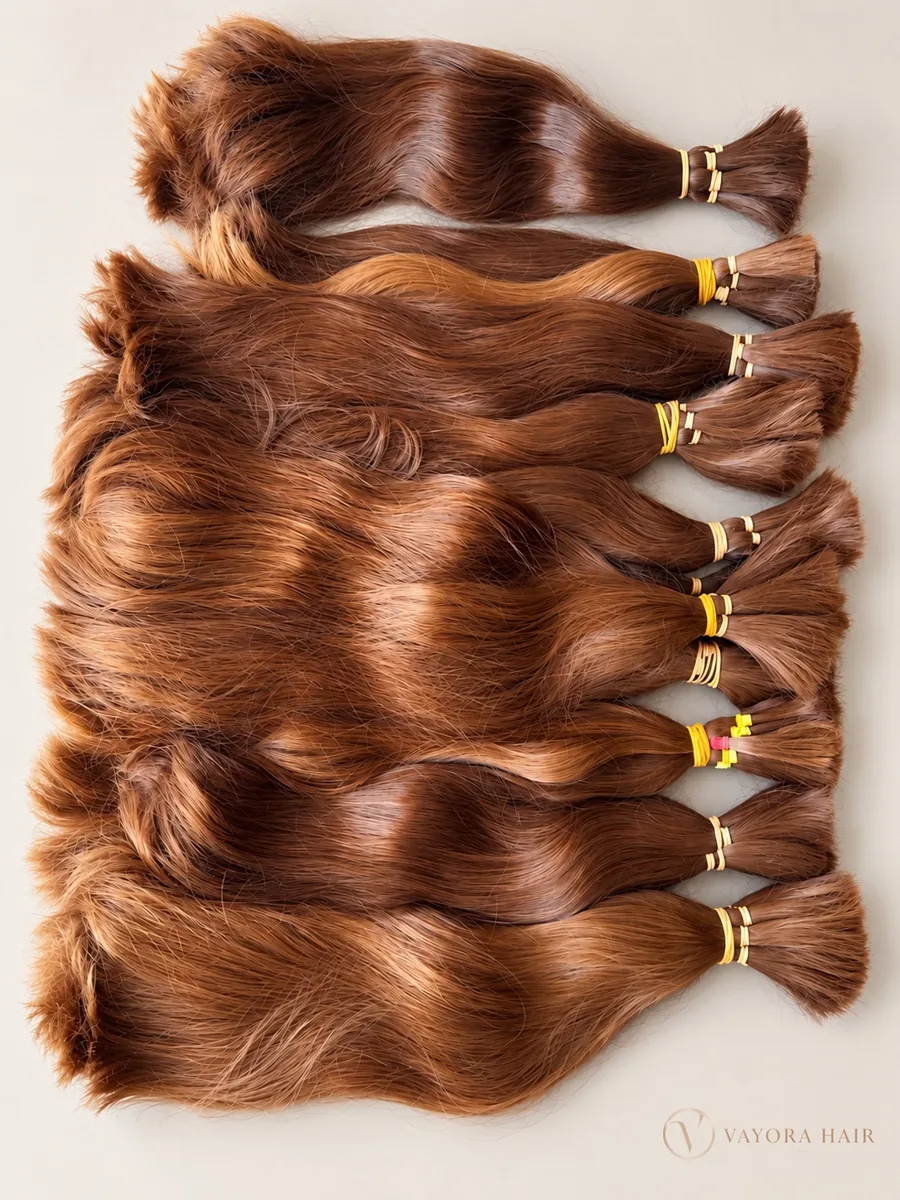
1. Genuine Supply Is More Limited
Premium European and Slavic hair is generally sourced in smaller quantities than mainstream Asian-origin commercial hair.
That matters because large wig programs depend on repeatability.
A buyer may be able to approve an excellent first sample, but the real challenge is whether the supplier can reproduce the same:
- length
- natural shade
- strand feel
- density
- texture
- end fullness
month after month.
Scarcity increases both the material cost and the sourcing risk.
2. Naturally Lighter Shades Can Have Additional Value
One of the main reasons buyers seek European-origin hair is the possibility of sourcing naturally lighter shades such as:
- dark blonde
- light brown
- ash brown
- warm blonde
- medium blonde
Starting closer to the final target shade can reduce the amount of chemical lifting required for some color programs.
That does not mean every European lot is naturally blonde, nor does it mean lighter hair is automatically healthier.
The value comes from reducing unnecessary processing when the starting color already matches the product goal.
3. Fine Strand Characteristics Can Suit Certain Premium Products
Some European and Slavic lots are selected for a finer strand profile and softer movement.
This can be commercially useful for:
- premium women's toppers
- luxury custom wigs
- fine-texture hair replacement pieces
- high-end extensions
- products designed to blend with naturally fine hair
However, strand diameter varies between individuals and regions.
A serious buyer should approve the actual sample rather than assuming that “European” automatically means “fine.”
4. Sorting and Shade Matching Add Cost
Premium material is often sold in smaller lots.
Additional sorting may be required for:
- natural shade
- gray percentage
- strand diameter
- length
- texture
- donor characteristics
- end fullness
The more narrowly a buyer defines the target, the smaller the usable raw-material pool becomes.
This is one reason a highly specific natural-blonde or fine-texture order can cost much more than a standard dark commercial wig program.
5. Long Lengths Increase Scarcity Further
Long European-origin hair can be particularly difficult to source consistently.
A buyer requesting 24", 30" or longer material should not evaluate only the nominal length.
The specification should also control:
- percentage of full-length strands
- end thickness
- usable length
- total finished weight
- natural taper
- repeat availability
Long hair is valuable only when the material can meet the intended appearance and be supplied again.
6. Premium Price Does Not Mean Universal Superiority
European hair is not automatically the best raw material for every wig.
A brand producing high-volume dark wigs may obtain better commercial results from a carefully selected Chinese, Indian or Vietnamese material with strong repeatability.
European-origin material makes the most sense when its natural characteristics solve a specific product problem.
For example:
- reducing heavy color lifting for lighter shades
- matching fine natural hair
- producing luxury toppers
- developing low-volume custom pieces
- creating premium natural-color assortments
The right question is not:
“Is European hair the best?”
It is:
“Does European-origin material create enough product value to justify its cost and supply constraints?”
7. Repeatability Should Be Included in the Price Evaluation
A premium sample has limited business value if it cannot be repeated.
Wholesale buyers should evaluate:
- how the supplier defines origin
- whether material is allocated by lot
- acceptable natural variation
- shade tolerance
- long-length availability
- replacement strategy
- approved substitute rules
- golden-sample control
For a scalable brand, supply stability is part of raw-material quality.
Frequently Asked Questions
Why is European hair expensive?
The premium can reflect limited supply, natural lighter shades, fine strand characteristics, sorting requirements and repeat-order difficulty.
Is European hair always better than Asian hair?
No. Different origins serve different product and supply needs. The best material depends on the product specification.
Is all European hair naturally blonde?
No. European-origin hair includes a range of natural shades.
Does European hair require less bleaching?
It may require less lifting when the starting shade is already closer to the target color. This should be evaluated on the actual material.
Is European hair suitable for large wholesale orders?
It can be, but repeat availability should be verified before building a high-volume program.
Planning a Premium Wig or Topper Program?
Send Vayora your target color, strand feel, length, construction and expected order volume.
We can help compare material options based on product performance, supply stability and budget.
Related Commercial & Buyer Resources
- European & Slavic Hair Wholesale Guide
- How to Evaluate Human Hair Wig Quality
- Samples & MOQ
- Quality Control
- Discuss Wig & Topper Specifications
- European Hair vs Slavic Hair: What Wholesale Buyers Should Know
- Why Naturally Lighter Human Hair Can Reduce Processing Stress
- Is European Hair Worth the Cost for Premium Wigs and Toppers?