
Wholesale specification guide
A shade number is a useful starting point for a wig or extension brief. The approved physical sample is the actual color standard for production. Use this guide to plan a color range, compare references and set a clear approval process before bulk ordering.
Explore wholesale hair extensions · Compare extension methods · Plan samples and MOQ
How to use a human hair color chart
Hair color codes are widely used in trade conversations, but the appearance of a number can vary by supplier, hair material, processing route, lighting and screen. First select a reference shade or color ring, then confirm the product construction, hair quality, texture and approved physical sample. We confirm which shades can be supplied for the requested product and quantity during quotation.
24 trade shade references: a starting matrix
These reference codes and typical names are not global color standards, an official VAYORA physical color ring, a stock list or a bleaching guarantee. Names can differ between suppliers, particularly #5, #14 and supplier-specific labels. Map each selected code to an approved physical master and your brand code.
| Reference | Typical description (non-standard) | Family | Buyer must check |
|---|---|---|---|
| #1 | Jet Black | Dark | Black depth and possible cool cast |
| #1B | Off Black / Natural Black | Dark | Natural-looking undertone versus #1 |
| #2 | Darkest Brown | Dark | Brown reflection under neutral daylight |
| #4 | Dark Brown | Dark | Warm/cool undertone and target depth |
| #5 | Medium Brown | Brown | Compare with supplier reference #6 |
| #6 | Light Brown | Brown | Tone shifts under warm room lighting |
| #8 | Chestnut Brown | Brown | Red/gold undertones |
| #10 | Golden Brown | Brown | Warm/gold undertones |
| #14 | Dark Blonde | Blonde | Depth compared with #16 |
| #16 | Medium Blonde | Blonde | Warm/cool balance |
| #18 | Ash Blonde | Blonde | Ash direction and brassiness |
| #22 | Pale Blonde | Blonde | End condition and tone consistency |
| #60 | Platinum Blonde | Light blonde | Pale tone versus yellow/violet cast |
| #613 | Bleach Blonde | Light blonde | Warmth, porosity and softness |
| #1001 | Ultra Blonde (supplier-specific) | Light blonde | Physical sample and feasibility |
| #1001A | White Blonde (supplier-specific) | Light blonde | Physical sample and feasibility |
| #55 | Silver Blonde (supplier-specific) | Silver | Silver tone and wash change |
| #SILVER | Silver | Silver | Undertone and toning retention |
| #ICE | Ice Blonde (supplier-specific) | Silver | Cool appearance and hair condition |
| #30 | Auburn | Red | Orange/copper balance |
| #33 | Dark Auburn | Red | Red/brown balance |
| #530 | Copper Red (supplier-specific) | Red | Saturation and color change |
| #99J | Burgundy | Red | Red-violet depth and fading |
| #8A | Ash Brown (supplier-specific) | Brown | Coolness and green/grey shift |
Shade families and procurement checks
Dark: compare #1, #1B, #2 and #4 under consistent lighting. Brown and blonde: check depth, undertone and appearance across planned lengths and textures. Light blonde and silver: review softness, dryness, strand and end condition alongside tone using project-agreed evaluation. Red: confirm copper/red-violet balance and any agreed wash or rub-transfer requirements.
Natural-colour versus base-unified processed hair
Naturally dark hair can vary between donors and batches. Sorting or processing may create a more uniform starting shade; neither route alone proves superior quality. Ask what natural, undyed, virgin, raw and base-unified mean in the particular quotation and which treatments were applied.
Do not assume natural black hair can always be lightened to #613, or that base-unified hair can never be recolored. Feasibility depends on pigmentation, prior treatments, fiber condition and the requested finish. Approve shade and post-processing hair condition through controlled sample development.
For custom colored human hair wigs, approve the finished style and placement. Use physical ring development and cross-system matching to connect references to extension constructions.
#60 vs #613: approve the actual blonde
Many charts present #613 as a warmer pale blonde and #60 as a cooler or more neutral light blonde. These descriptions are not universal standards. A label alone cannot establish tone, bleaching history or hair feel. Ask to compare strands in daylight and neutral indoor light, review root and tip consistency, and assess dryness, breakage and tangling after care. Blonde programs should specify the reference sample, tolerance and whether subsequent toning is planned.
Roots, blends and custom color
Rooted colors, balayage, highlights and mixed shades need more than one code. Document the root shade and depth, transition position, blend ratio or placement, end shade and permitted variation. For wigs, review the hairline, parting and overall balance. For extensions, compare multiple pieces side by side so a set reads consistently after installation.
Why screens and production batches differ
- Lighting and screens: daylight, warm indoor light, phone exposure and display calibration can shift the apparent shade.
- Hair and processing: raw material and lightening or toning can change undertone and finish.
- Construction: curl, wave and hair density affect how a color appears on a finished wig or extension.
- Batch variation: agree a physical master, tolerance and approval method before repeat production.
Practical color approval workflow
- Brief: send the reference ring or swatch, product type, target market, shade codes, quantities and any rooted or blended layout.
- Confirm feasibility: we review the construction, material, processing and color options for that specific project.
- Approve samples: compare labeled physical samples under consistent lighting and record the approved reference.
- Document the specification: state shade, undertone, root layout, finish, tolerance and packaging label for each SKU.
- Check bulk: inspect production pieces against the approved master and agreed sampling plan before shipment.
See our quality control approach and sample evaluation guide for related buyer checks.
Color approval record: from physical master to repeat batch
Use one record for each product and shade, including rooted or highlighted layouts. A screen image and a familiar shade code can identify a direction, but the signed physical master and the approved construction define what production should match. Keep the master sample labeled and protected from light and handling damage.
| Field to record | Buyer approval entry |
|---|---|
| Product, SKU and construction | Wig, bundle or extension type; texture and hair specification |
| Reference and sample IDs | Physical master ID, supplier sample ID, revision and dated photo IDs |
| Shade direction | Code as reference only; depth, warmth/coolness and root, mid-length and end tones |
| Placement and finish | Root length, transition location, highlight placement, curl/finish condition |
| Comparison conditions | Light source, background, dry/wet state, viewer and date |
| Decision and limits | Pass/revise/reject; written acceptable variation, approved by and date |
| Repeat-batch check | Batch ID, pieces checked, differences found and disposition |
Compare root, middle and ends in a stated daylight or neutral-light setup, then review several pieces side by side for batch consistency. If a wash or color-transfer test is part of the brief, record the actual method and result separately. Do not claim colorfastness from a shade photograph. If the reference changes, issue a new sample version rather than silently replacing the master. See the sample revision and approval checklist and extension quality-control guide for the linked production checks.
This table is a blank buyer workflow. It does not list VAYORA stock shades or published batch-test results.
Color planning for wigs and extensions
Start with the shades your buyers already request, then decide where a color ring, a swatch or a finished product sample is needed. Product type matters: a shade available in a bundle may need a separate feasibility check for a lace wig, tape-in extension or processed blonde range. We do not publish one fixed MOQ; the minimum is confirmed case by case from construction, color, hair specification, packaging and customization.
Link Fashion Color Names to Physical References
The 24 reference codes in this guide do not cover every custom fashion color. Names such as lilac, ice blue, sunset, money-piece and split dye are descriptive labels, not global color standards. Do not assign a chart code to a fashion design solely because a screen image looks similar.
Record Shade and Placement Separately
For each proposed colorway, record the design name, physical reference identifier, revision and product SKU. Record root, body and end shades or panel shades individually. Add a placement drawing identifying the parting, transition height, panel width and front, side and back views. Confirm the final color on the finished wig under the agreed viewing conditions.
Keep Evaluation Records Specific to the Sample
When care or color-transfer checks are needed, agree the method and acceptance criteria before evaluation. Record the sample identifier, conditions and actual observations. Do not infer colorfastness, processing limits or certification from a shade code, marketing name or product photograph.
Continue with Custom Colored Human Hair Wigs, the Shade & Color Approval Record or Ombre & Balayage Wigs.
Frequently asked questions
Can a fashion color name replace a physical shade master?
No. Descriptive names can help organize a brief, but the order requires an agreed physical target and an approved finished-sample record.
Can the same reference code describe different placements?
Yes. A code may identify a reference shade without defining where it appears. Root depth, gradient transitions and panel positions need a separate placement record.
Are all 24 references available in every product type?
No availability is implied by this reference matrix. Send your product brief and target shades so we can verify feasible options for that construction and order.
Can photos replace a physical color ring?
Photos support initial scoping and records, but lighting and devices change appearance. Use physical references for final bulk approval where an exact match is required.
Are #60 and #613 identical across suppliers?
No. Compare physical samples rather than relying on a code or screen image. Specify the approved undertone and permissible tolerance.
Can VAYORA match a custom color?
Share a physical swatch or clear reference and the intended product specification. We can review matching feasibility, sample route, quantities and timing for the project.
How do I reduce shade differences in repeat orders?
Keep an approved physical master, record its shade and construction specification, and compare each production batch to that reference under consistent lighting.
Build your shade plan
Tell us whether you need wigs, bundles or extensions, your reference shades, target texture, approximate quantity and private label requirements. We will confirm sample options and a project-specific quotation.
Separate Shade Development From Batch Verification
Develop your physical shade system through extension color matching, then manage bulk shade comparison against the approved master.
Keep the 24-Reference Chart and 36-Code Extension Register Distinct
The 24 shade references above remain the starting matrix for general wig and extension discussions. A separate catalog contains 36 extension codes, including supplier-specific and multi-tone labels. It is a reference list with unconfirmed availability, not a larger official Vayora stock chart.
Use the complete 36-code extension register and approval workflow to scope a sample request. Retain each originating ring/version and map selected codes to your buyer master and brand SKU. Matching numbers do not establish matching colors across catalogs.
| Reference question | Approval requirement |
|---|---|
| Same number in two lists? | Compare both physical swatches; record accepted equivalent or difference. |
| Wig and extension share a brand shade? | Approve the actual finished wig and each extension construction against the buyer master. |
| P / T / named fashion shade? | Record component tones, blend or placement, transition and root depth rather than guessing from the label. |
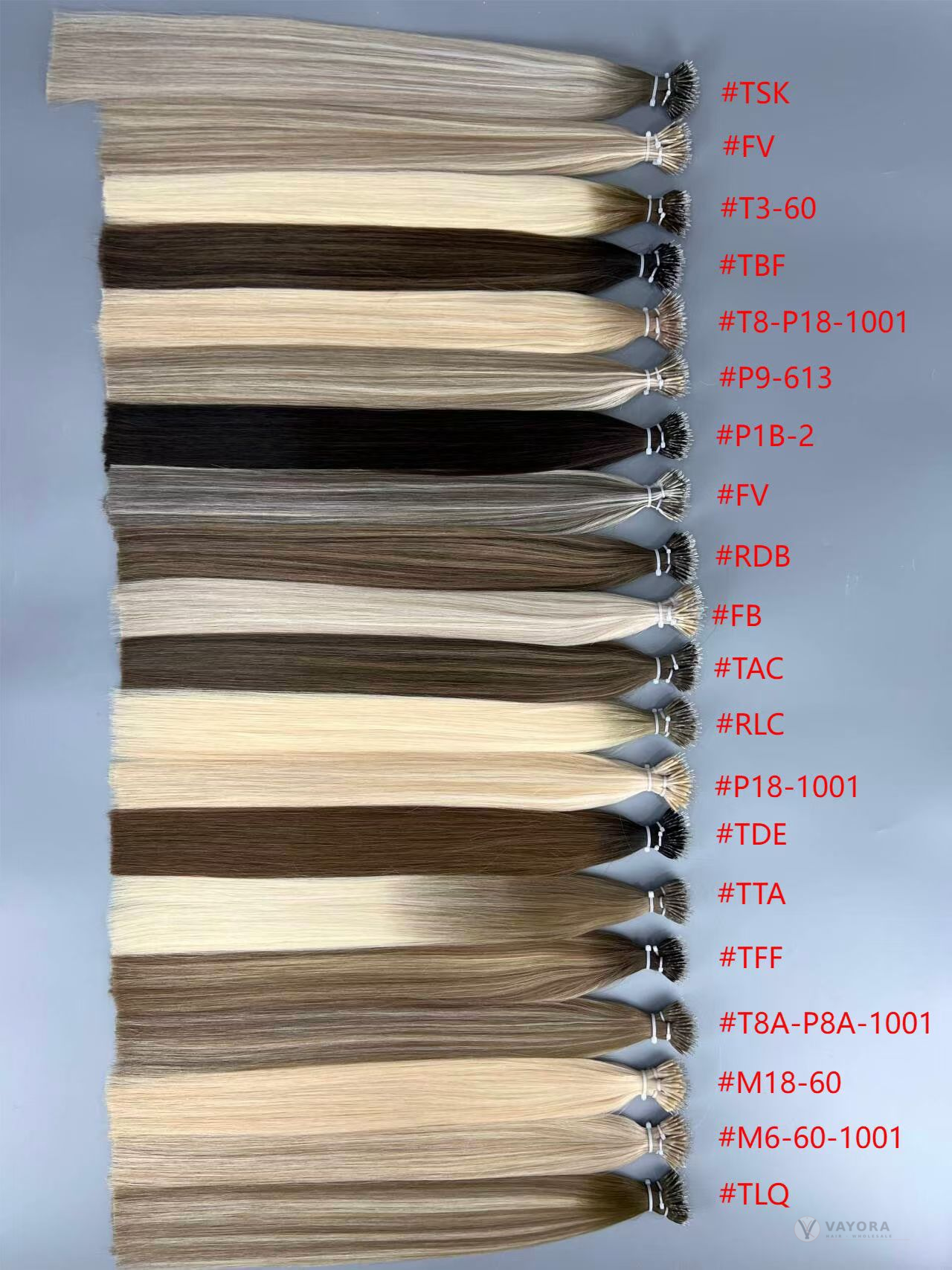
Does a 36-color catalog mean all 36 shades are currently available?
No. Confirm the requested construction, hair specification, physical shade reference and quantity during quotation. An approved sample remains necessary before bulk release.
For product briefs, explore wholesale hair extensions or custom colored wigs.
Request a Quote