
Hair extension quality control has two parts: the hair itself and the attachment or base that holds it in place. A soft, attractive sample can still disappoint if tape edges lift, bonds crack, wefts shed, clips fail or the shade shifts after washing. Wholesale buyers should approve the complete product in the intended method, length, color and packaging before a bulk order.
The checks below are a buyer inspection framework, not a claim that every failure occurs in every method. Installation technique, care products and wear conditions also affect results. Record the test method and acceptance criteria with your supplier and salon team.
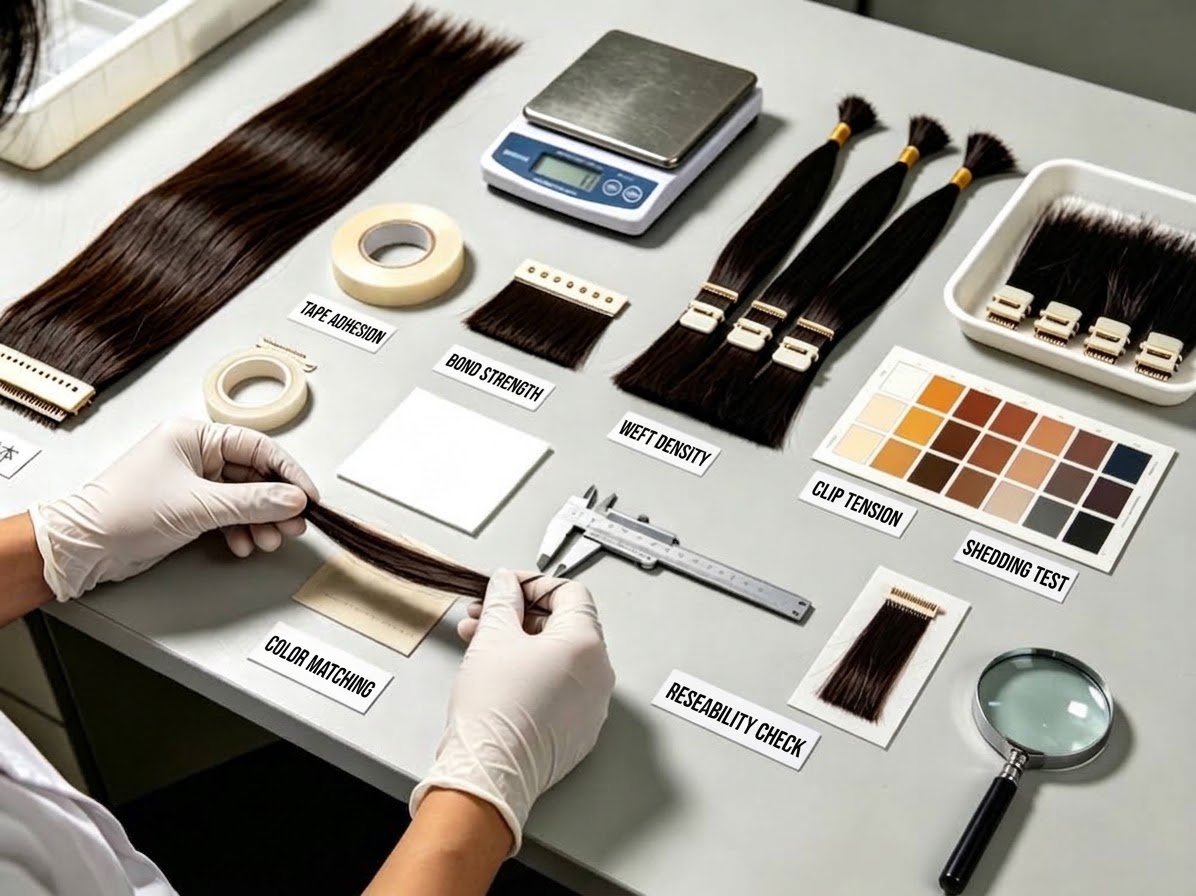
Start with a method-specific reference sample
Compare tape, tips, wefts and clip-ins by attachment method before setting a single pass/fail standard. A bond test for a keratin tip cannot substitute for tape adhesion or clip retention. Capture the SKU, net hair weight, length measurement, texture, color reference, base dimensions and intended use for each sample.
| Area | Watch for | Buyer check |
|---|---|---|
| Tape-in | Edge lift, uneven adhesive or residue | Inspect tabs before and after the agreed wear/removal simulation |
| Tip / bond | Cracks, oversized bonds or loose strands | Compare bond size, shape and integrity across units |
| Weft | Loose stitching, bulky base or seam shedding | Inspect seam consistency and controlled combing |
| Clip-in | Weak spring, sharp edges or insecure stitching | Open and close repeatedly; inspect attachment points |
| All methods | Color, length, weight, shedding and tangling variation | Compare matched samples and repeat lots after washing |
1. Adhesive and tape edges
On tape-ins, check whether the adhesive is applied evenly, the tab size matches the approved sample, the corners are clean and the hair is anchored securely. A lifted corner may snag or become visible. Residue behavior matters during removal and repositioning, but results depend on the remover, hair condition, temperature and installation. Agree on a repeatable test with the professional who will install the product rather than claiming a universal wear duration.
2. Tip or bond thickness and integrity
For pre-bonded extensions, compare the bond’s shape, thickness and strand distribution. An oversized or irregular bond can affect concealment; a brittle or poorly formed bond can release hair. Inspect several tips from each sample and record variation. Test the intended installation and removal process with a qualified stylist. Separate bond integrity from the quality of the hair lengths below it.
3. Weft base, stitching and return hair
For machine or hand-tied wefts, inspect the seam for even stitching, loose tracks and inconsistent thickness. Short return hairs near the weft can create discomfort or matting if the base is poorly finished or installed incorrectly. Document how much return hair is acceptable, check both sides of the seam and compare the base against the approved sample. Evaluate shedding at the seam after controlled combing and handling.
4. Clip function and secure attachment
For clip-ins, inspect the clip finish, spring action, comb teeth and stitching or fastening to the weft. Open and close several clips, then look for sharp edges, loosening and inconsistent placement. The attachment should sit securely while remaining comfortable for the intended use. A good hair sample cannot compensate for an unreliable clip.
5. Shedding, tangling and end fullness
Define a consistent combing and wash protocol: same sample weight, same products, same number of strokes, same dry or wet condition, and a recorded baseline. Distinguish loose hairs left from finishing from continuing seam, bond or strand loss. Look at tangling after washing as well as first-touch softness. Compare the lower-section silhouette with the approved single or double drawn specification; overall weight alone does not prove end fullness.
6. Color consistency and reuse expectations
Assess shades under consistent neutral lighting and again in the lighting your customers use. Compare the hair before and after a controlled wash, especially for blonde, rooted and multi-tone styles. A photo or third-party ring is a starting reference, not proof of a production match; use a physical master sample as explained in the color chart approval guide.
If the collection will be removed and reinstalled, define what “reuse” means for that method: whether the hair remains serviceable, whether an adhesive or bond must be replaced, and which care process will be used. Test the proposed cycle with a qualified installer. Do not infer guaranteed reuse count from a method label.
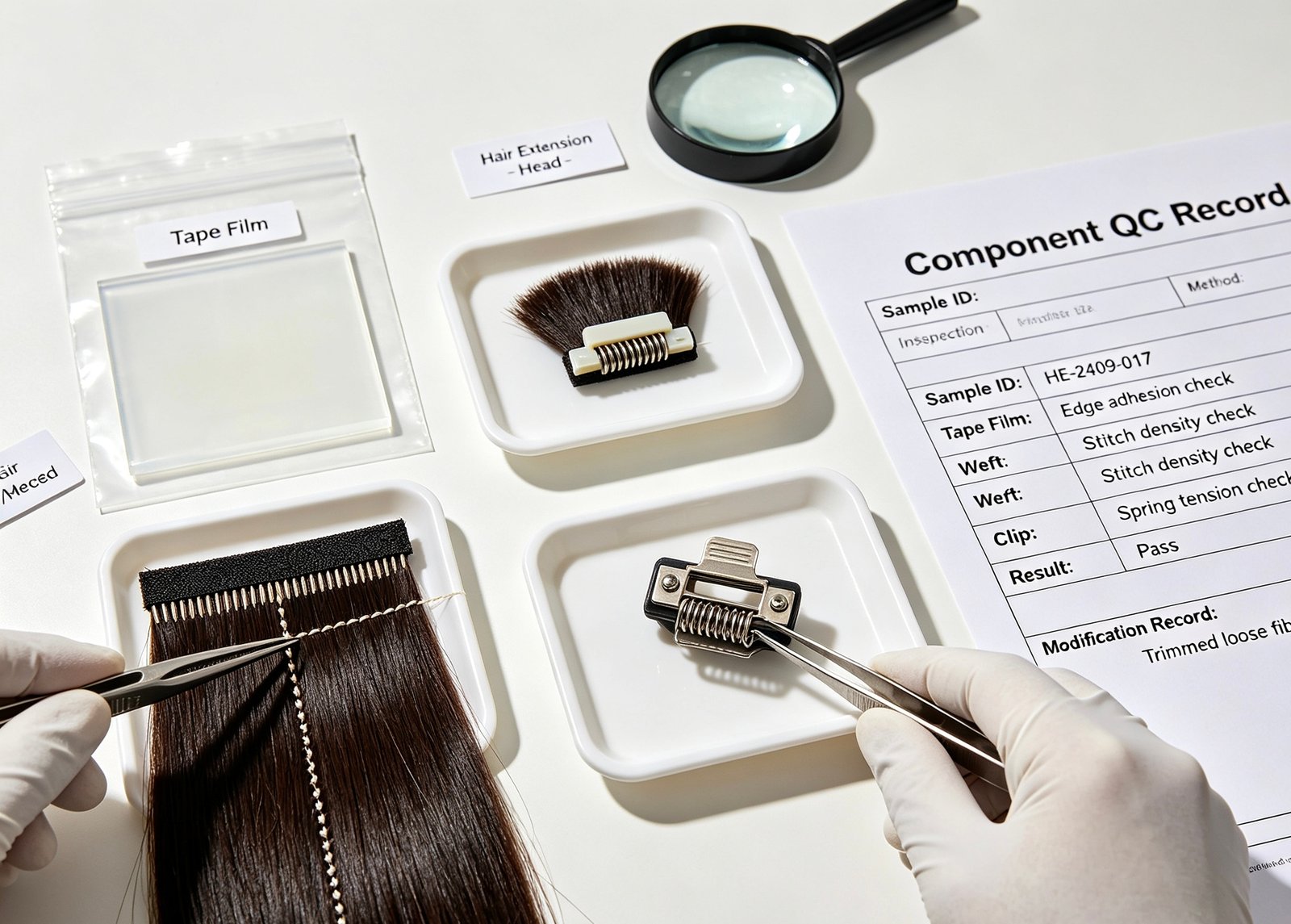
Build a method-specific inspection record
For each proposed extension SKU, tie the visible defect to a sampling location, a repeatable observation and an approved physical reference. Decide the number of units to inspect and the pass/fail rule with the buyer before production; there is no universal wear-life or reuse threshold that applies to every installation method.
| Method | Possible failure | Where and how to record it | Approval reference |
|---|---|---|---|
| Tape-in | Lifting edge, uneven tab or residue | Photograph both faces and corners before and after the agreed installation/removal procedure; note remover, temperature and operator. | Labeled tab dimensions and approved sample; written tolerance for edge condition. |
| Tip / bond | Crack, oversize tip or loose strands | Measure and photograph several tips across sampled pieces; record the qualified stylist’s installation and removal observations. | Approved bond material, shape and size range for the SKU. |
| Weft | Loose seam, bulk or hair loss at the track | Photograph both seam faces and ends; log dimensions and controlled combing condition separately from general strand shedding. | Dated weft master and construction specification. |
| Clip-in | Weak clip action, sharp edge or loose fixing | Record clip location, visible finish, fastening and the agreed open/close trial on sampled pieces. | Approved clip model, placement and attachment sample. |
| All methods | Shade drift, short ends, tangling or weight variation | Log sample/lot ID, net hair weight, measured length, wash conditions and controlled-light photographs. | Approved color master and end-fullness reference. |
Keep the sample ID, revision, operator, inspection date, photo IDs, result and corrective action in one record. If a defect is found, identify affected lots and request a revised sample before changing the approved construction. The sample approval checklist explains how to freeze the production reference; adapt its revision log to the extension SKU.
This matrix is a proposed buyer inspection method. It does not present measured VAYORA production results or a guaranteed service life.
A practical incoming-sample checklist
- Log supplier, SKU, lot, method, length, texture, color and net hair weight.
- Photograph the attachment/base, mid-lengths and ends against a scale under fixed lighting.
- Check dimensions, attachment placement, workmanship, odor and loose fibers across multiple units.
- Perform a controlled comb, wash and dry test and record changes.
- Ask a qualified stylist to trial the intended installation and removal procedure.
- Write down pass/fail criteria and approved variation for the production sample.
- Retain a labeled physical master and recheck representative bulk units against it.
Use VAYORA’s sample and approval route to capture revisions before production. The quality control hub covers specification control and final verification across product families.
Discuss an extension program
Send your intended method, SKU list, reference shade, lengths, texture, packaging needs and inspection priorities through Request a Quote. We can review the proposed product specification, sample plan and case-by-case MOQ for the wholesale hair extensions range.
FAQ
Can one hair sample approve all extension methods?
No. The same hair material may be used with different bases, but each attachment method needs its own construction and installation checks.
Is some shedding normal during inspection?
Some loose fibers may come away at first handling. Define a controlled protocol and compare ongoing loss after wash and combing rather than relying on a single stroke or an unsupported universal threshold.
How should buyers assess reuse?
Specify the removal, cleaning, replacement of attachment materials where applicable, and reinstallation process. Test that process with a qualified stylist and record the result for the specific SKU.
Define the Inspection and Release Decision
Turn failure awareness into an agreed sampling plan, construction dimension controls and a documented shipment release.
When wash testing reveals a weight difference, separate hair, attachment and packaging mass and compare conditioned samples using the human hair weight verification and wash-and-reweigh guide. A mass change alone does not identify a treatment or establish a defect.