
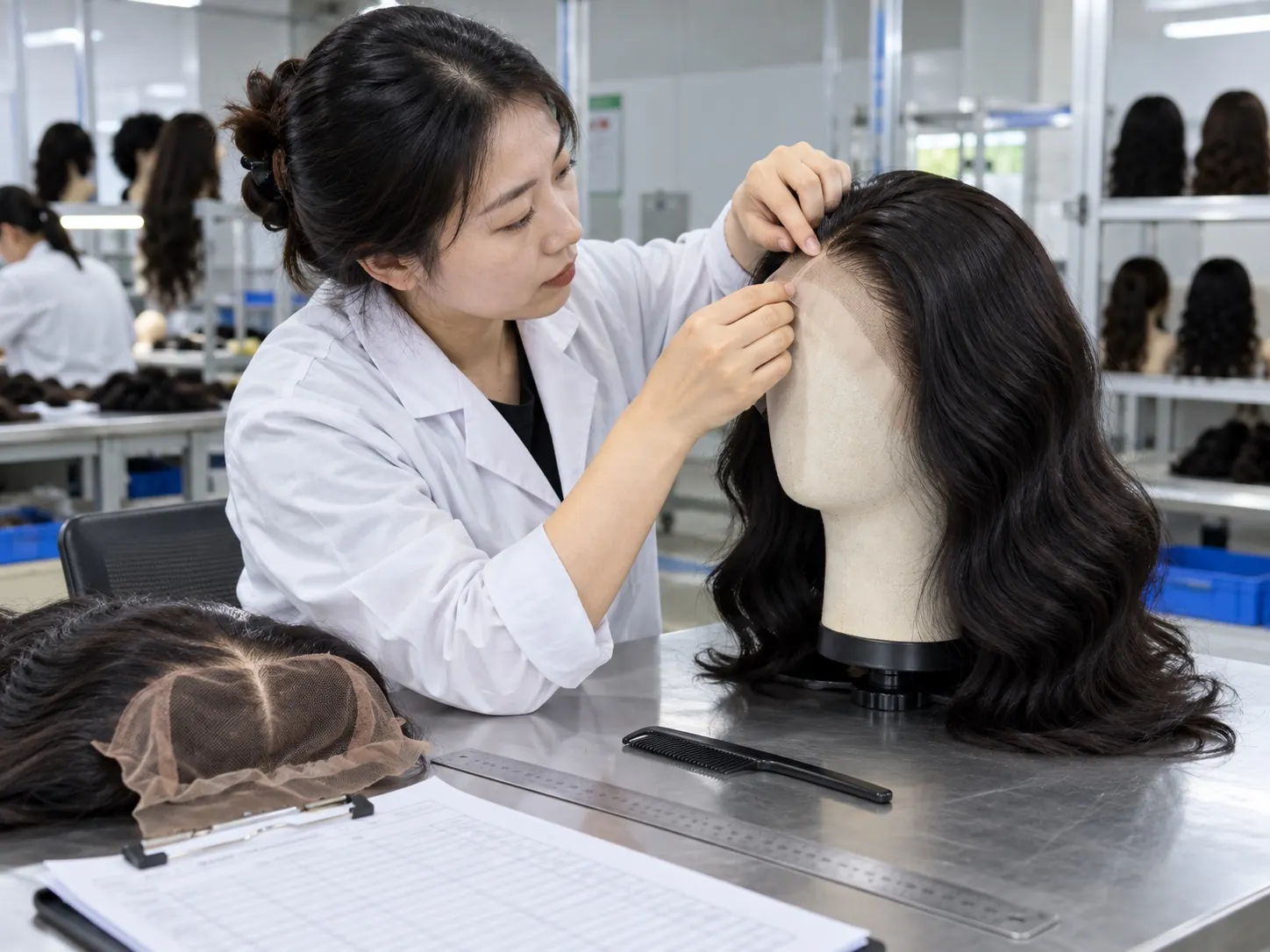
A Wig Should Be Inspected as a Complete System
A human hair wig combines hair, lace, cap construction, ventilation, sewing, density distribution, color and styling. Evaluating only the hair fiber can miss problems that appear after installation or retail use.
For B2B buyers, wig inspection should follow a repeatable checklist tied to the approved sample and specification.
Hair Quality Checks
- Length.
- Finished weight where specified.
- Texture consistency.
- Color and tone.
- Shedding.
- Tangling after wash and dry.
- Dryness, elasticity and end quality.
- Parting behavior and hair direction.
Lace, Knots and Hairline
- Lace type and color.
- Lace size and shape.
- Knot size and consistency.
- Bleached-knot appearance where specified.
- Hairline density and transition.
- Ventilation consistency.
- Damage, holes or weak lace areas.
Cap Construction
- Cap size and fit reference.
- Panel shape and seam quality.
- Elastic band and adjustment hardware.
- Comb or clip position.
- Weft sewing and spacing.
- Closure or frontal alignment.
- U-part / V-part opening dimensions when applicable.
Density and Distribution
A density percentage alone does not fully describe how a wig feels. Inspect where the density is placed: hairline, crown, sides, back and ends. Use the approved sample as the visual and tactile standard.
Styling and Final Finish
Check whether the final cut, fringe, curl pattern, parting and overall shape match the approved sample. Styling should not hide construction problems or weak ends.
Pre-Shipment Wig QC Workflow
- Verify SKU, style, color and cap type.
- Compare with the latest approved sample.
- Measure length and key cap dimensions.
- Check density distribution and weight where specified.
- Inspect lace, knots, hairline and sewing.
- Comb and manipulate for shedding and tangling.
- Run wash testing on representative units if part of the plan.
- Check final styling, labels, packaging and accessories.
- Record results before release.
Discuss Your Sourcing Project
Send Vayora your product brief, target colors, lengths, construction and reference samples. We can review the requirements and prepare the next sampling or quotation step.
Request a QuoteFrequently Asked Questions
What is the most important reference for wig inspection?
The latest approved physical sample together with the written specification.
Should density be checked only by percentage?
No. Distribution across the hairline, crown, sides, back and ends also matters.
How can a buyer check wig shedding?
Use consistent combing and handling procedures and compare results with the approved standard.
Should packaging be part of QC?
Yes. Incorrect labels or accessories can create commercial problems even when the wig itself is acceptable.
Related Guides
Finished-wig weight includes the cap, lace and attachment components. For a separate review of suspected finish-related mass changes, use the human hair weight verification guide and agree the weight definition, conditioning and comparison method before drawing conclusions.