

Introduction
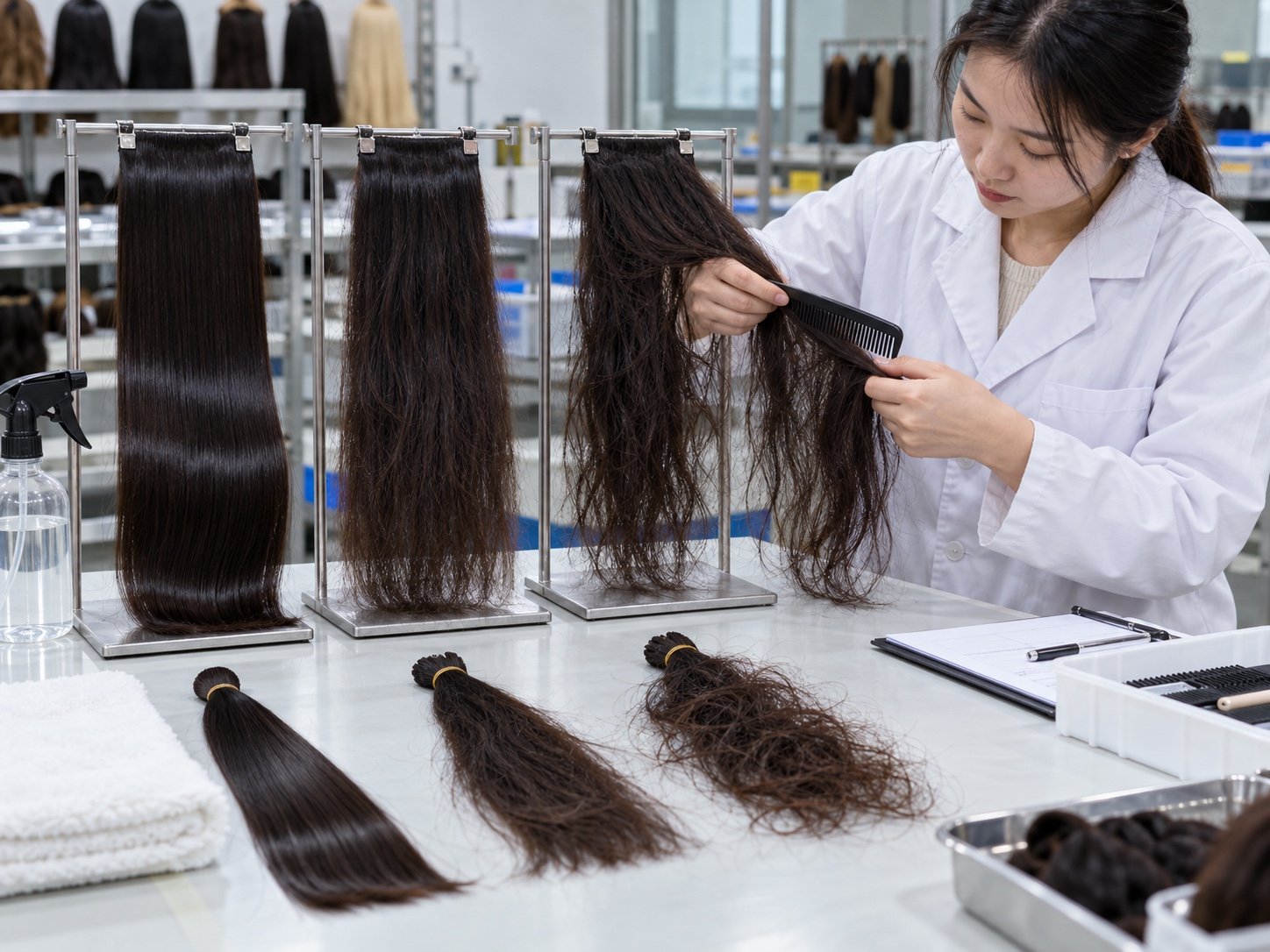
Tangling is a symptom, not a diagnosis. A wig can look smooth when freshly styled yet behave differently after washing, wearing, coloring or exposure to friction. For wholesale buyers, the useful question is not simply whether a wig tangles: it is where, when, under which conditions and compared with which approved sample.
The difference between tangling and matting
Minor tangles are localized crossings of strands that usually release with careful sectioning and conditioning. Matting refers to denser interlocking of many strands. Persistent matting, heavy breakage or repeated tangling after controlled washing warrants quality review rather than an assumption that routine care will fix it.
Six contributors to investigate
- Fiber surface and processing history: chemical processing and wear can alter the surface and increase friction. An attractive silicone finish is not proof of long-term performance.
- Hair orientation and assembly: if cuticle-bearing fibers face opposing directions, friction may increase. However, do not diagnose reversed cuticles from tangling alone; inspect construction and processing evidence.
- Color treatment: repeated lifting and coloring can increase sensitivity to breakage and tangles. Blonde samples deserve specific after-wash review.
- Dryness and static: low humidity, friction and depleted conditioning may raise flyaways and strand interaction.
- Residue: sebum, environmental soil and styling-product buildup can affect feel and combability.
- Care and wear: clothing contact, sleeping practices, heat and forceful detangling can contribute, especially at the nape and ends.
Why the location of tangling matters
Nape-only tangling may indicate friction against clothing or the neck, while all-over tangling that appears promptly after a controlled wash may justify examining fiber processing. Localized root-area tangling calls for inspection of ventilation, short return hairs and cap construction. These patterns are clues, not proof of fault.
What procurement teams should verify
Ask suppliers to identify the approved sample, hair source declaration, donor grouping where substantiated, processing and color history, finished length, density, and cleaning/conditioning instructions. Compare the original and washed state under consistent handling, and document any changes to texture, ends, friction and shedding.
A practical controlled comparison
Use a documented wash-and-detangle procedure on a representative, agreed sample. Record product type, water conditions, drying method, grooming tool, number of cycles and before/after photos. Compare against the approved golden sample. Do not publish numerical performance guarantees until the factory has an agreed protocol and actual results.
What Vayora can discuss with wholesale buyers
We can help buyers establish sample specifications and discuss repeatable inspection criteria for tangling, shedding, texture and after-wash feel. Specific hair-origin, cuticle-alignment or durability claims should be agreed against evidence for the selected SKU, rather than assumed from a marketing grade.
Conclusion
Strong wig quality control separates raw-material declarations, construction, processing history and daily handling. When a tangle complaint arises, examine these dimensions together before assigning responsibility.
Frequently Asked Questions
Does tangling always mean poor-quality human hair?
No. Consider processing, construction, environment and care before assigning cause.
Can silicone finishing hide future tangling?
A temporary smooth finish does not establish after-wash behavior; document treatment and inspect a washed sample.
Do single-donor wigs never tangle?
No. Donor grouping alone does not establish cuticle integrity, processing history or detangling performance.
Why do blonde wigs need particular attention?
Lightening and repeated processing can change fiber condition; compare samples under agreed conditions.
What evidence should wholesale buyers request?
Request specification, processing declarations, reference samples and comparable after-wash evidence.
Plan Your Wholesale Wig Quality Specification
Share your target style, length, color, volume, cap/lace details and your sample acceptance priorities. Ask Vayora about product options and evidence available for the specific SKU.
Related Products & Buyer Guides
- Human Hair Wig Inspection Guide
- Quality Control
- Golden Sample and Sample Approval
- Complaint and Corrective Action
- Samples & MOQ
- Private Label Wig Development
- Request a Quote
- How to Detangle a Human Hair Wig Safely: A Care and Escalation Guide
- Human Hair Wig Tangling Complaints: Root-Cause Analysis & QC Checklist
- Remy vs Cuticle-Aligned Hair
- #613 Blonde Hair Quality
- Hair Extension Quality Inspection