
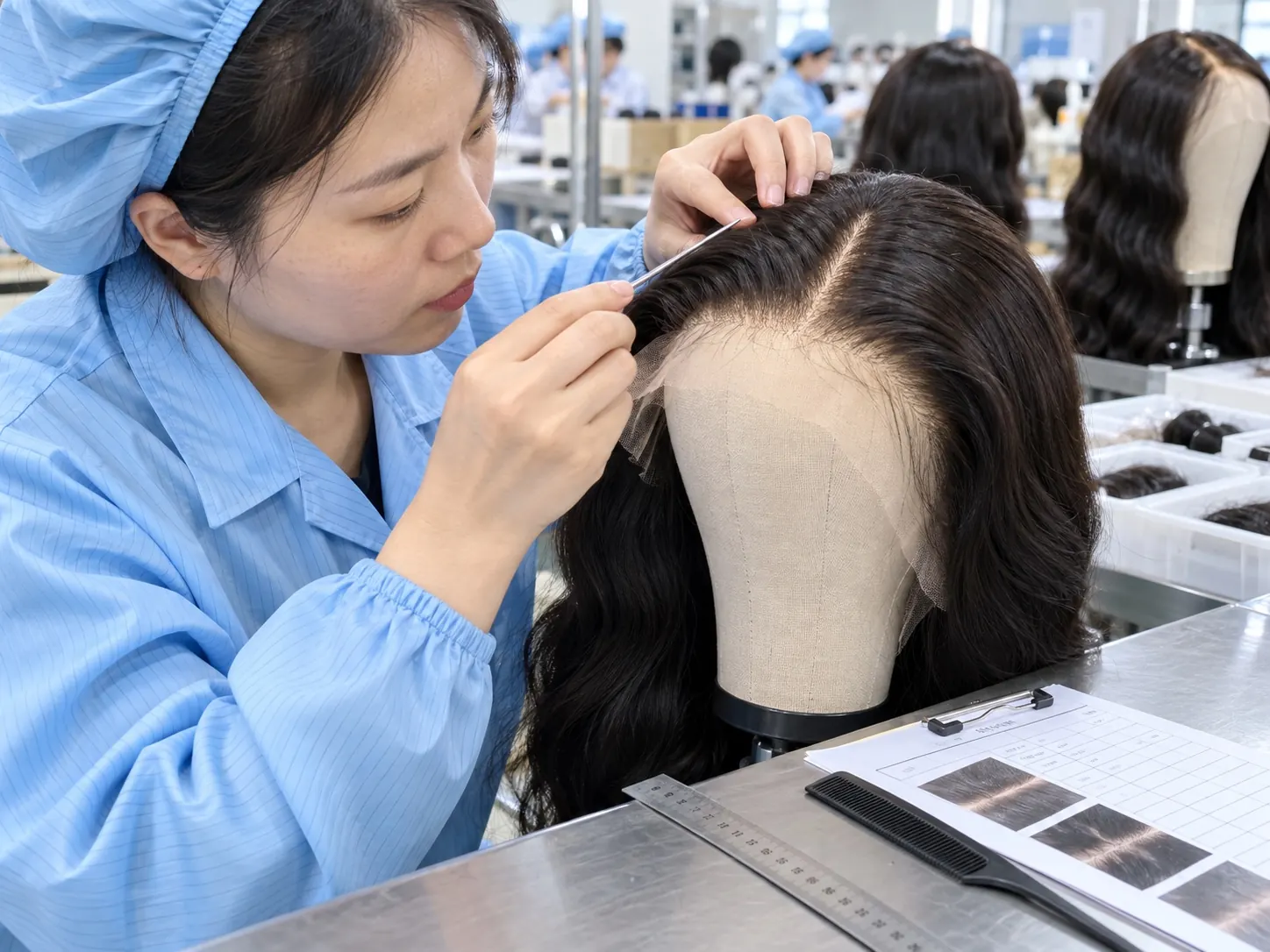
Why Hairline and Parting Need Separate QC
The front hairline and parting zone are high-visibility areas. Small differences in density, knot spacing or direction can change how natural the finished wig appears even when the same hair and lace are used.
Hairline Density Transition
A natural-looking hairline generally uses a controlled density transition rather than the same density from the very front edge backward. The approved sample should define how gradual or full the transition should be.
Reference the Front Edge and Temple Areas
Photograph the center front and both temples on the approved sample. Compare the transition at each position under the same lighting before deciding whether a revision is needed.
Parting Construction
Parting quality depends on ventilation direction, spacing and the usable lace area. Buyers should check whether the part remains clean and flexible within the intended styling zone.
Check the Usable Styling Zone
Move the part within the intended zone and record where the construction limits the styling direction. The acceptable area is subject to the final cap and lace specification.
Knot and Lace Considerations
- Knot size and consistency.
- Lace integrity around densely ventilated areas.
- Bleached-knot appearance where specified.
- Direction of the ventilated hair.
- Hairline symmetry and transition.
Sample Approval Points
- Photograph the hairline under neutral light.
- Check the front edge from multiple angles.
- Part the wig within the intended styling area.
- Inspect knot spacing and direction.
- Compare density transition with the approved reference.
- Record any requested changes before bulk production.
Apply Construction Checks to a SKU Brief
Review the recorded multi-style wig brief when planning sample coverage across styles and lengths. Hairline, lace and parting details still need separate written specifications and sample approval; the brief does not establish completed construction or QC outcomes.
Discuss Your Project
Send Vayora your target hairline style, lace type, parting area and reference wig. We can use the sample stage to define the construction standard before production.
Frequently Asked Questions
Is pre-plucked hairline a fixed standard?
No. The degree of density reduction is subjective and should be approved by sample.
Does smaller knot size always mean better quality?
Not by itself. Lace strength, hair type, ventilation quality and the intended product all matter.
Can parting direction be customized?
Depending on construction, the parting area and direction can be specified during development.
Should hairline QC be done on every wig?
The inspection plan should be defined for the order, with production and final checks tied to the approved standard.
Combine the hairline and parting reference with the cap, lace and finished wig requirements. Review finished wig collection scope when preparing the next project decision.