
Pre-Everything Wigs: What Wholesale Buyers Need to Define
“Pre-everything” has become a convenient way to describe wigs designed to reduce preparation before wear. In practice, however, the phrase can hide several separate manufacturing decisions.

Pre-cut lace, a pre-plucked hairline and pre-bleached knots do not control the same part of the product. A buyer who writes only “pre-everything” into a purchase request leaves important visual and technical details open to interpretation.
For wholesale and private label programs, the safer approach is to break the phrase into individual specifications, approve the physical result and preserve that reference for production.
What Does “Pre-Everything” Actually Mean?
There is no single universal construction hidden behind the term. One supplier may use it to mean pre-cut and pre-plucked. Another may include knot processing, cap adjustment or additional finishing. The final result can also vary by lace area, hairline design, density and color.
The first step is therefore simple: replace the marketing phrase with a checklist of actual features required for the SKU.
- Is the lace pre-cut? Which lace area and what edge shape?
- Is the hairline pre-plucked? What visual density and shape?
- Are knots pre-bleached? To what approved appearance?
- Is the cap intended for glueless wear? Which security/adjustment components?
- Are there other finishing requirements that the buyer expects under “pre-everything”?
Lace area and finished edge
Hairline shape and visual density
Approved knot appearance
Pre-Cut Lace
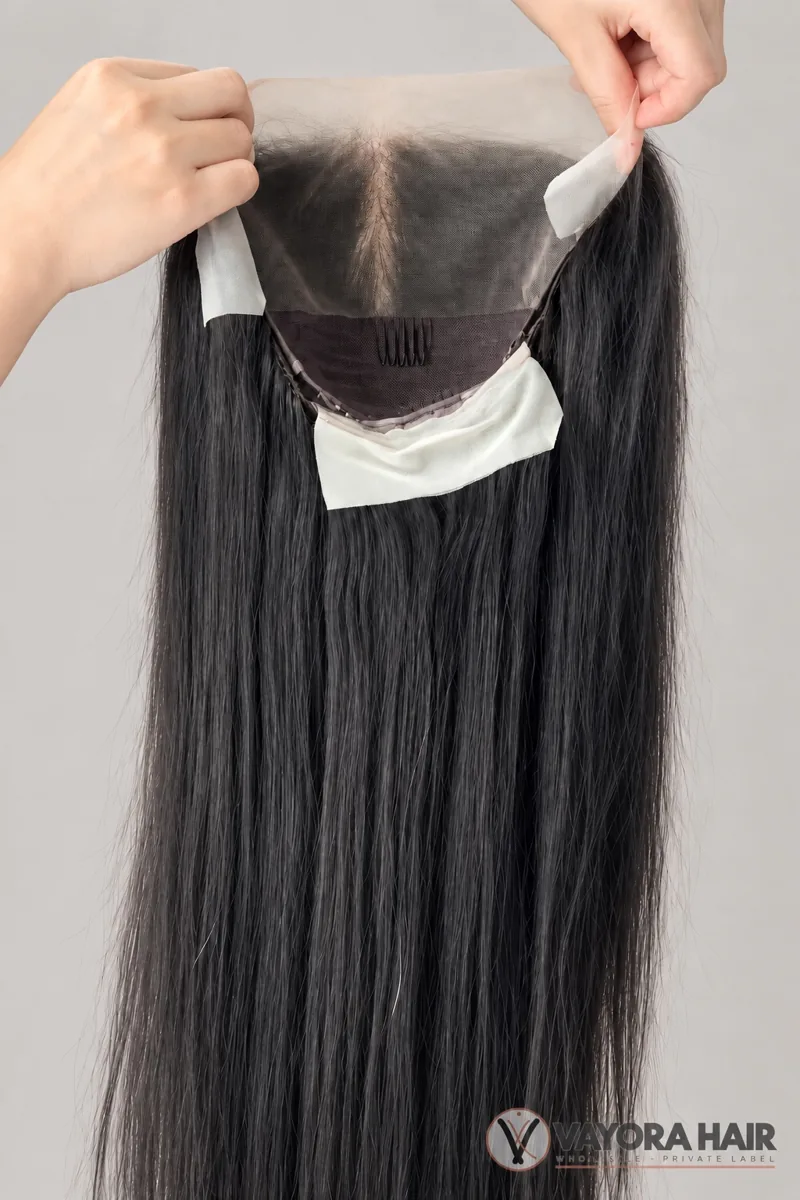
Pre-cut lace changes the product before the customer receives it, so the approved edge matters. Buyers should define the lace area, the intended cut shape and the acceptable finished appearance rather than relying on the words “pre-cut.”
A physical sample is particularly useful because photos may not show edge consistency, placement or how the cut interacts with the hairline.
Approval check: lace area; edge shape; symmetry where relevant; relationship to the hairline; packaging protection so the finished edge is not damaged in transit.
Pre-Plucked Hairline
Pre-plucking is intended to reduce excessive visual density at the front and create a more graduated hairline. But “pre-plucked” does not define how much hair is removed, where the transition begins or what final silhouette is acceptable.
The buyer should approve the hairline as a finished visual element. Front-view and close-up images can support the record, but the physical sample should remain the strongest reference where possible.
Approval check: overall hairline shape; front density direction; temple treatment where applicable; consistency with the target product position; relationship to parting and lace.
Pre-Bleached Knots
Knot processing affects the appearance of the lace area and can also interact with hair color, lace color and processing tolerance. The buyer should define the intended visible result rather than assuming that a stronger processing level is always better.
The goal is not to maximize bleaching. The goal is to achieve the approved knot appearance while maintaining an acceptable product result for the specific construction.
Approval check: visible knot appearance; consistency across the required lace area; interaction with hair color; any acceptable variation agreed during sampling.
Cap and Security
A pre-everything product is often sold together with an easy-wear or glueless promise. That makes cap construction and security part of the same customer experience.
Define cap size or size strategy, adjustment method, elastic or drawstring components where applicable, comb placement where applicable, and how the product is expected to sit at the nape and hairline.
A wig can be fully pre-cut and pre-plucked yet still fail the intended easy-wear brief if the cap does not fit or secure as expected.
Why Sample Approval Matters
Many pre-everything requirements are visual. A specification sheet can describe the controls, but words such as “natural,” “lightly plucked” or “well bleached” can still be interpreted differently.
The sample converts those words into an approved physical reference. Once approved, the buyer should record the sample version, supporting photos, key measurements and any agreed tolerances or notes that need to carry into bulk production.
This is especially important when the product is intended for repeat orders. Without a stable reference, each reorder can gradually become a new interpretation of the original brief.
How to Write the Specification
A useful pre-everything specification should separate the following controls:
Lace area / cap type / intended glueless or attachment direction
Exact area and approved finished edge
Hairline shape and visual density direction
Approved knot appearance and relevant processing notes
Cap size, adjustment, elastic/drawstring/combs where applicable
Material/grade as actually agreed, length, texture, color
Density/finished weight control as agreed
Approved sample ID/version + photos/notes
Protection and presentation requirements relevant to the finished product
The objective is not to create the longest possible specification. It is to remove the points most likely to be interpreted differently between sampling and bulk.
From Marketing Claim to Repeatable Product
Pre-everything can be a strong customer-facing concept because it communicates convenience quickly. For a manufacturer and buyer, however, the work happens underneath that phrase.
When each feature is separately defined, sampled and approved, the brand can market a simple benefit while the supply chain works from a precise reference.
Carry that approved result into a golden reference and controlled scaling plan.
Approve the Physical Result Before Bulk
Define the pre-cut, pre-plucked, pre-bleached, cap and fit requirements, then review them together on the development sample.
Editorial Context
VAYORA product-development interpretation. This article does not make a market-size, sales-ranking or universal technical-standard claim. Features and processing limits must be confirmed for the actual construction and approved sample.