
Wholesale & Private Label
Custom Colored Human Hair Wigs for Private Label Brands
Develop custom human hair wig colorways from a physical shade target and placement brief. VAYORA reviews the selected hair, cap construction, length and texture with the finished color sample before building the SKU, packaging and repeat-order reference.
Request a Quote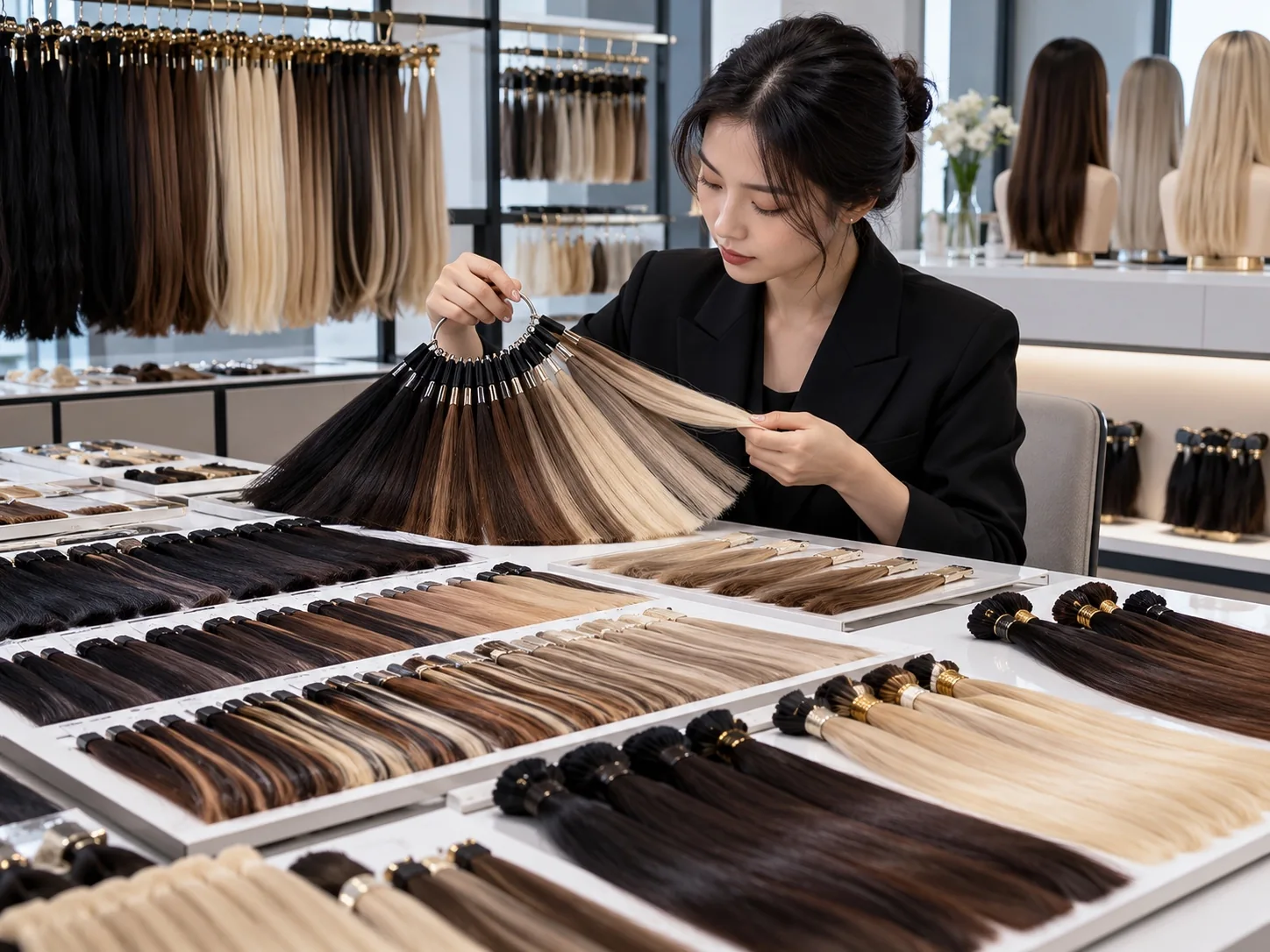
Color Development Options
Shade numbers and names below are reference labels, not global color standards or confirmed inventory. Confirm feasibility on the selected hair and finished construction.
- Natural Black / #1B
- Brown families
- #613 Blonde
- Highlight
- Ombre
- Balayage
- Piano color
- Burgundy and fashion shades
- Custom benchmark matching
Color Approval Process
Reference sample or image → preliminary target → lab/sample development → buyer review → revision if needed → approved color standard → bulk production reference.
Approve your custom wig color on the finished style
A physical color ring defines the tone direction, while the approved finished wig confirms how it appears across the selected lace, cap, parting, hairline, length and texture. For rooted or balayage styles, the golden sample must also show root depth, transition position and distribution.
Label the golden sample with its ID, master revision, SKU and approval date, and retain the buyer and supplier sign-off with the placement map. A changed tone or construction requires documented review before bulk release.
Plan a focused shade assortment
“Honey blonde,” “613,” “highlight” and “balayage” are useful descriptions, but none replaces an approved physical shade. Begin with a limited matrix of construction, length, shade and texture. Ask for projected quantities by SKU before multiplying colors across every size and cap.
| Approval requirement | Record on the sample brief |
|---|---|
| Color standard | Physical swatch ID and signed finished golden sample ID, master revision, approval date, buyer/supplier approval and SKU. |
| Lighting | Agreed neutral comparison method and repeatable photo setup. |
| Placement | Root depth, highlight ratio, face-frame, transition and end positions; include front, sides and back photos. |
| Texture | Approved curl or wave appearance and finished styling reference. |
| Hair condition | Review appearance after an agreed wash or handling procedure; do not imply an unperformed colorfastness test. |
Retain artwork and lot-level deviation notes for repeat orders. Requested hair inputs and processing routes need feasibility review; no origin or treatment claim should be assumed from a shade name. Compare the color matching guide, sample evaluation sheet and RFQ template.
Are all blonde shades made by the same process?
No. The input hair and approved design determine the feasible route and outcome.
How should repeat shade consistency be checked?
Compare the production sample to the retained physical standard under the agreed lighting and tolerances.
Frequently Asked Questions
Can you match a wig color from a physical sample?
A physical reference can be used to define the color target. Sample development and buyer review are used to confirm the approved shade and placement.
Can one collection include multiple colorways?
Yes. Record each colorway as a separate SKU with its shade, placement, texture, length and construction requirements.
How do you control repeat color orders?
Retain the approved color standard and written placement requirements as the production reference. Review bulk color consistency against that reference.
Can colored wigs be made with HD lace?
Include HD lace and the target color in the development brief. Approve lace, hairline, shade and hair condition together on the sample.
Related Products & Buyer Resources
Define the Shade and Placement on the Finished Wig
Custom color manufacturing turns a target shade into a repeatable approved product reference. A digital image can begin the discussion; final acceptance should use a physical color master and the relevant finished wig. A 613 blonde direction is a base or selected product option, not automatic approval of a rooted, highlighted or balayage collection.
| Color direction | What to specify | What the sample must show |
|---|---|---|
| Solid shade | Target tone, depth and selected physical master. | Consistency across the required hair areas under agreed lighting. |
| Rooted shade | Root tone, zone length and transition to body/ends. | Root-to-body relationship on the chosen parting and construction. |
| Highlight / piano | Base shade, contrast tones and placement pattern. | Placement, proportions and visible pattern on the finished style. |
| Ombre / balayage | Transition zones, tone relationships and distribution. | Blend/placement across lengths and the chosen texture. |
| Blonde-base development | Starting material/shade, proposed processing and finished hair-condition requirements. | Shade and hair-condition approval together; no assumed processing or performance result. |
| SKU / pack | Color code, construction, length, texture and brand label. | Physical product master mapped to the correct packaging version. |
Review Color, Construction and Texture Together
A shade viewed on a straight swatch may look different on a curl, layered length or ventilated hairline. Review root placement around the approved part, color distribution over weft rows or lace areas, and the finished silhouette. Keep reference views and samples for relevant construction/texture combinations rather than treating one swatch as approval of every SKU.
- Submit physical reference or target and color-placement brief.
- Map tone, root/body/end zones, construction and texture requirements.
- Develop the finished sample and review shade plus hair condition.
- Record revisions and approve a physical master with comparison conditions.
- Assign SKU codes, quantities and artwork/packing versions.
- Compare bulk and repeat batches with retained references; review deviations before release.
Use the color approval guide for evaluation. Build a branded assortment through Private Label Wigs and a custom product through OEM development.
Specify Two-Tone, Split-Dye and Pastel Design Briefs
Fashion color names describe a design direction, not a universal shade standard or confirmed availability. Use the existing rooted, highlight and ombre specification table above for those directions. For other layouts, add the following details to your sample inquiry.
| Design direction | Buyer requirements | Finished-sample review |
|---|---|---|
| Two-tone / split dye | Physical references for both shades; panel positions; dividing line and parting direction. | Compare the boundary and balance from front, sides and back with the agreed parting. |
| Pastel direction | Physical target; acceptable shade variation; selected construction and intended care conditions. | Review the actual finished shade and hair condition after the agreed evaluation. |
| Money-piece / accent panels | Base shade; panel width, position and face-framing balance. | Check placement relative to the lace, part and styling direction. |
Separate the Design Request from Approved Specifications
Record the requested hair definition, cap, lace, length and texture alongside the color brief. Identify requirements that need a sample trial. A photograph, marketing name or blonde reference code alone does not establish material origin, processing suitability or repeat-order capability. Keep pending requirements separate from signed approval.
For requested wash or rub-transfer checks, agree the method and acceptance criteria before evaluation; record the sample ID, conditions and actual observations. A product photograph is not a test certificate. Retain the finished golden sample and revision ID, and document later changes before bulk release.
Does a two-tone reference define the color placement?
No. Two-tone can describe several arrangements. Specify whether the colors are split into panels, blended, placed at the roots or arranged along a gradient, then approve that arrangement on a finished sample.
Does a pastel design reference confirm production availability?
No. It is an inquiry reference. Product construction, material and processing requirements need feasibility review and sample confirmation before they become approved order specifications.
For transition-based designs, review Ombre & Balayage Human Hair Wigs. Prepare your RFQ brief with the physical shade targets, placement record and proposed SKU quantities.
Commercial Program Questions
Can an image serve as the final color standard?
Images can help define the target, but lighting and screens change appearance. Confirm final shade and placement with accepted physical references and agreed comparison conditions.
How are blonde or multi-tone repeat orders controlled?
Retain root/body/end and placement masters, finished construction/texture samples and current SKU specifications. Review batch differences and approve changes before shipment or the next production run.
Start a Custom Wig Color Program
Send shade references, root/placement directions, construction, lengths, texture, hair-condition requirements, SKU quantities and packaging. Feasibility, price and timing are confirmed by project.
Request a QuoteStart a Custom Color Development
Send your target market, product construction, hair specification, texture, color, length, density or weight, estimated quantities and packaging requirements. Samples, quantities, pricing and timing are confirmed after the project brief is reviewed.
Request a QuoteColour Approval Workflow and Evidence
The custom-colour approval workflow example explains how a physical target, sample revisions and SKU identity can be connected. It is illustrative, not a verified customer colour project or testing result.
Browse project briefs and evidence levels. For a real colour programme, request the project-linked target, sample and approval records before treating a comparison as bulk-production proof.
Use a physical shade master and agreed viewing conditions when recording custom-color approval. Review physical shade references and color matching when preparing the next project decision.
When shade approval must also cover a glueless fit system, review color placement on a glueless wig configuration. The broad custom-color program remains the route for other cap constructions; retain the same physical shade and placement approval discipline.
Record the approved shade reference
Identify the physical shade master, placement zones, lighting and revision before bulk or repeat production.