
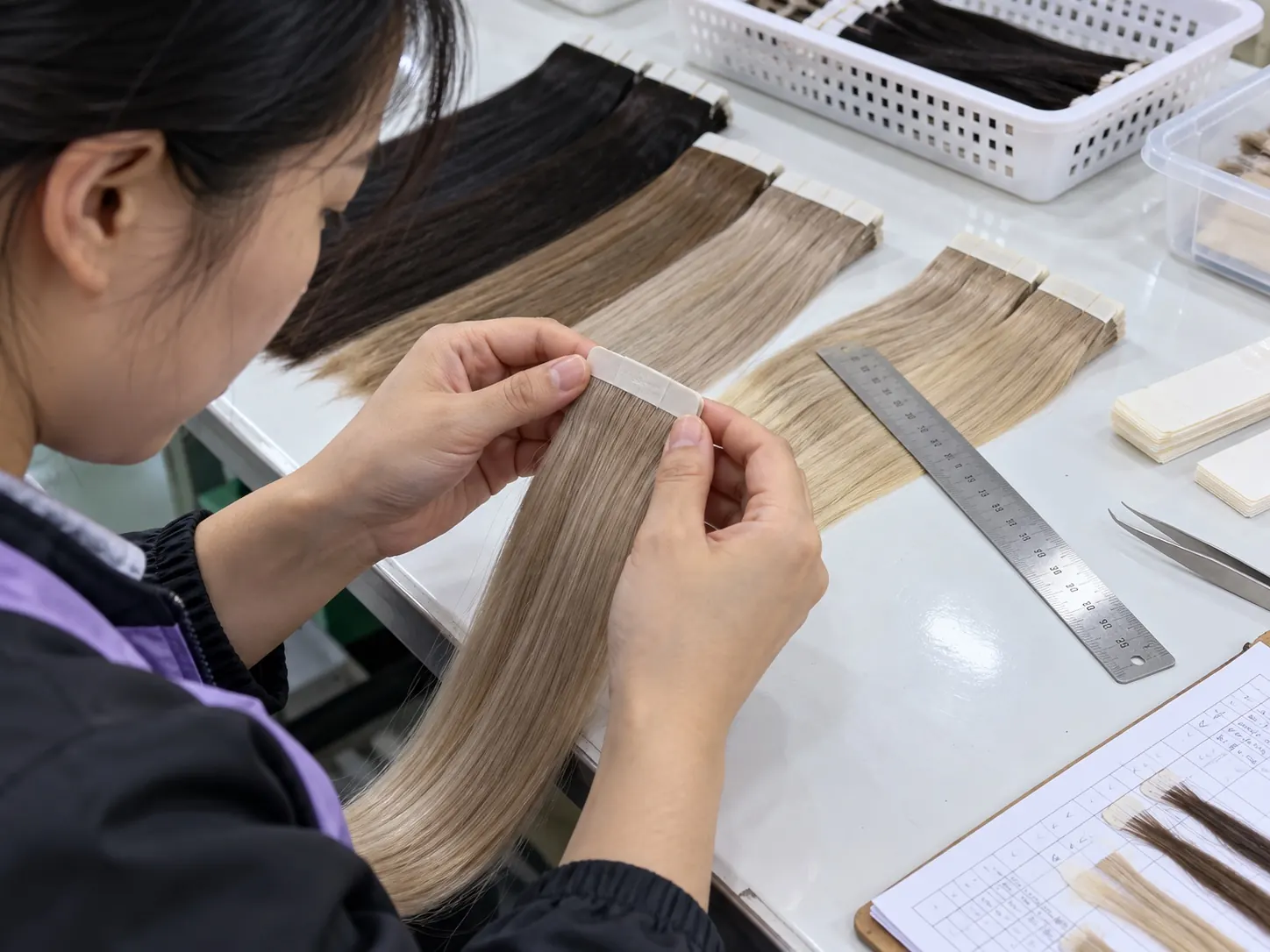
Why Tape-In Quality Is More Than Hair Quality
Tape-in complaints often come from the attachment system rather than the hair itself. A product can look excellent when new but still fail commercially if the tape lifts too early, leaves excessive residue, feels bulky or sheds around the taped section.
For B2B buyers, tape quality, base construction and hair preparation should be inspected as separate control points.
Three Common Tape-In Construction Levels
Standard Machine-Inserted Tape
Cost-efficient and suitable for volume programs, but the base may be thicker and less discreet than premium invisible constructions.
Thin / Invisible Tape
Designed for a flatter, more concealed installation. Buyers should inspect hair distribution, stable tape adhesion and clean edge construction.
Premium Hand-Finished / Advanced Invisible Construction
These constructions may reduce visible base thickness, but the exact performance should be verified through physical samples rather than product names.
Key QC Points for Tape-In Extensions
- Adhesive alignment and clean edges.
- Initial tack.
- Removal behavior and residue.
- Reapplication after cleaning.
- Base thickness and flatness.
- Hair anchoring and shedding.
- Section weight.
- Color consistency.
Simple Sample Tests for Buyers
- Photograph and record the sample before testing.
- Install or simulate the intended application.
- Check edge lift and base visibility.
- Remove using the planned process and inspect residue.
- Retape if reusability is part of the product promise.
- Wash and dry several times while monitoring shedding and tangling.
- Record all differences against the brief.
Why Adhesive Claims Need Careful Approval
Avoid approving a tape-in program based only on statements such as “strong tape” without matching the claim to the exact construction, documentation and sample behavior.
Climate, oils, aftercare products and installation technique can affect field performance, so buyers should avoid absolute performance claims that have not been substantiated.
Tape-In Adhesive Quality: A Closer Check
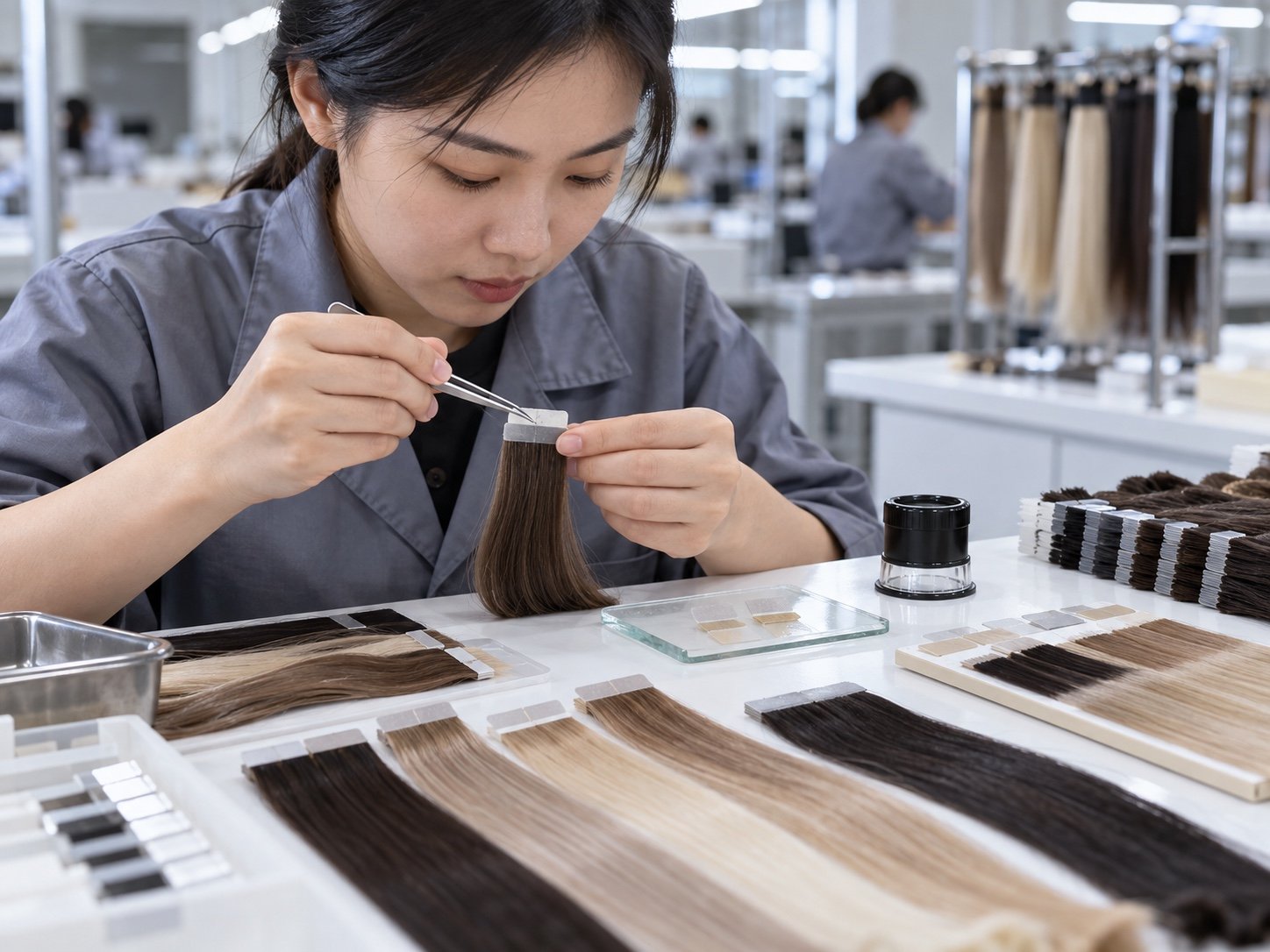
Good hair can still lead to salon complaints if the tab lifts, slips or leaves excessive residue. Evaluate initial tack, edge lift, residue after the intended removal method, flexibility and hair anchoring as separate observations.
Sample and Storage Observations
Document tab width and thickness, liner condition, adhesive alignment and the sample storage conditions. Compare fresh and stored samples where storage stability matters. Follow the intended installation and removal instructions when evaluating humidity exposure, cleaning and any planned retaping.
Approve Claims Only From the Final System
Any wear period or reapplication count depends on adhesive, hair base, application, aftercare and handling. Define the acceptance test and final product specification before making a performance claim; do not infer it from an adhesive name.
Discuss Your Sourcing Project
Send Vayora your product brief, target colors, lengths, construction and reference samples. We can review the requirements and prepare the next sampling or quotation step.
Request a QuoteFrequently Asked Questions
What causes tape-in hair extensions to fail early?
Common causes include unsuitable adhesive, incorrect installation, oil contamination, weak base construction and poor removal or retaping procedures.
How should a buyer test tape residue?
Use the intended removal procedure on a representative sample and inspect both the extension base and simulated natural-hair area.
Can tape-in hair be reused?
Many systems are designed for reapplication, but reuse depends on hair quality, base integrity, replacement tape and proper removal.
Is thinner tape always better?
No. Thinness must be balanced with stable hair anchoring and suitable adhesive.
Use these attachment checks when preparing your tape-in product brief. Review Tape-In manufacturing specifications →
Related Guides
Carry the Tape Standard Into Production
After adhesive and sample review, document the tab construction reference and its measurement method. Link findings to the order release decision.
Separate Tape Appearance, Adhesive Review and Pack Approval
For an invisible-style tape sample, retain front, reverse and side photos with the sample ID. Record base dimensions and hair coverage separately from the adhesive reference. Appearance does not prove an injected base or a particular material, adhesive performance or service duration.
Before comparison, record paired-piece arrangement, installation and removal instructions, exposure conditions and elapsed time. Retain an untreated control where relevant; note slip, edge change and residue under the agreed method. Agree the acceptance criteria before testing and retain dated observations rather than converting them into an unsupported wear-time claim.
Transfer accepted dimensions and handling to the Tape-In and Invisible Tape-In specification brief. Approve piece count and finished pack weight independently of any sourcing unit, then coordinate the private label pack.